Coat The Existing Roof
- Panels
- Surface rust, steel still firm
- Screws
- Replaced where loose or stripped
- Insulation
- Dry under the panels
- During The Work
- Stays open, coated in sections
- Published Range
- $2.50 to $4 per square foot
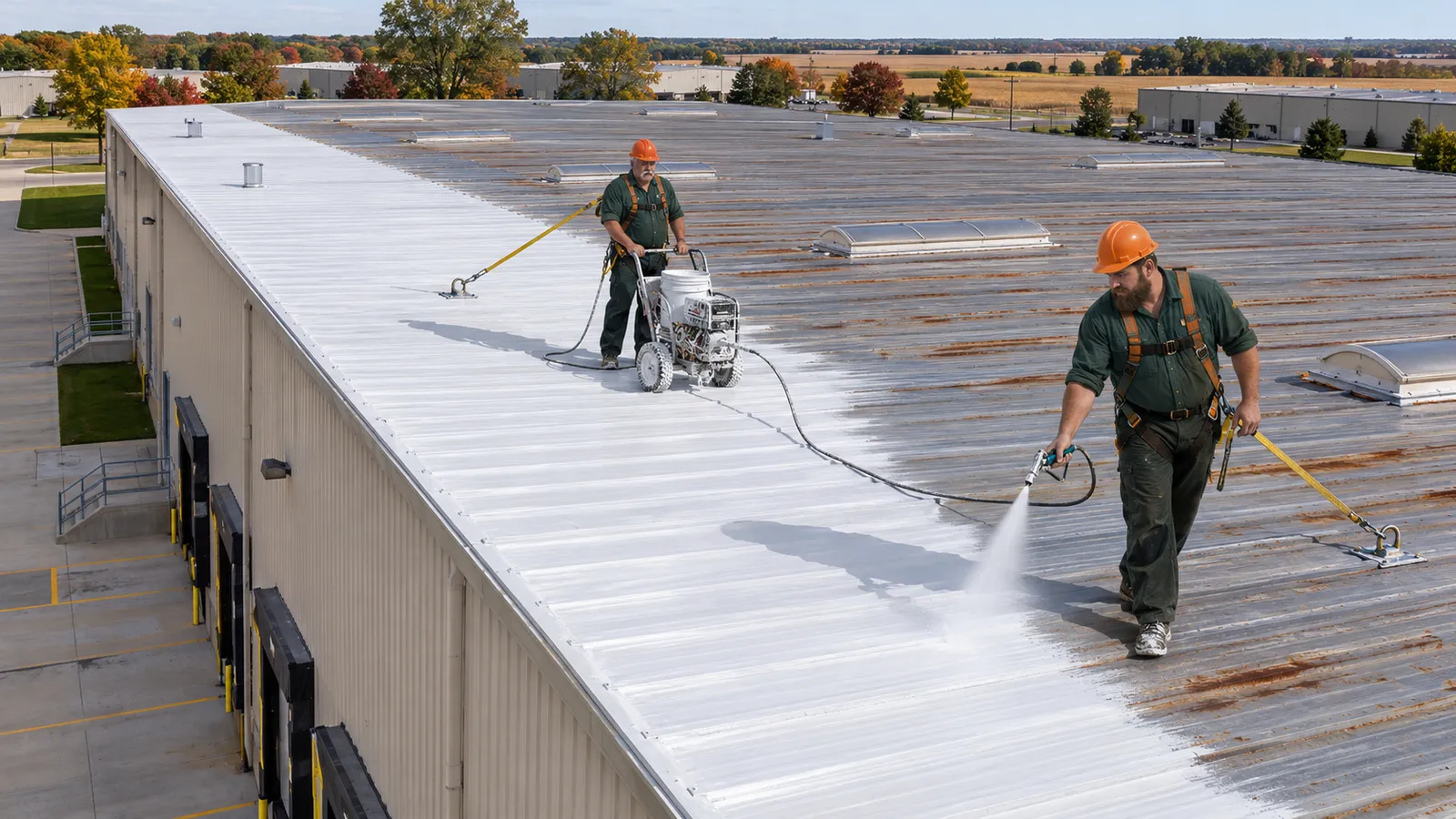
As a South Bend metal roof coating contractor, we repair and coat commercial metal roofs on plants, warehouses, farm shops, and offices.
South Bend metal roof coating is the lower-cost path when the panels are still solid. Here is how coating and replacement compare on the same building.
Most metal roofs give plenty of notice before they fail. Here is what to look for and how soon to act.
A coated roof that leaves white chalk on your hand, shows hairline cracks, or has bare spots near the screws is ready for a recoat before rust starts again.
WatchRust streaks running from panel overlaps show water sitting in the joint. Treat them before the steel thins and the lap needs a new panel.
Repair FirstThick ice along the eave each winter holds meltwater against the lowest screws and end laps. Those spots tend to leak first in spring.
Repair FirstA spreading stain or a bucket under a drip means water is already inside. That calls for a repair visit before any coating is scheduled.
Call NowFive systems cover the roofs we see across South Bend. Each card names the buildings it fits and what we check first.
 Exposed Fasteners
Steel panel roofs with rusted laps and loose screws get new fasteners, primed rust, and a field coat checked with a wet film gauge.
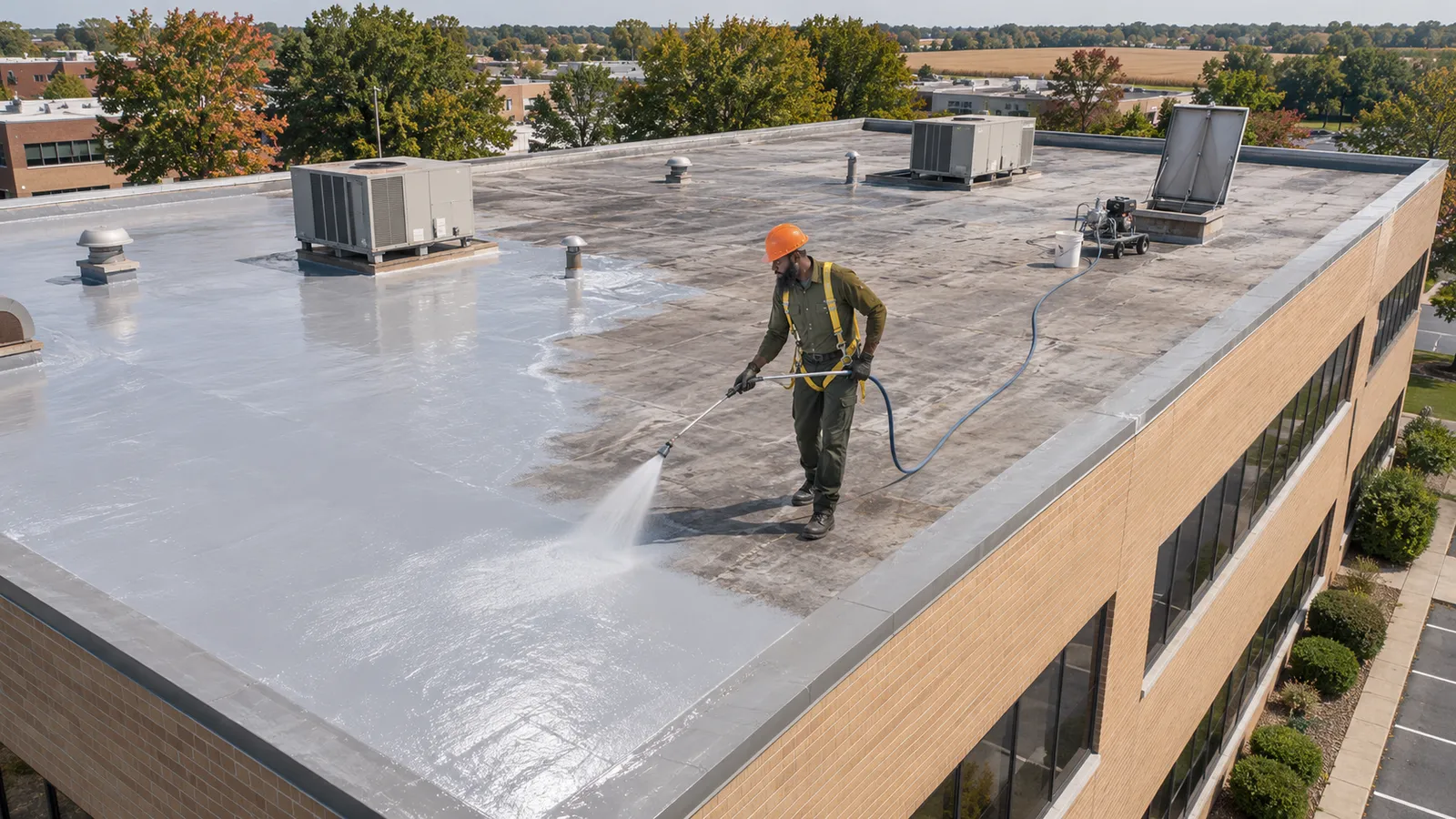 Ponding Laps
Silicone handles water that sits after rain, so it goes on low-slope metal, single-ply, and foam roofs once moisture readings come back dry.
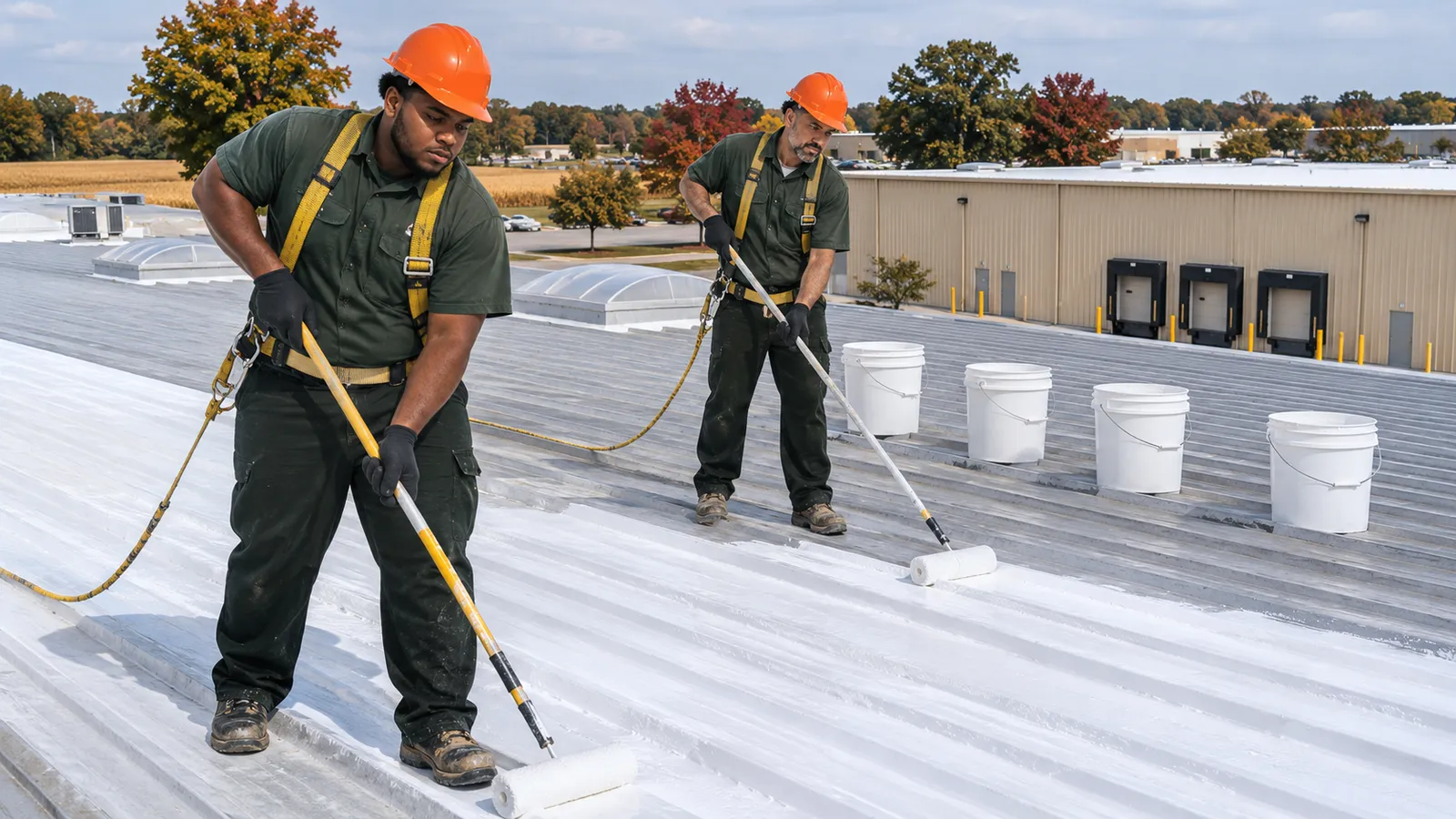 Pitched Panels
Pitched panels that shed water fast take a two-coat acrylic system, rolled or sprayed on dry, mild days with time to set before dew.
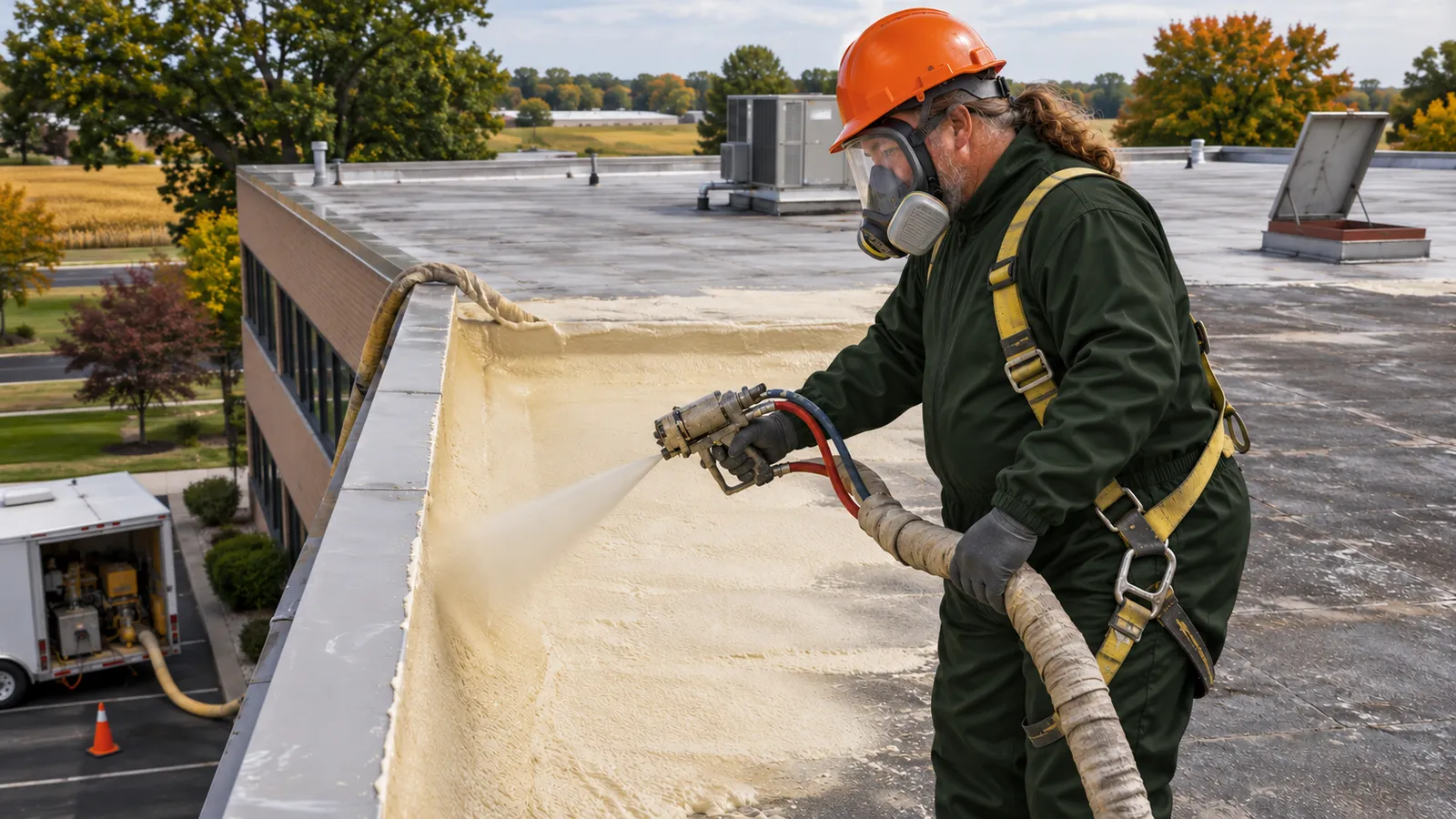 Ribs Filled
Foam sprayed over old metal or flat roofs fills the ribs, adds insulation above the deck, and gets a silicone or acrylic topcoat the same week.
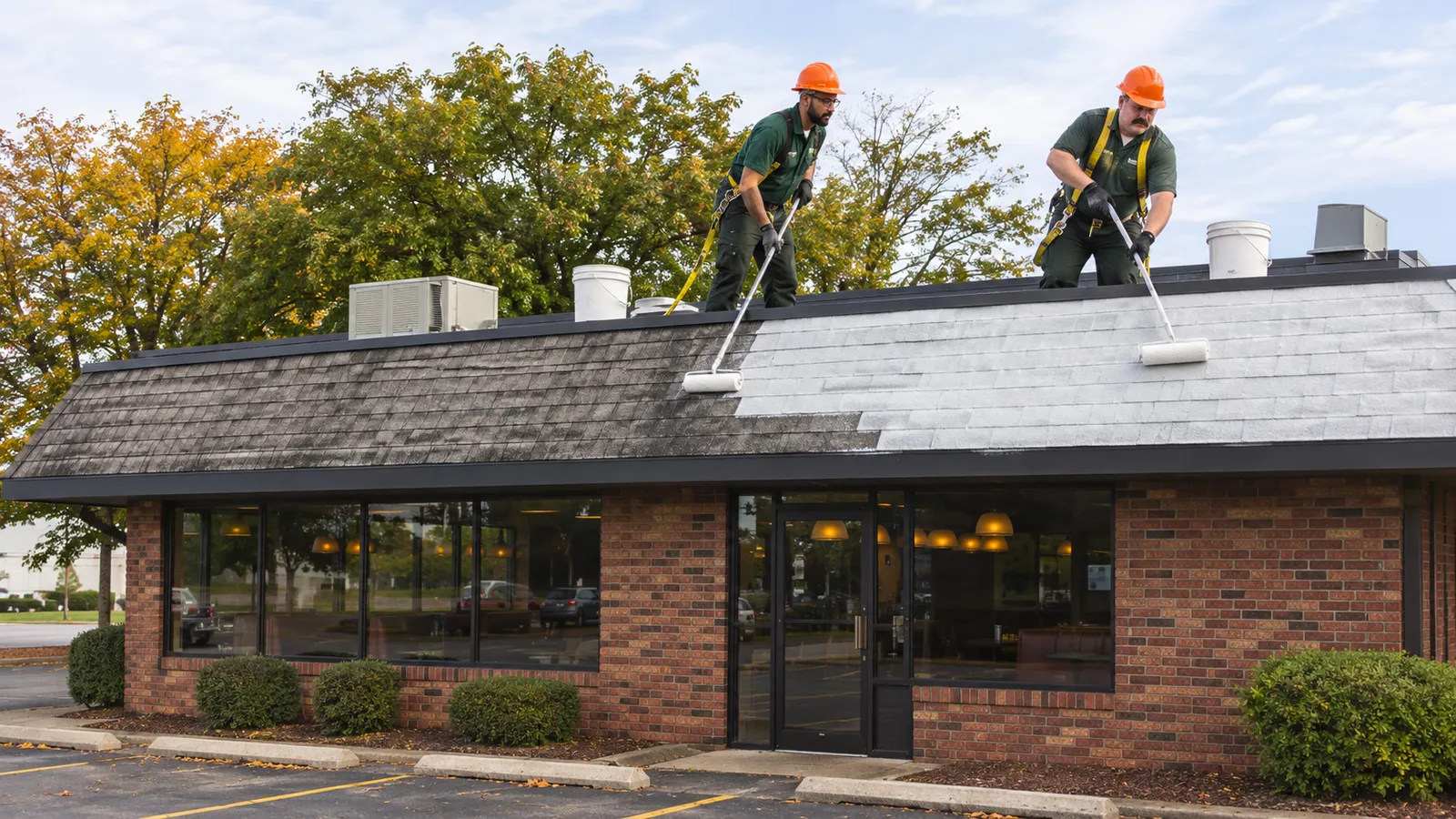 Asphalt Tabs
Aged shingles that still lie flat take a shingle-rated coating after the flashing, valleys, and damaged tabs are repaired.
Leaks get fixed first. Coating follows once the roof is dry and tight.
Get A Free Ballpark EstimateEvery South Bend job follows the same four steps, from the first roof walk to the final thickness check.
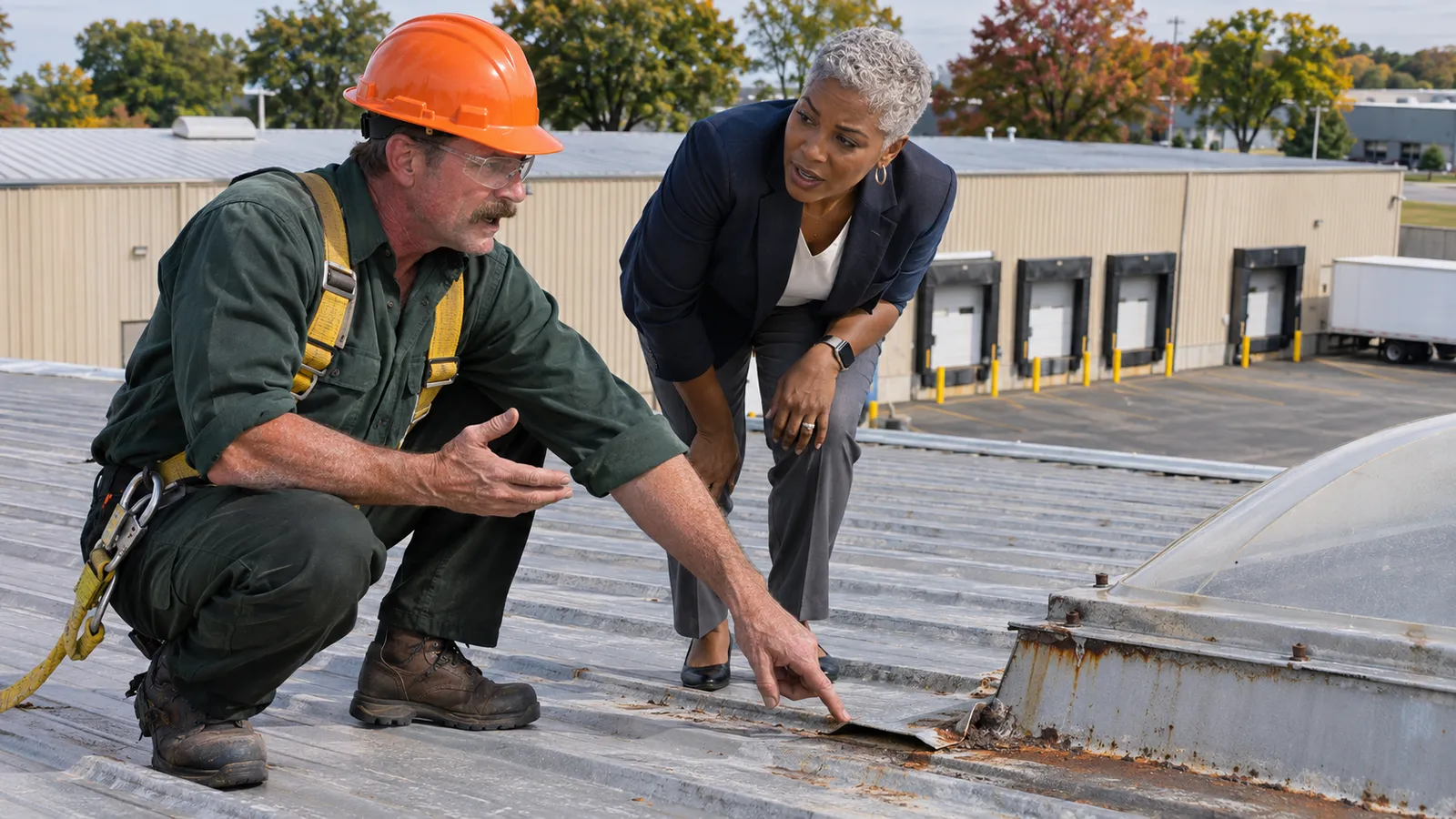
We walk every panel run, test screws by hand, take moisture readings, and photograph rust and open laps before writing a price.
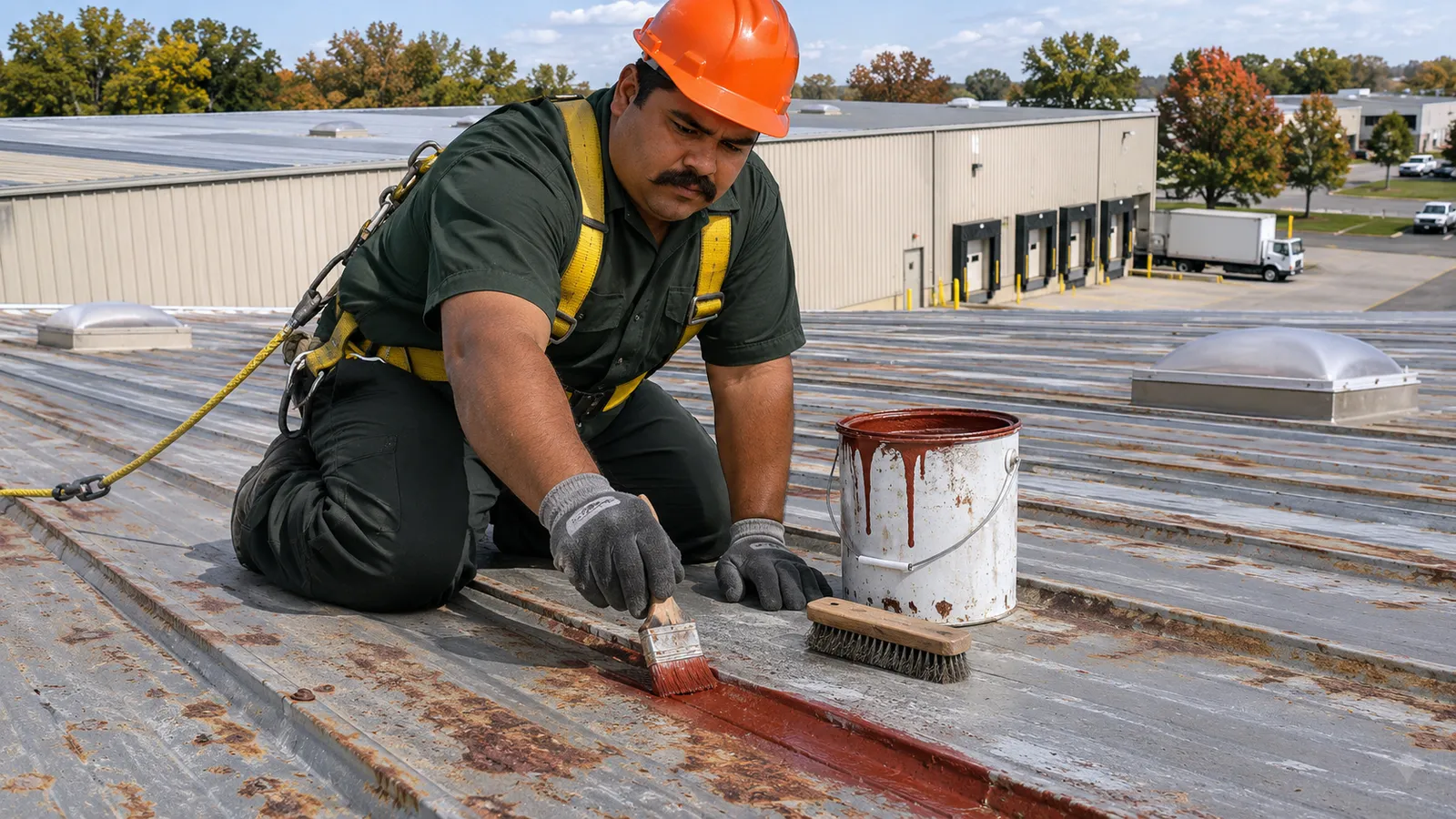
Failed screws are replaced with larger ones, laps are sealed, and loose trim or ridge caps are fastened back down.
Pressure washing strips chalk and dirt. Loose rust is brushed off and bare metal is primed to match the topcoat.
Details are brushed, then the field is sprayed or rolled. A wet film gauge confirms the specified thickness.
Here is how a typical South Bend metal roof reads before coating and after.
Hot summers and cold winters push fasteners out of the panels a little more each year.
Water held in panel overlaps rusts the steel from the joint outward.
Meltwater backs up behind eave ice and runs into the lowest laps.
New screws and washers sit under sealant and coating across the roof.
Treated overlaps are covered by one continuous film over the whole field.
The low edge gets extra sealant and coating where ice sits each winter.
We coat commercial metal roofs in South Bend, Mishawaka, La Porte, Plymouth, Winfield, and Nappanee.
Outside these towns? Call us or send us a message.
Retail centers and storefront rows here share one roof among many tenants, so we coat them in phases.
Industrial roofs here carry exhaust fans and vents, so residue is cleaned and tested before coating.
Farm and shop buildings here have exposed screws, so washers are replaced and spraying waits for calm days.
Storage and commercial buildings here see ice at the eaves, so the low edge is repaired first.
Factory roofs here have air intakes, so we plan around them to keep odor out of the plant.
In many cases it is, provided the panels and framing are solid and the leaks trace to seams, screws, and rust spots. Coating renews the roof in place without pulling panels over the production floor, so the plant keeps running. If panels have rusted through across large areas or the insulation is soaked, replacing the roof is the better spend.
Yes, as long as the steel is intact. Exposed-fastener roofs on pole barns, machine sheds, and farm shops coat well once worn screws are swapped, laps and ridge caps sealed, and rust primed. Drips from the underside on cold mornings usually mean condensation, which is a ventilation or insulation fix we flag before coating.
A recoat is due when the coating has thinned, started chalking or cracking, or shows bare spots, and before rust can spread. A roof check every year or two, plus one after hail or a rough winter, tells you when that point is close. Maker-published ranges often run 10 to 20 years, based on the system and its thickness.
Coating a commercial metal roof usually runs about $2.50 to $4.00 per square foot, while replacing it runs about $5 to $8. The inspection sets the final price. Roof size, rust and screw repairs, seam reinforcement, the coating type and thickness, and access for lifts all move a project within that range.
During the December 2020 event, the National Weather Service recorded 8 to 15 inches of lake-effect snow from Lake Michigan in parts of St. Joseph County. Heavy, repeated snow keeps panels and gutters wet and builds ice at the eaves, where meltwater backs into laps and screws. Laps and screws sealed under a coating shed that water better.
Leaking laps are one of the most common reasons owners coat. The laps are opened up, cleaned, primed, and sealed, then covered with the field coat. If the steel along the laps has rusted through, those panels are swapped first and the rest of the roof is coated.
Tell us about the building and the leaks you are seeing. We will walk the roof and price the coating.