Replacing Aged Washers On Metal Roofs
Neoprene washers shrink and crack after years of sun and frost, and each one lets water run down the screw. We replace those screws with oversized fasteners and new washers before coating.
Repair First
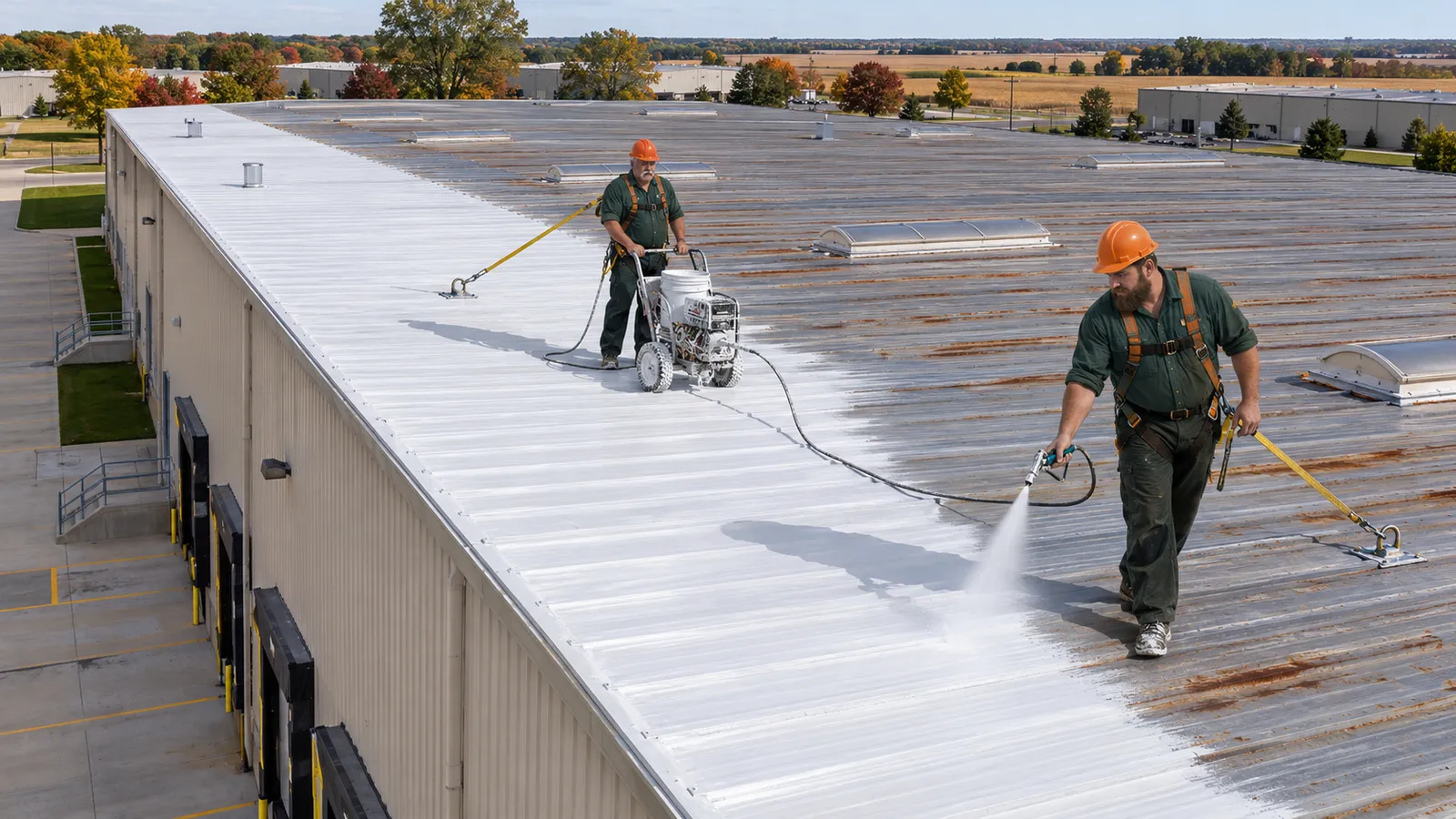
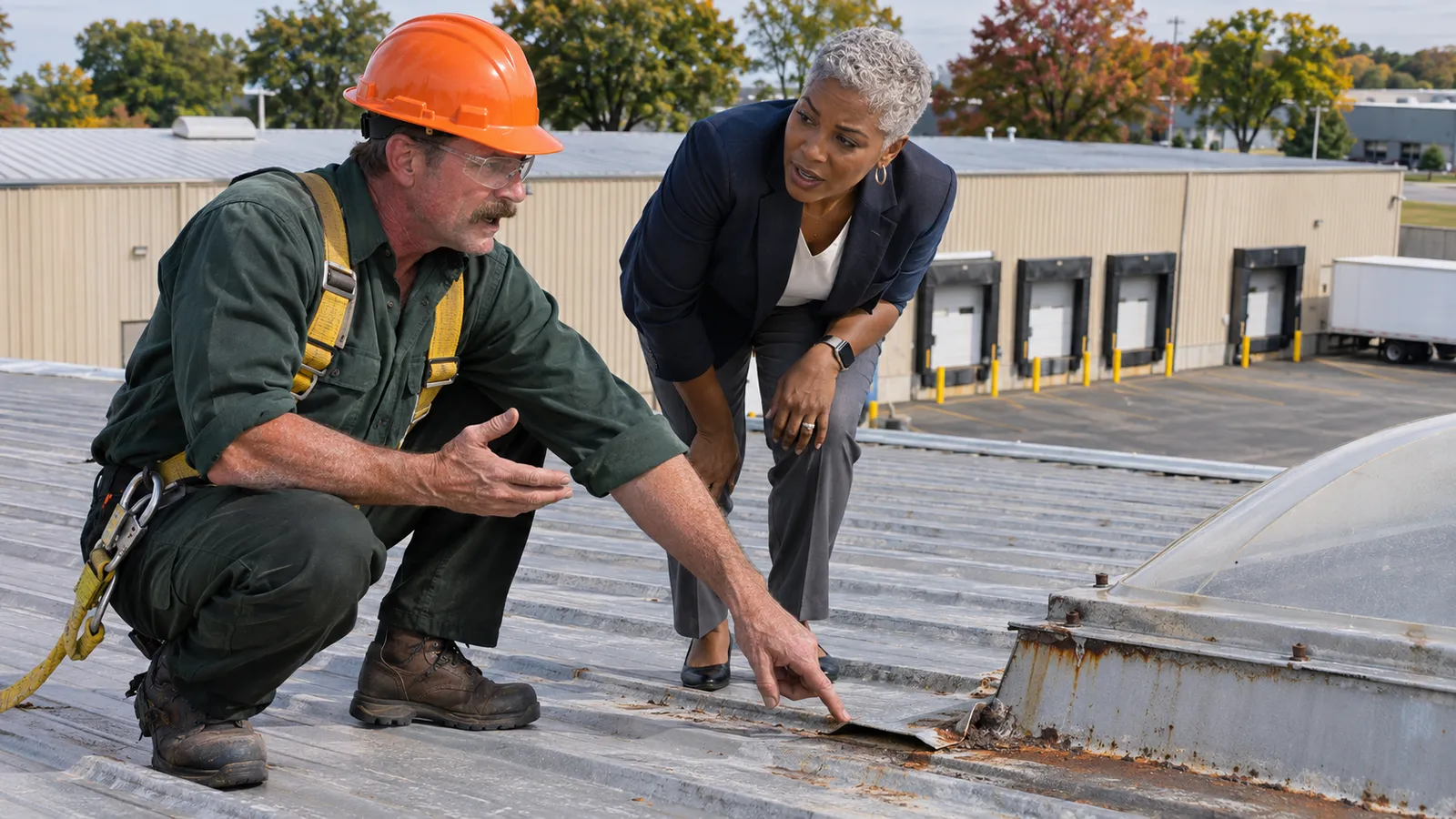
Plymouth metal roof coating covers farm buildings, shops, and light industrial roofs with exposed screws and aging washers.
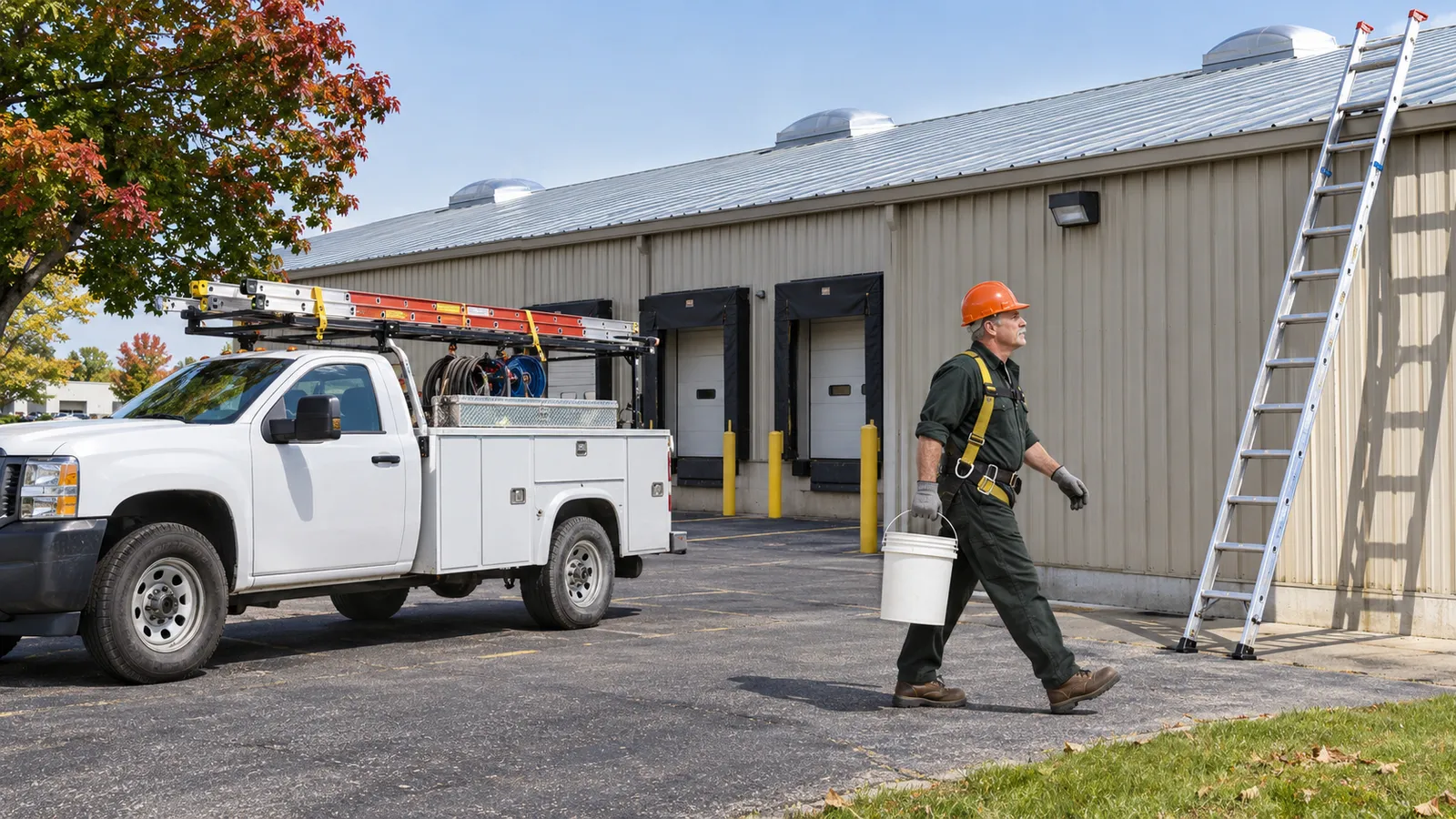
Plymouth metal roof coating on open lots means watching the wind. Farm shops and light industrial buildings often have trucks, equipment, and stored goods parked right beside the walls.
We pick spray days with low wind, mask what sits close, and switch to rollers near anything that cannot be moved. On open lots the wind often picks up after lunch, so most spray work is planned for the calmer morning hours.
Exposed-fastener roofs share a few common failures. These are the ones we fix first.
Neoprene washers shrink and crack after years of sun and frost, and each one lets water run down the screw. We replace those screws with oversized fasteners and new washers before coating.
Repair FirstSpray mist drifts with any breeze. Masking, wind checks through the day, and roller work near equipment keep coating off what sits below the eaves.
WatchWind gets under loose ridge caps and pulls out the foam closures, letting rain blow in at the peak. Caps are refastened, closures replaced, and the laps sealed.
Repair FirstFarm roofs collect residue that blocks adhesion and holds moisture against the steel. Washing removes it before priming, with runoff kept away from feed.
WatchHere is how an exposed-fastener roof changes after coating.
Cracked washers let water in at hundreds of points across the roof, and the drips land on equipment and stored goods.
Water held at side and end laps has started rust that spreads a little further each year.
Wind has worked caps and trim loose at the edges, and gaps open during every storm.
Failed fasteners are replaced with oversized ones and every head is sealed under the coating.
Rusted laps are brushed, primed, and closed under one continuous coating.
Caps, closures, and trim are reset before the field coat goes on.
Here is where each system fits on Plymouth buildings.
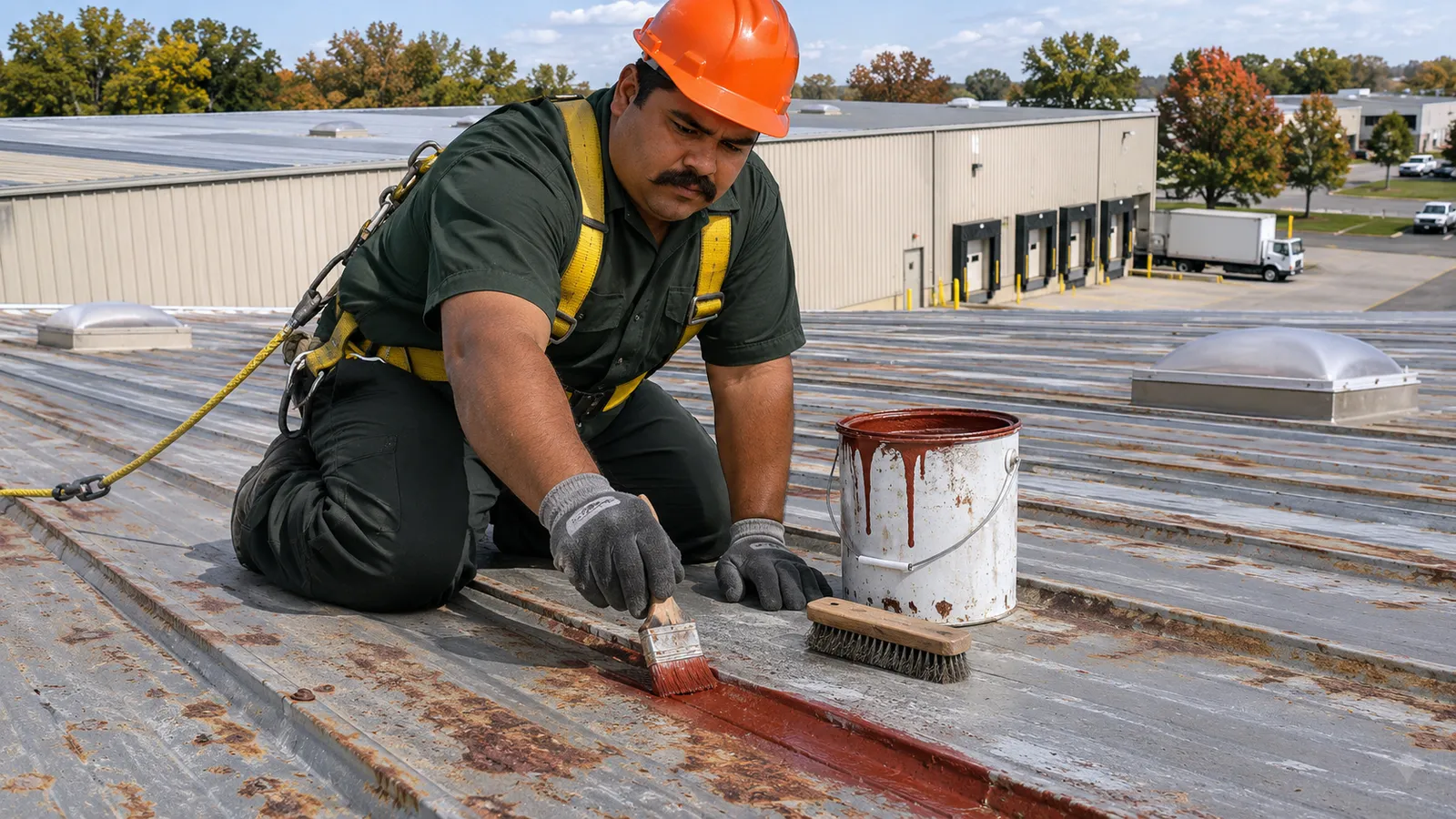
Exposed-fastener sheds get new screws, lap sealant, and a primed, coated surface checked for thickness as it goes on.
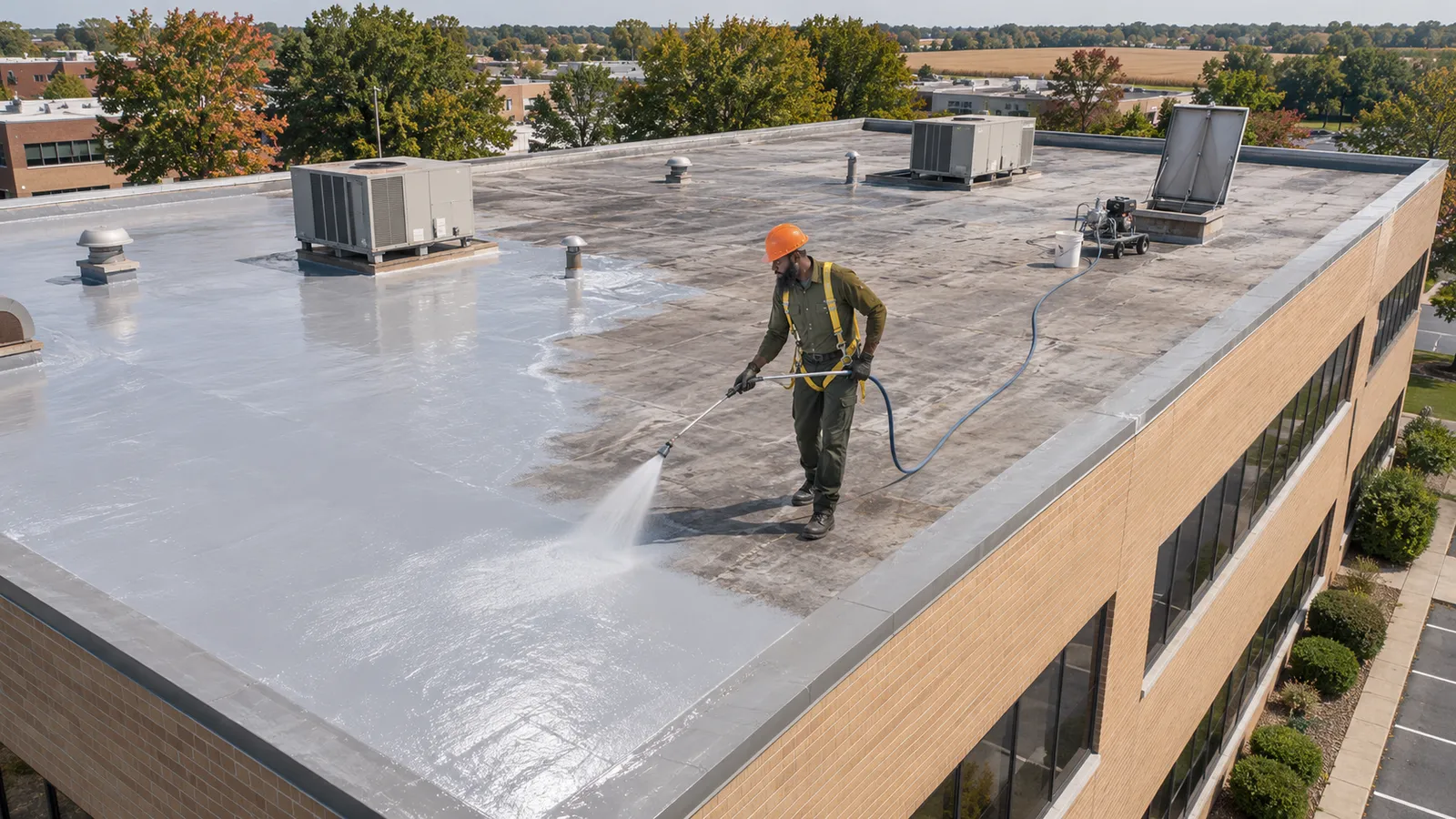
Flat lean-tos and office additions that pond after rain take silicone once the drains or gutters are cleared.
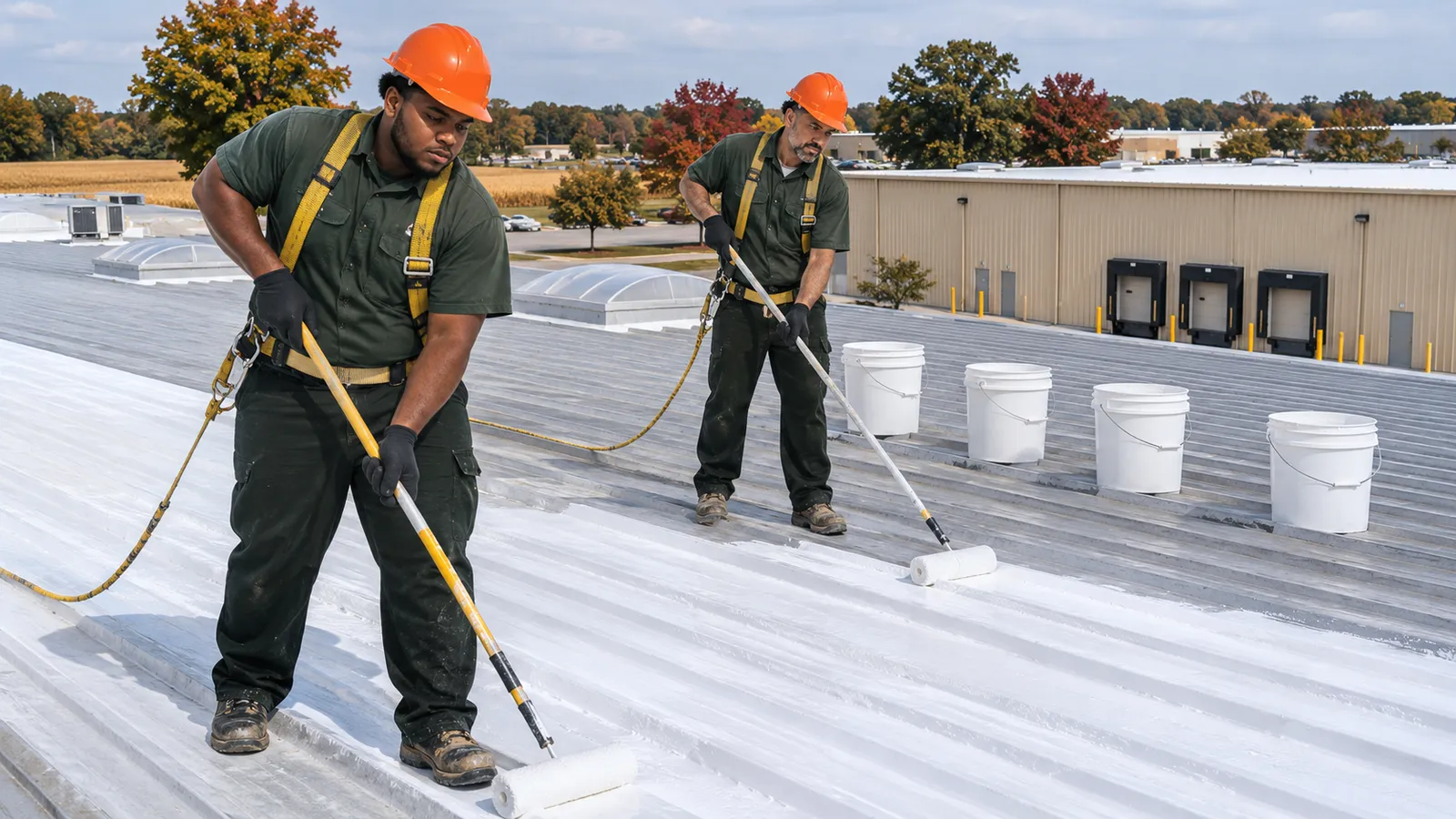
Steep, fast-draining barn roofs take two coats of acrylic, rolled or sprayed on calm, dry days.
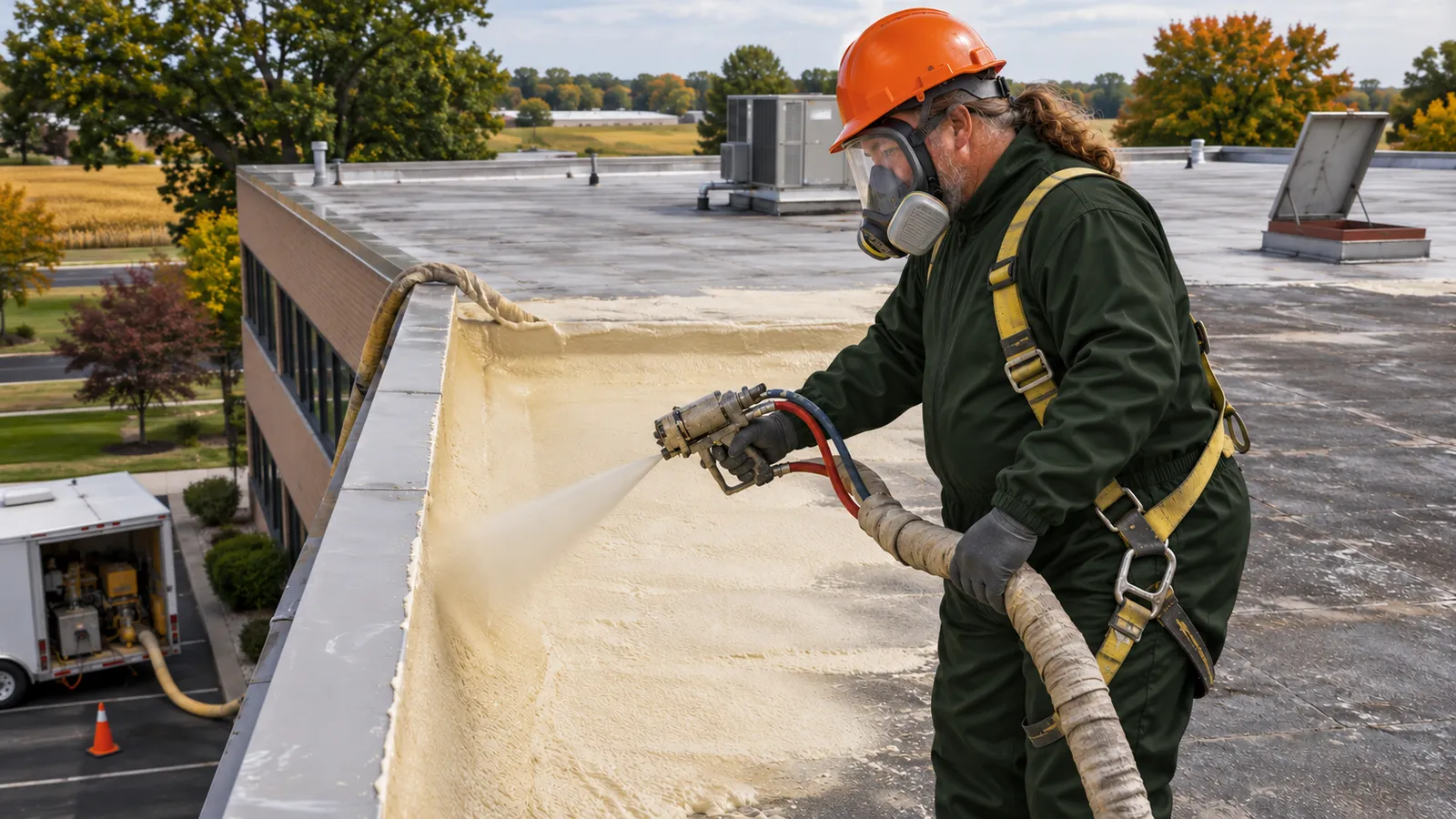
Shops heated through winter gain insulation and fewer drips from spray foam finished with a topcoat.
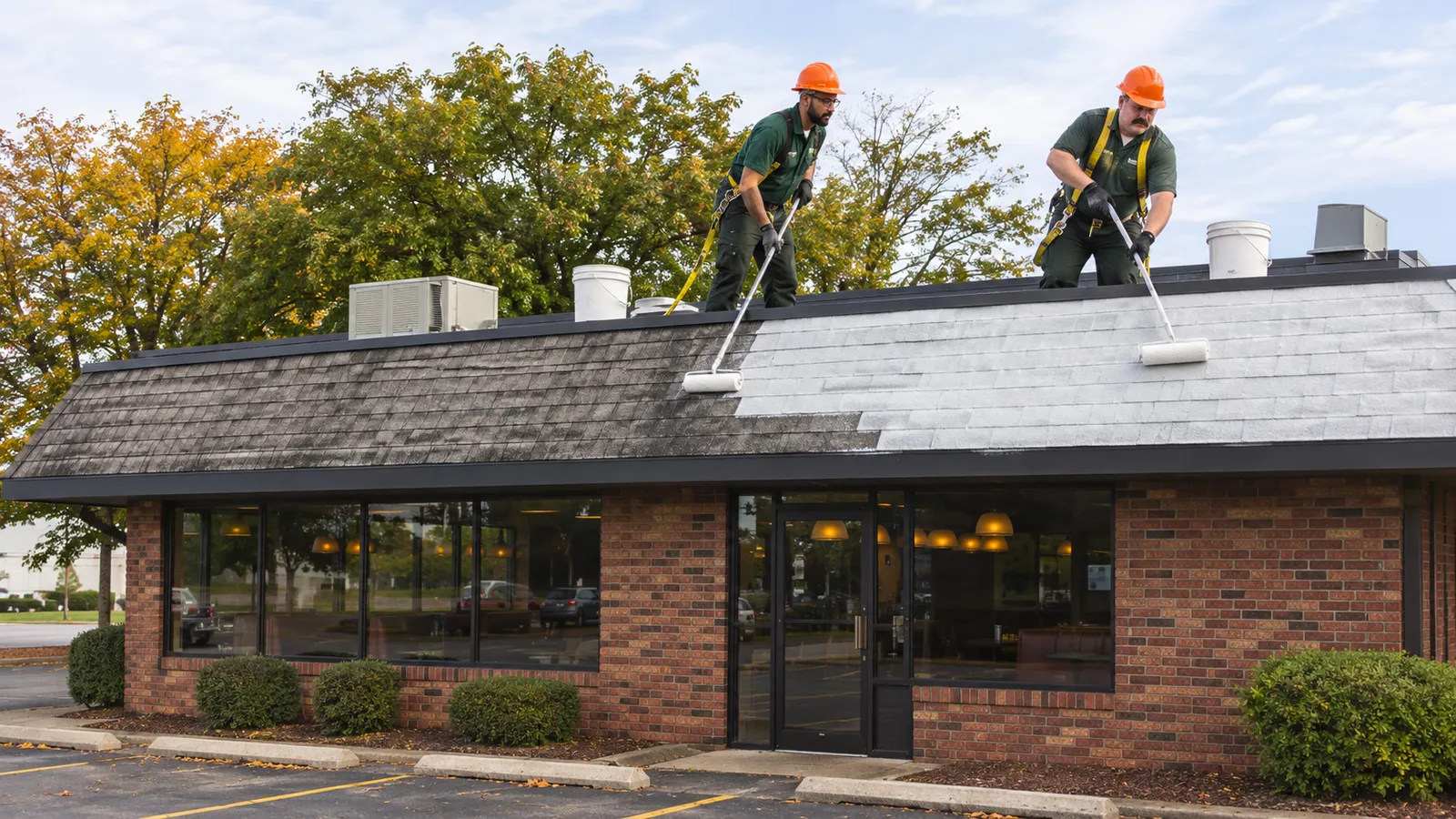
Shingled office fronts take a shingle-rated product when the tabs are flat and the flashing is tight.
We plan masking and roller work so overspray stays on the roof, and we ask what can move and what has to stay before spray day.
Get A Free Ballpark EstimateFour steps, timed to the weather.
We check every screw line, ridge, lap, and trim joint, and note what is parked or stored beside each wall.
Farm buildings get washing for dust and droppings, then primer on rusted laps and trim once the steel dries.
Failed screws are replaced with oversized ones, and ridge caps are refastened with new closures and sealant.
Calm days get spray work across the field. Breezy days or tight spots next to equipment get rollers.
Besides Plymouth, we coat commercial metal roofs in South Bend and these towns.
Outside these towns? Call us or send us a message.
Yes. Commercial, light industrial, and farm buildings in Plymouth are all roofs we coat. Exposed-fastener panels with worn washers usually need new screws and sealed laps first. We schedule spraying for low-wind days so overspray lands on the roof and stays away from nearby vehicles.
Most of the work happens on top of the roof, so animals and stored grain can usually stay in place. We keep doors and openings closed during spraying, wash only with water that drains away from feed areas, and plan with you if livestock or bins need extra separation or the work needs to fit around feeding or harvest.
We check each screw by hand and replace those that are loose, stripped, or sitting on cracked washers. On roofs that have weathered for a long time, that can be a large share of them, especially along the ridge and eaves. The count goes on the written scope so you can see exactly what is being replaced.
A coating seals the outside of the panels against rain. Condensation forms when warm, moist air inside meets cold steel, so it needs ventilation or insulation. Spray foam on top of the roof warms the panels and cuts drips, and we explain those options when the walk shows condensation rather than leaks.
Even a light breeze carries spray mist off the roof and onto trucks, equipment, or crops nearby. We check wind before and during the day, mask what sits close, and switch to rollers near anything that cannot move or whenever gusts pick up. Calm mornings usually give the best spray windows.
The steps are the same, though pole buildings often have long eave runs, sliding doors, and plenty of trim. Trim joints and door headers get extra sealant, and ridge vents are checked so they keep breathing after coating. Translucent panels are left uncoated and resealed at their edges.
Tell us about the building and what sits beside it. We will plan the screw work, the masking, and the spray days.