Coat The Shingles
- Shingle Shape
- Flat, sealed, and attached
- Granules
- Some loss, no bare mat
- Deck
- Solid underfoot
- Flashing
- Repaired before coating
- Material
- Shingle-rated coating only

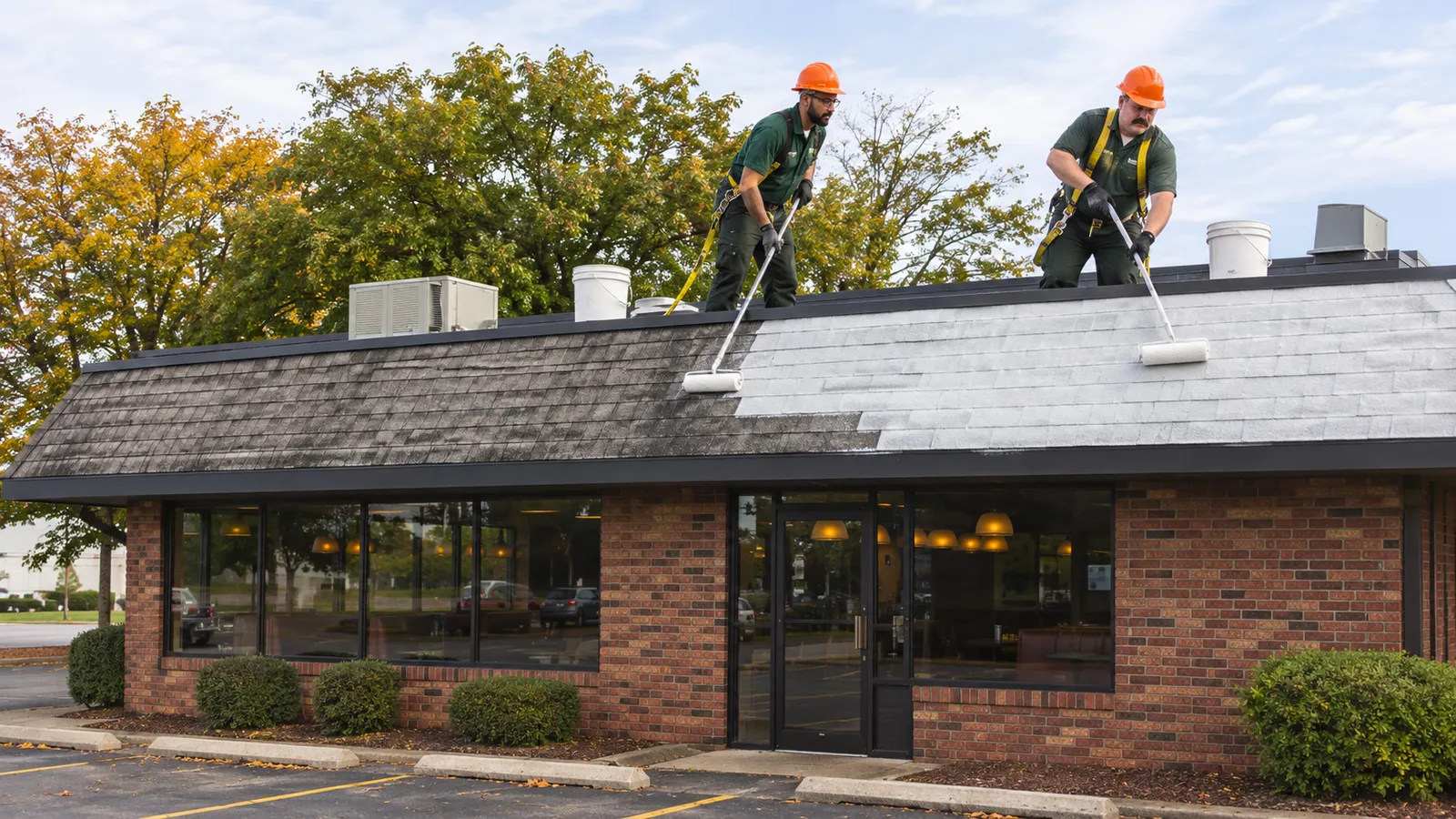
South Bend shingle roof coating is for commercial shingle roofs that are aged but still flat and attached, on offices, churches, and storefronts.
South Bend shingle roof coating works on a narrow set of roofs. If the shingles are past saving, a new roof is the honest call.
Shingle coating has a strict gate. These checks decide whether we coat or recommend new shingles.
Shingles need a product made for them, one that soaks in and lets the roof breathe. Thick metal-roof coatings trap moisture under shingles, so we keep those products off every shingle slope we work on.
WatchSteep pitches, tall walls, and steeples call for lifts, anchors, and fall protection. Valleys and steeple flashing get repaired before any coating, and work is timed around services.
Repair FirstStains along an inside wall usually trace to step or counter flashing where the roof meets brick or siding. That metal is reset or replaced before coating, since a coat on top will not close the gap.
Call NowSome granule loss is normal on aged shingles. Large drifts in the downspouts, or black asphalt showing through on the slopes, mean the shingles are wearing through and coating has come too late.
WatchShingle coating sits apart from the other four systems. Here is how they compare.
| System | Where It Fits | What To Know |
|---|---|---|
| Shingle Roof Coating | Aged but flat asphalt shingles | Penetrating, breathable product |
| Metal Roof Coating | Steel panel roofs | Thick film, not for shingles |
| Silicone Roof Coating | Flat roofs with ponding | Kept off shingle sections |
| Acrylic Roof Coating | Sloped metal panels | Different product family |
| Spray Foam Roofing | Metal and flat roofs needing insulation | Never sprayed over shingles |
What a shingle coating changes, and what stays the same.
Sun and cold have dried out the asphalt, and the tabs crack when anyone walks on them to service the roof.
Each storm sends more granules into the gutters and downspouts, leaving thin spots where the asphalt shows.
Patches and weathering leave the roof looking blotchy from the street and the parking lot.
The coating soaks into the asphalt and brings back some give to the tabs, so they crack less underfoot.
Granules hold on longer once the asphalt binding them is refreshed by the coating.
Flashing, valleys, and damaged shingles were fixed first, so the coating sits on a roof that already sheds water.
We check whether coating still makes sense or whether new shingles are the better spend, and we show you photos of what decided it.
Get A Free Ballpark EstimateFour steps, with an honest stop point after the first.
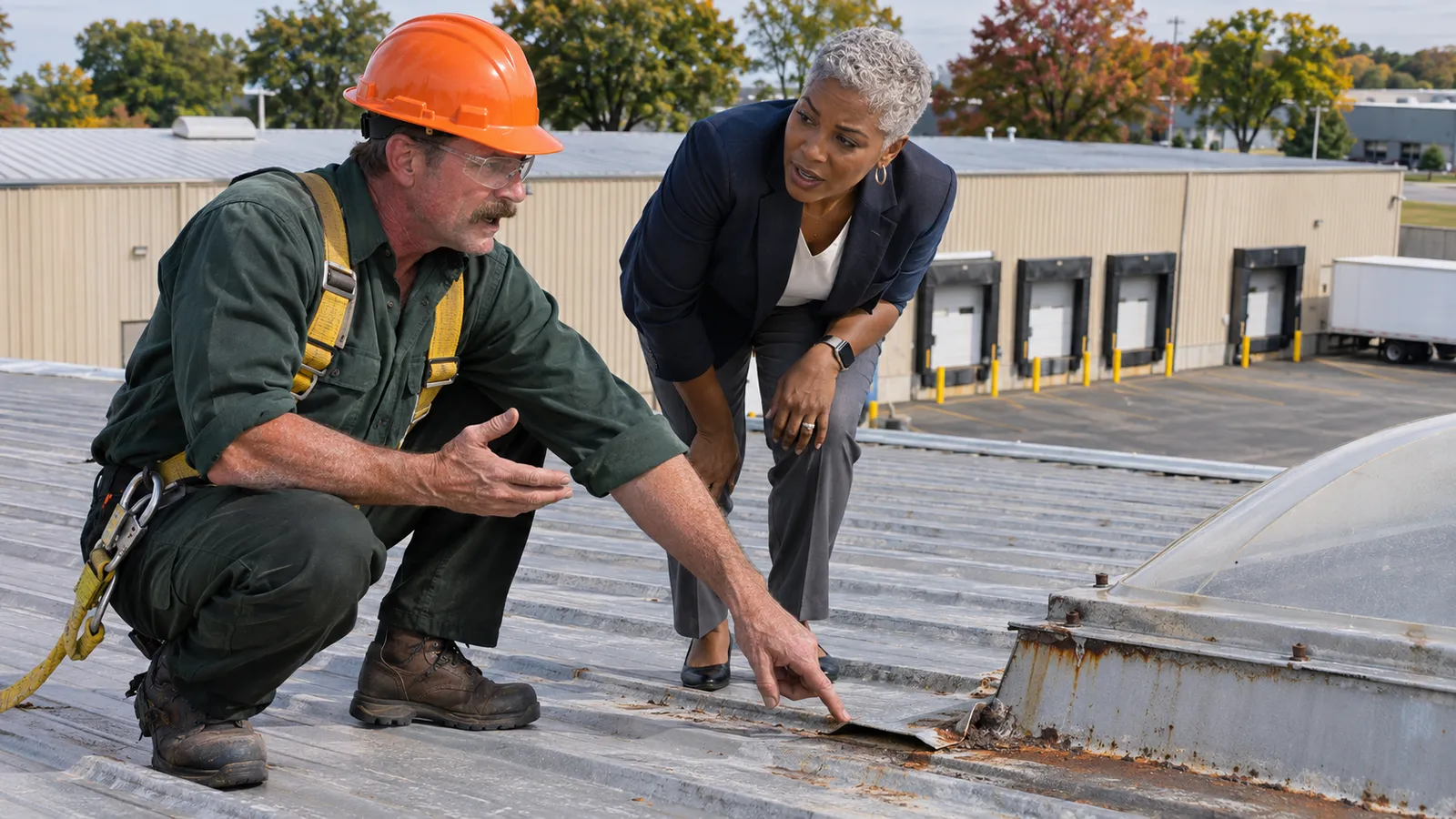
We check shingle shape, granule loss, the deck underfoot, and every valley, wall flashing, and pipe boot before saying yes to coating.
Step and counter flashing, pipe boots, and cracked or missing shingles are fixed so the coating goes over a roof that already sheds water.
Leaves, moss, and loose granules are cleared with low-pressure washing and blowers, and gutters are emptied so the roof drains on coating day.
The product goes on at the maker’s coverage rate, on a dry day within its temperature range, working down the slope from the ridge.
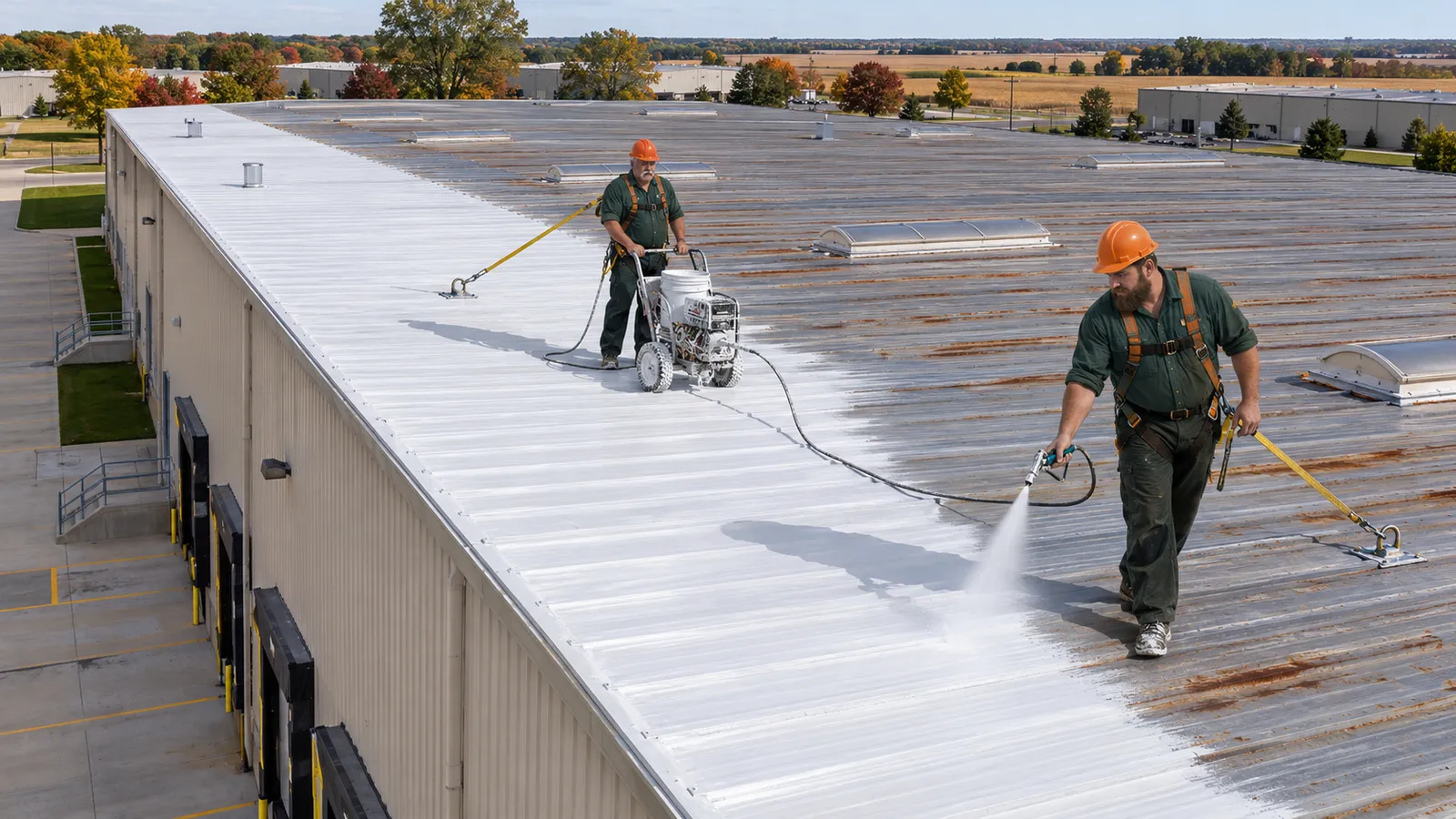
Many shingle buildings have metal or flat sections too. These four cover those.
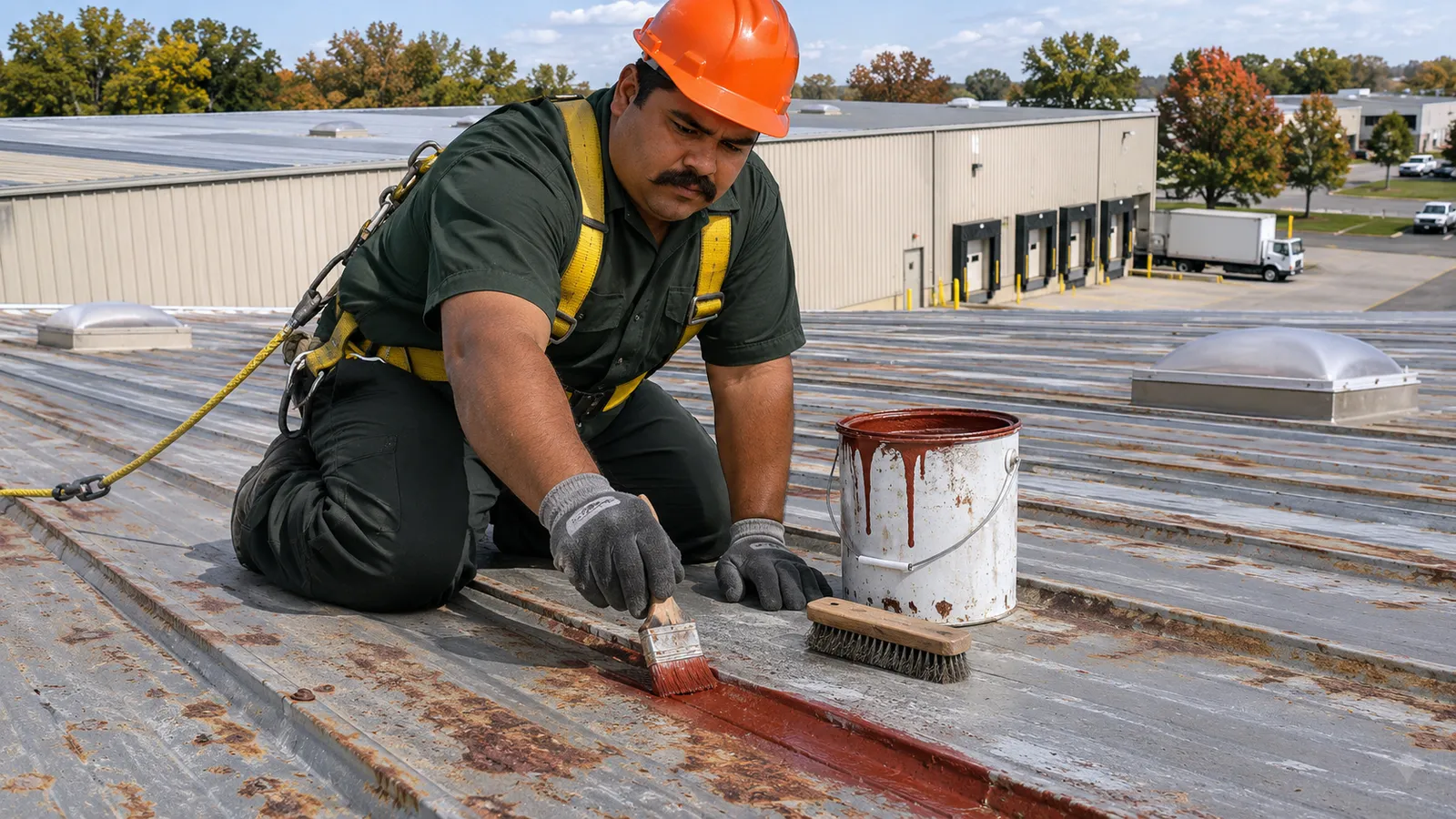
Screws, laps, and rust fixed before the field coat.
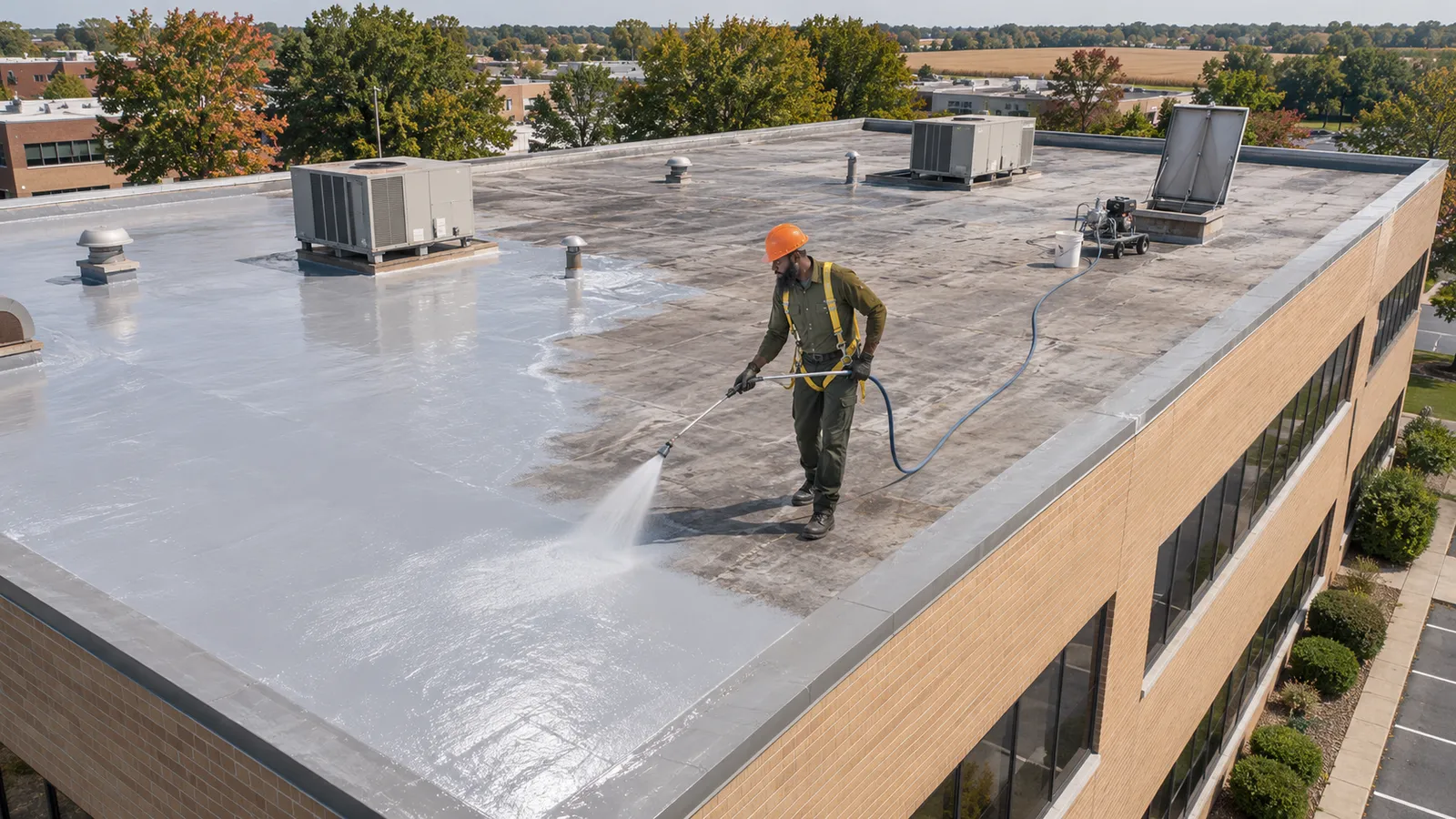
Low-slope roofs where water sits near drains.
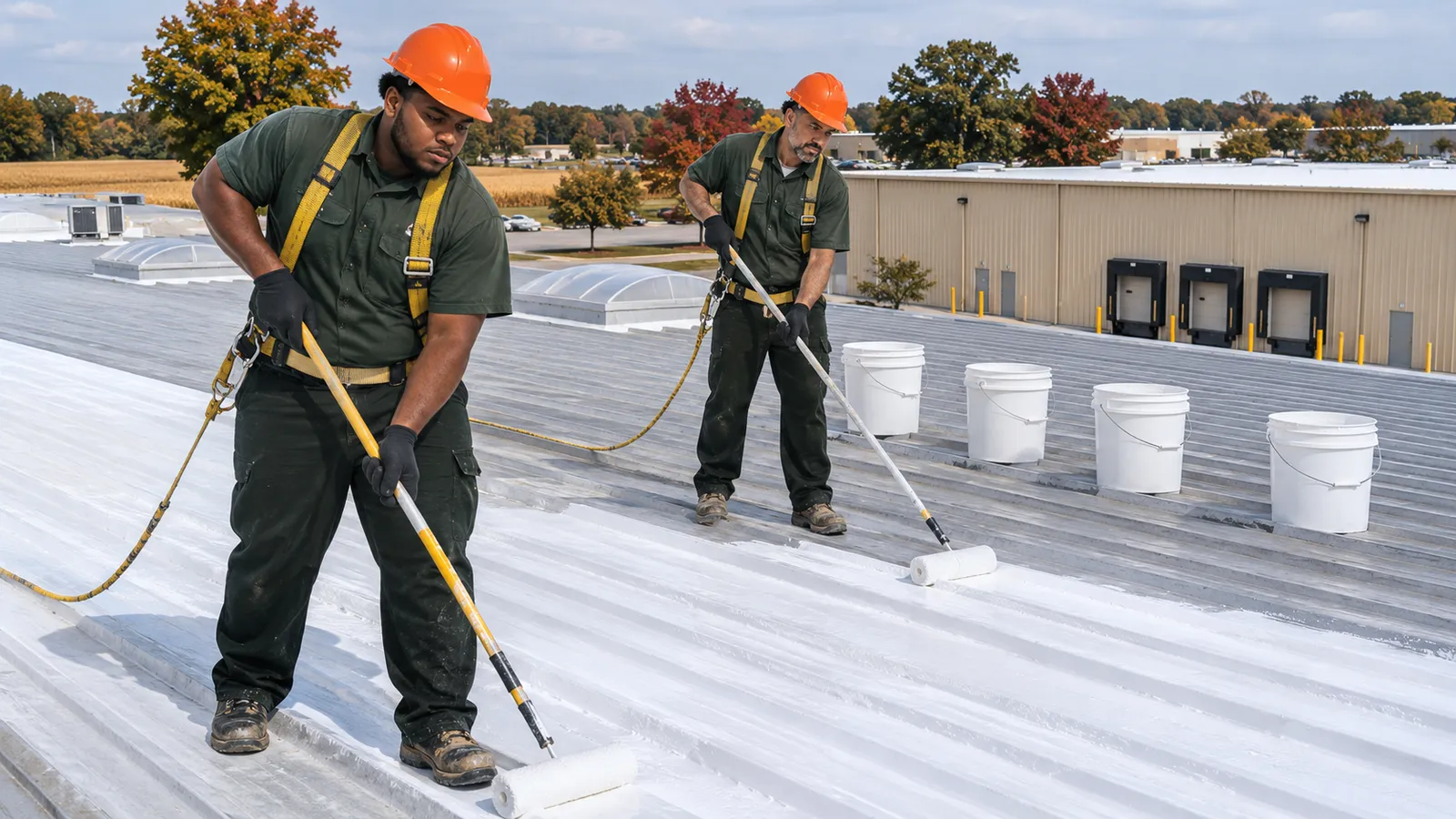
Pitched panels that drain fast, coated twice.
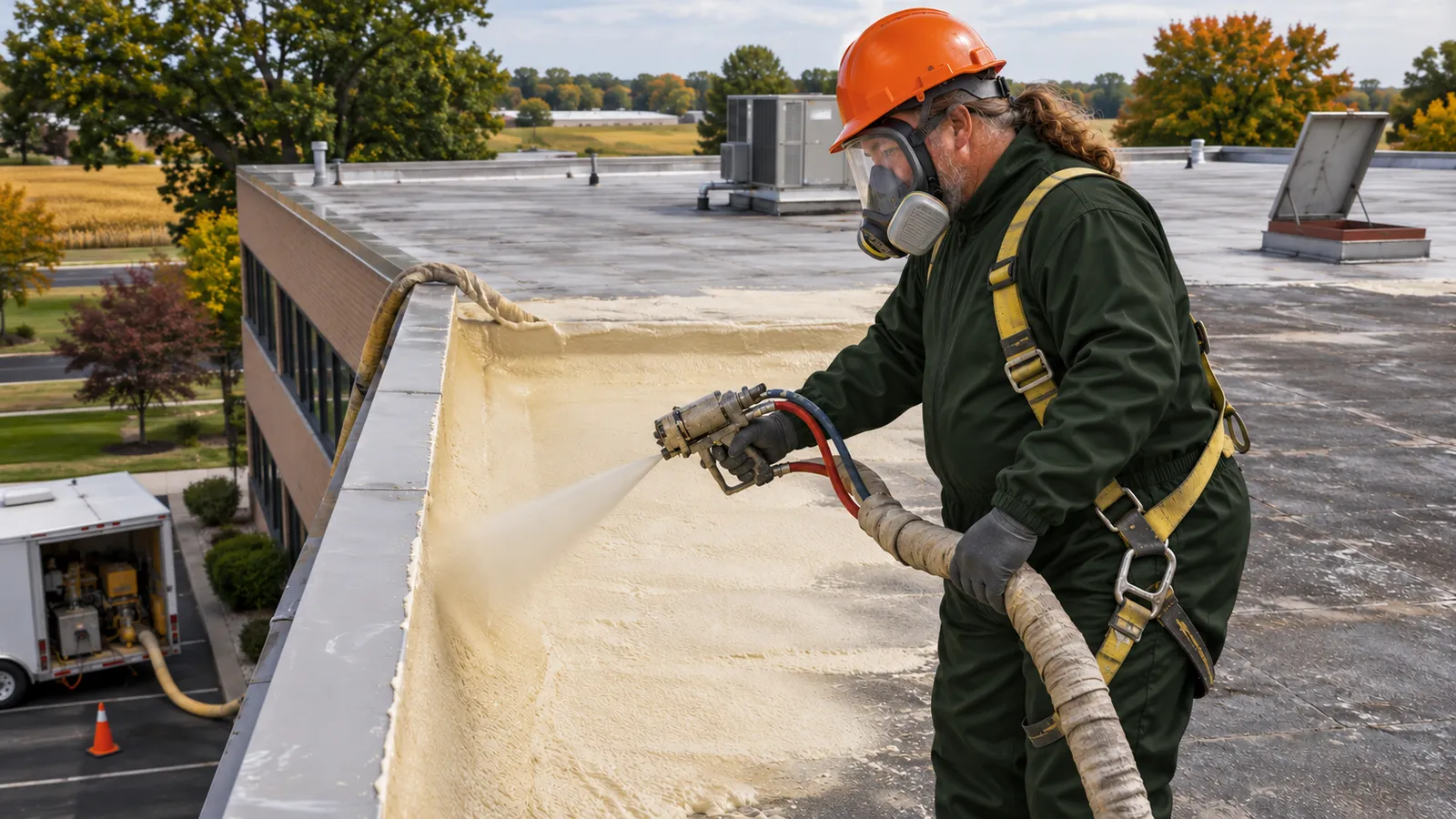
Foam over old metal adds insulation and fills ribs.
Shingles take coatings designed for them, which soak into the asphalt and let the roof breathe. The thick elastomeric coatings used on metal and flat roofs are kept off shingles because they can trap moisture. We follow the shingle coating maker’s instructions for cleaning, temperature, and coverage on every job.
It helps shingles that are old but still lying flat and nailed down. The coating brings back some flexibility and slows granule loss. It will not stop leaks from bad flashing, reattach loose tabs, or rebuild shingles that are worn out. Flashing and damaged shingles are fixed before any coating.
Yes, when the shingles are flat and the deck is solid. Church roofs tend to be steep, with tall walls and steeples, so safety and lift access are planned first. Valleys, wall and steeple flashing, and gutters cause most church leaks, and we repair those before the coating goes on.
Yes, using a coating made for asphalt shingles, and only on a roof worth keeping. The shingles need to be flat, sealed, and attached, with a solid deck below. Curled, missing, or brittle shingles across the roof point to replacement instead. We inspect first and tell you which way it goes.
Reshingling wins when shingles are curling, cracking, or missing across large areas, when bare mat shows, or when the deck is soft. Coating cannot reshape or reattach a failing shingle, so money spent on it would only delay the tear-off. We show you photos of what we find either way.
Most shingle coatings are clear or lightly tinted and soak into the asphalt, so the roof darkens and evens out instead of turning a new color. Faded patches and repairs blend in better afterward. On a roof visible from a busy street, we can coat a small test area on a back slope so you can see it first.
Tell us about the building and how the shingles look. We will tell you plainly whether coating or new shingles makes more sense.