Spray Foam Plus Topcoat
- Surface
- Fills ribs into one flat surface
- Insulation
- Adds insulation above the deck
- Drainage
- Can be built up to move water
- Application Needs
- Dry, frost-free surface, calm air
- Long-Term Care
- Topcoat renewed over time

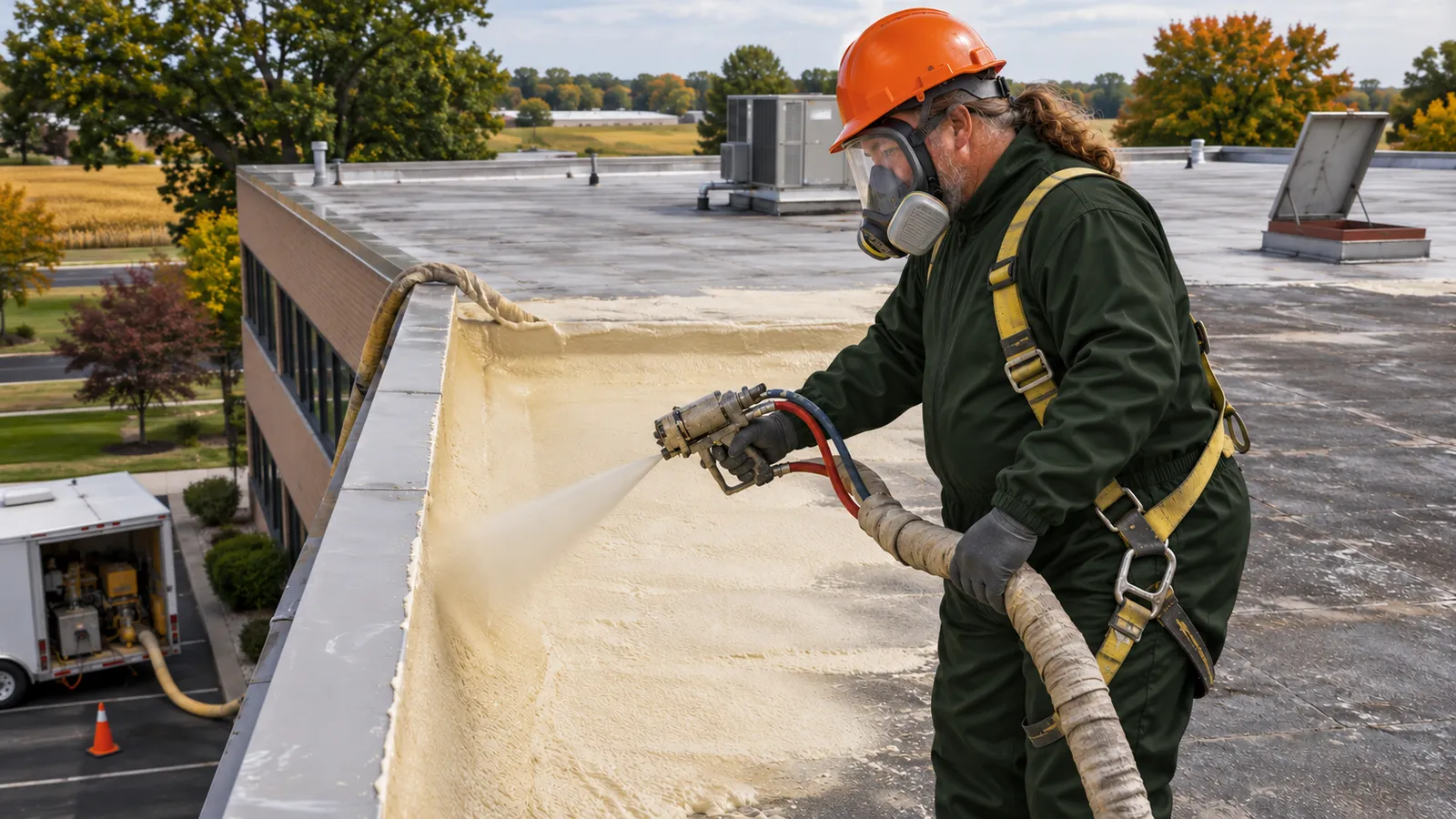
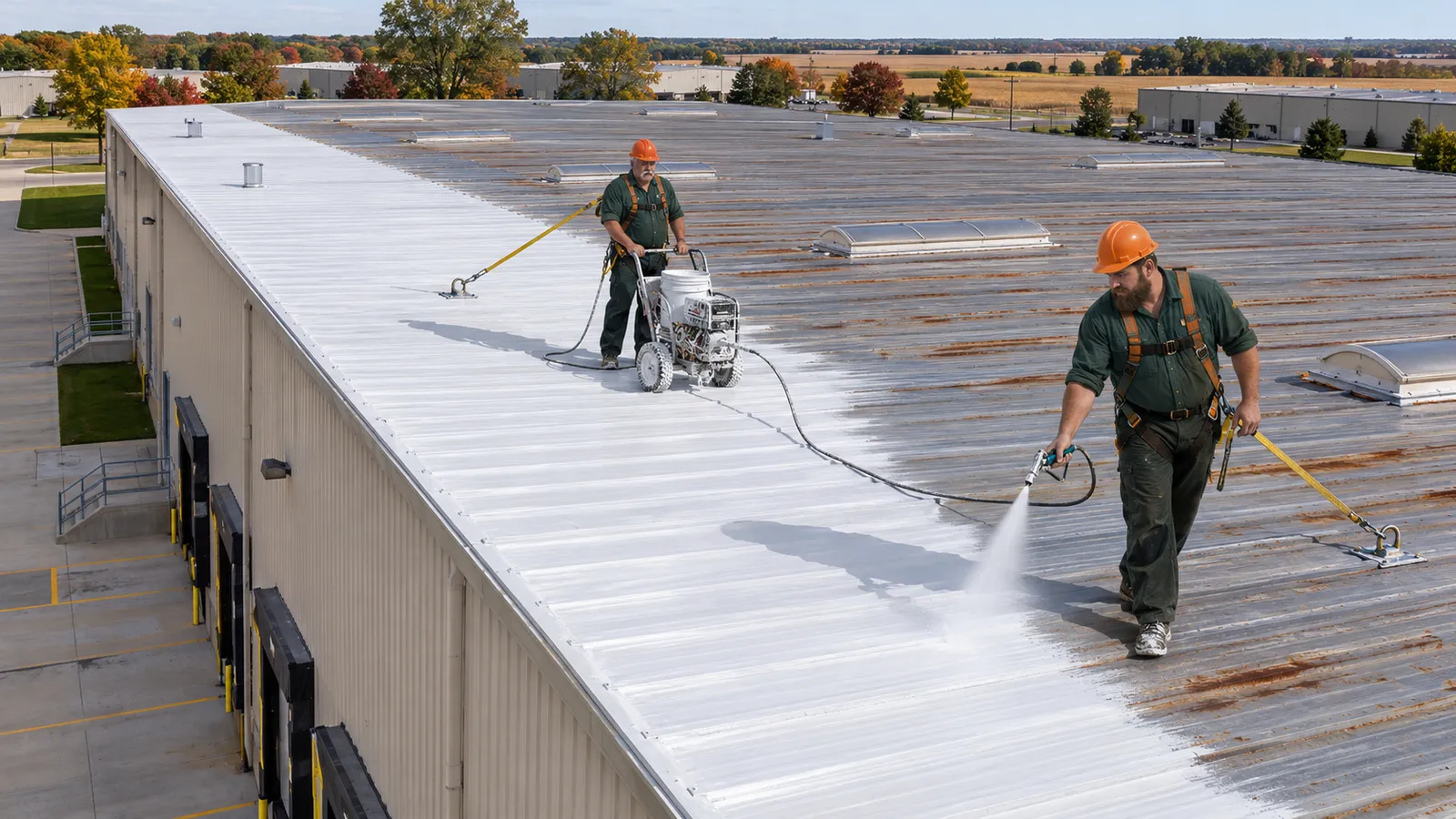
South Bend spray foam roofing adds a continuous, insulating layer over old metal and flat roofs, finished with a coating that blocks sunlight.
South Bend spray foam roofing earns its place when the building needs insulation or slope. A coating alone fits roofs that only need a new surface.
Foam bonds to whatever it touches, good or bad. These are the conditions we settle first.
Loose screws and lifting laps are fixed and the steel is primed. Foam then fills the ribs and locks the panels into one surface.
Repair FirstDrips under a metal roof on cold mornings are often condensation. Foam on top raises the panel temperature, which helps more than a thin coat would.
WatchFoam over wet board traps the water and the roof rots from inside. Wet sections found with moisture readings are cut out and replaced so the foam bonds to dry material.
Call NowOverspray drifts in wind. We cover rooftop units, mask nearby surfaces, and plan where vehicles park on spray days.
WatchFoam is one of five systems. Here is where each fits on South Bend commercial roofs.
| System | Where It Fits | What To Know |
|---|---|---|
| Spray Foam Roofing | Metal or flat roofs needing insulation | Foam layer plus topcoat |
| Metal Roof Coating | Panels that only need a new surface | Follows the rib profile |
| Silicone Roof Coating | Ponding-prone low-slope roofs | Also a common foam topcoat |
| Acrylic Roof Coating | Sloped panels with fast runoff | Lower-cost topcoat option |
| Shingle Roof Coating | Asphalt shingle roofs | Separate shingle-rated product |
Here is what foam changes on an older metal or flat roof.
Thin or missing insulation lets winter heat out through the panels, and the heating system runs longer to keep up.
Every side lap, end lap, and screw is a separate place for water to get in, and each one ages on its own.
Warm indoor air meets cold steel on winter mornings and drips onto the floor, racks, and equipment below.
Foam adds R-value on top of the roof, with no work inside the building.
The foam layer bridges every joint and screw head into a single roof.
With foam on top, the panels stay warmer and drip less on cold mornings.
Foam adds insulation from the outside while the building stays in use. Nothing is torn off, and the heated space below stays open through the work.
Get A Free Ballpark EstimateFoam work starts days before the rig shows up.

We map wet areas, loose panels, rooftop units, and drains with moisture readings and a full walk, then plan how thick the foam needs to be in each area.
Rooftop units, intakes, and roof edges are covered. Vehicles are moved away from the downwind walls on spray days, and neighbors are told when spraying starts.
Foam goes on in layers to the planned thickness, filling the ribs and building gentle slope toward drains where water used to sit.
A silicone or acrylic topcoat goes on within days so sunlight never sits on bare foam, and the thickness is checked as it is applied.
Foam needs a topcoat and good neighbors on the roof. Here are the other systems we apply.
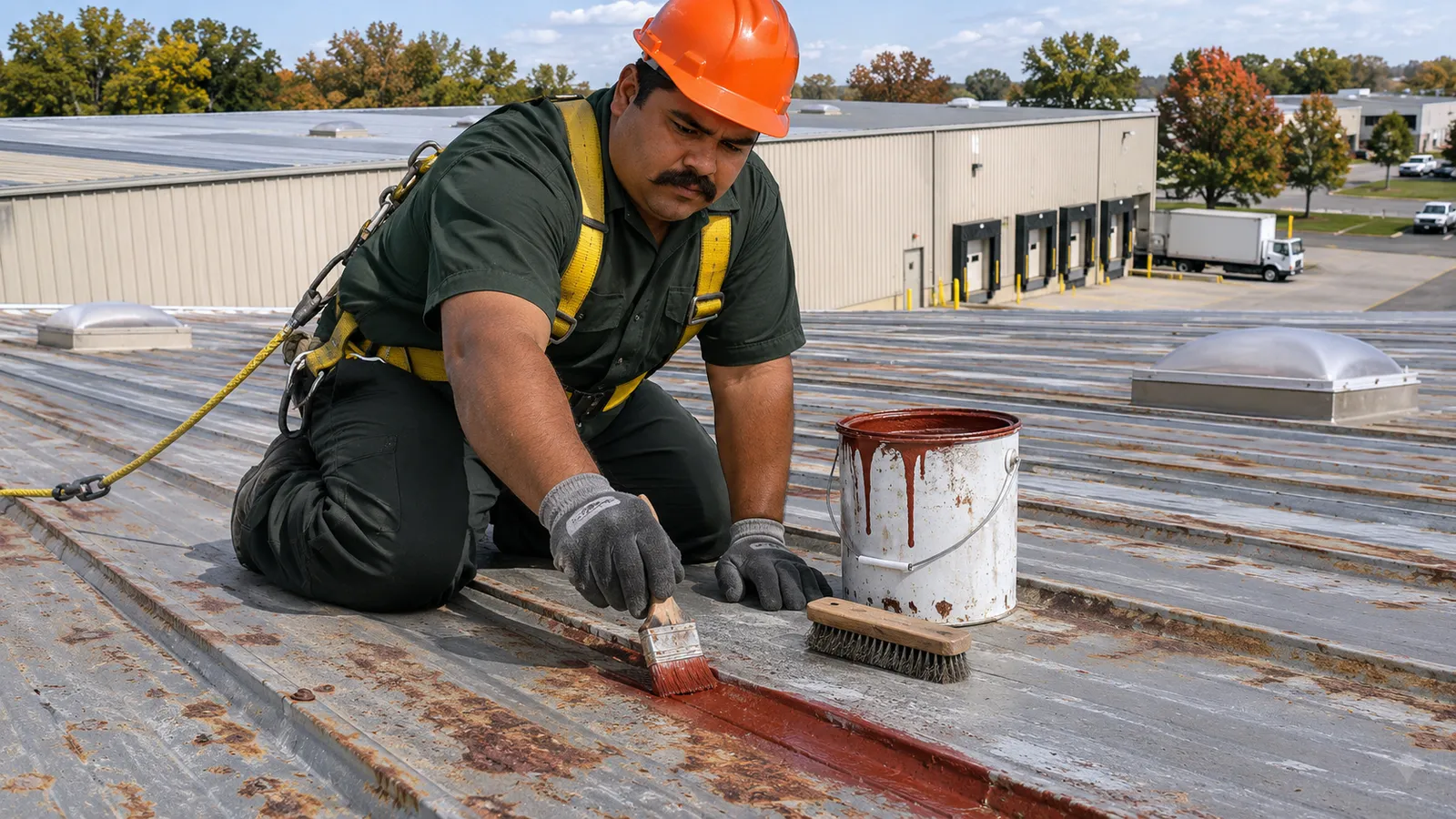
Screws, laps, and rust fixed before the field coat.
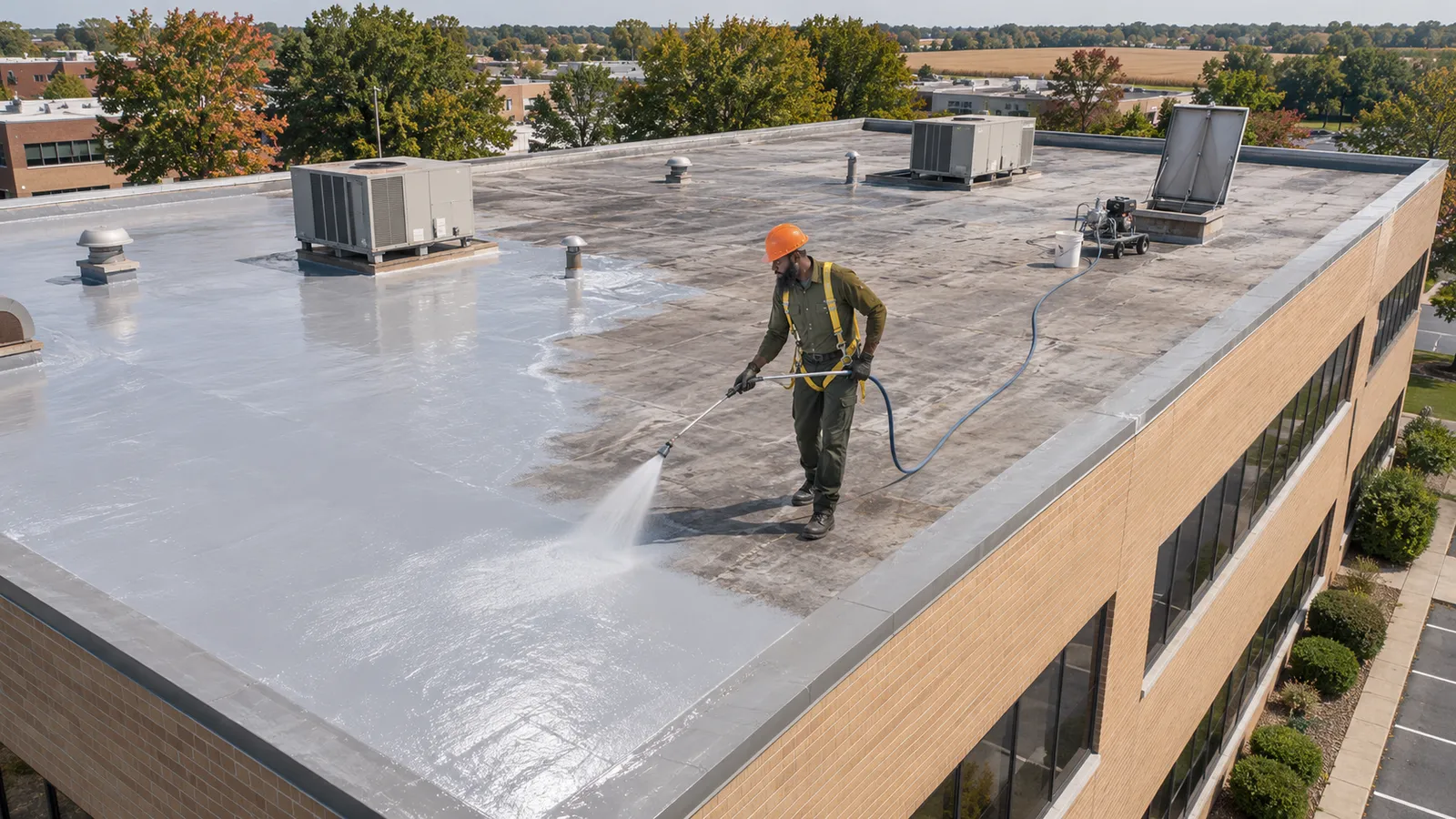
Low-slope roofs where water sits near drains.
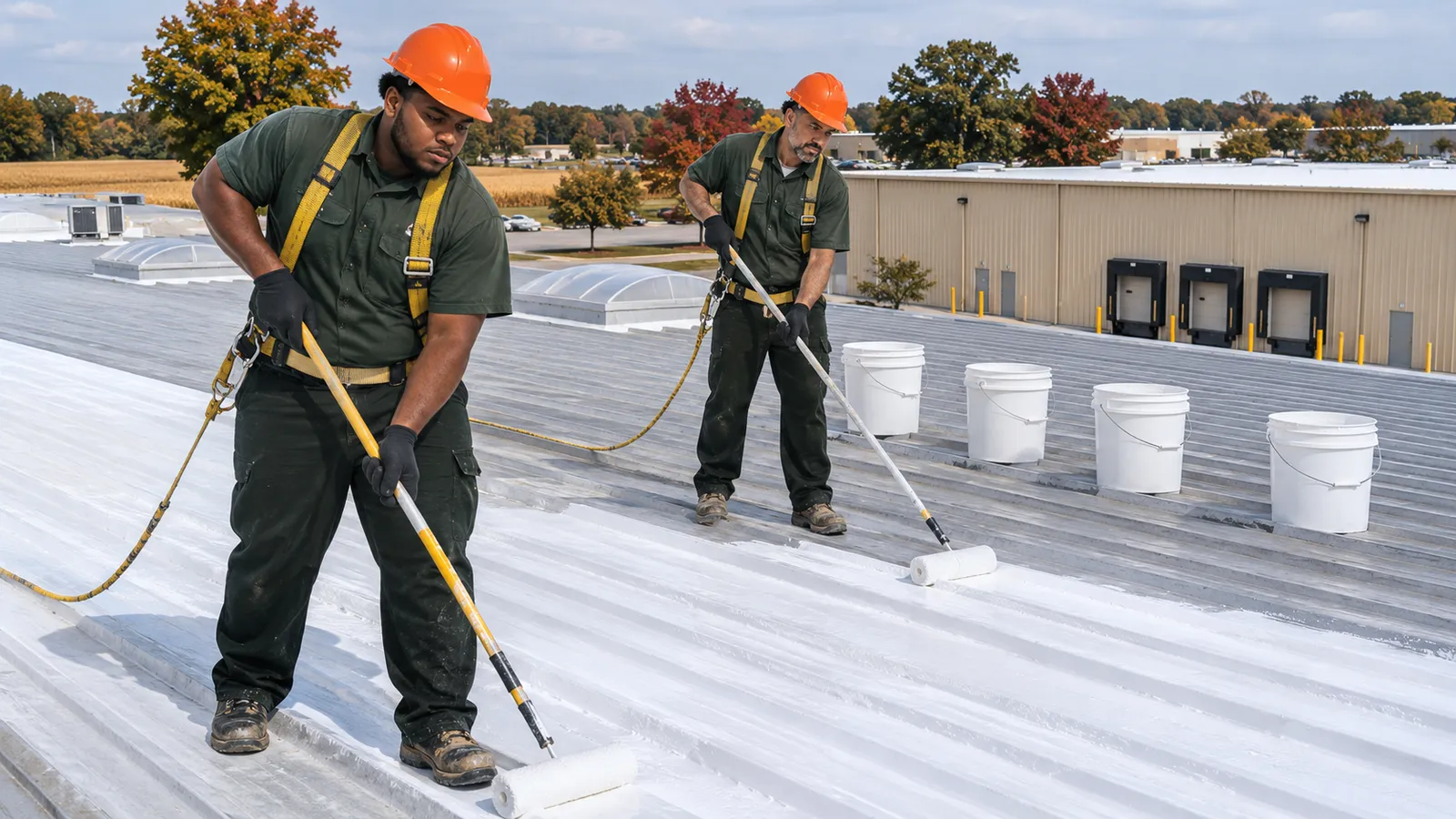
Pitched panels that drain fast, coated twice.
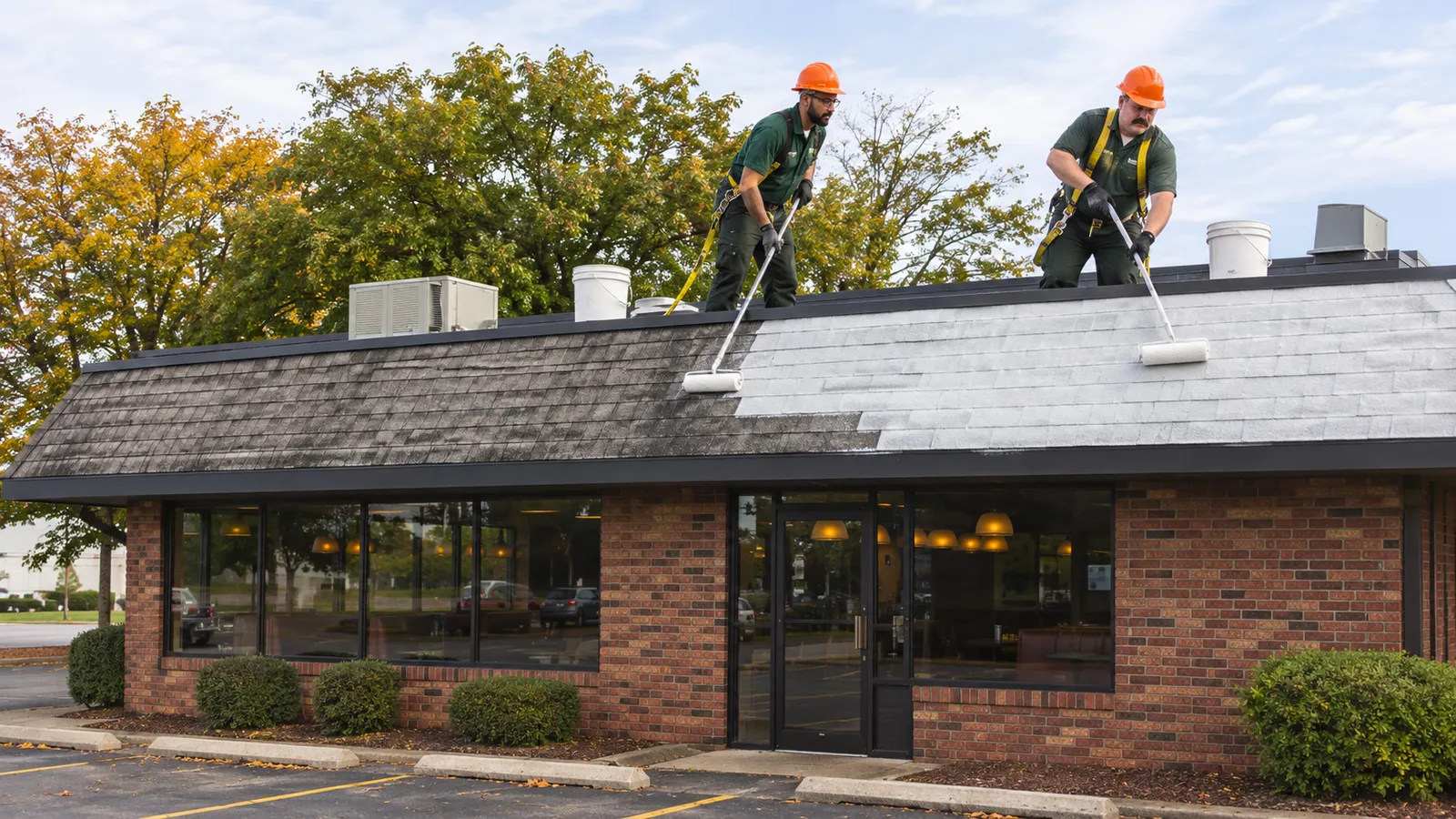
Aged but flat shingles on offices and churches.
Foam needs a dry, frost-free surface, which trims the working season in a snowy area. The topcoat has to be renewed from time to time or sunlight breaks the foam down. Hail and foot traffic can bruise the surface, and those spots should be patched quickly. Overspray also has to be controlled near cars and neighbors.
Yes. Once the panels are cleaned and primed and loose screws are fixed, foam is sprayed across the whole roof, filling the ribs into one continuous surface. A silicone or acrylic topcoat shields it from sunlight. The steel stays in place, so the building keeps operating and gains insulation above the deck.
Yes. Polyurethane foam adds insulation on top of the deck and closes air leaks at the panel laps. That cuts heat loss through the roof and reduces condensation on the underside of the metal. How much it helps depends on the foam thickness and the insulation the building already has.
Our published ranges run about $2.50 to $4.00 per square foot for coating work and about $5 to $8 for replacement. Foam pricing is set once we inspect, based on thickness, topcoat, removal of wet materials, slope building, and overspray protection. Roofs crowded with vents and units take more detail work.
The interval depends on the topcoat type and its thickness, so we read the maker’s data sheet and inspect yearly. Signs it is time include worn spots showing tan foam, chalking, and hail bruises. Catching thin areas early keeps the foam itself out of the sun.
Spray foam is light for the insulation it adds, a small fraction of the weight of new panels or a ballasted membrane. Slope built up with foam adds more where it is thickest. For older buildings, or ones where the framing looks undersized, we ask for an engineer to confirm the load before the job is set.
Tell us about the roof and the building below it. We will plan foam thickness, the topcoat, and how overspray is kept on the roof.