Eave Ice Damage On Metal Roofs
Ice dams push meltwater back under the end laps and bend thin eave trim. The lowest panels on each run often rust first, and the drips land on doors below.
Repair First
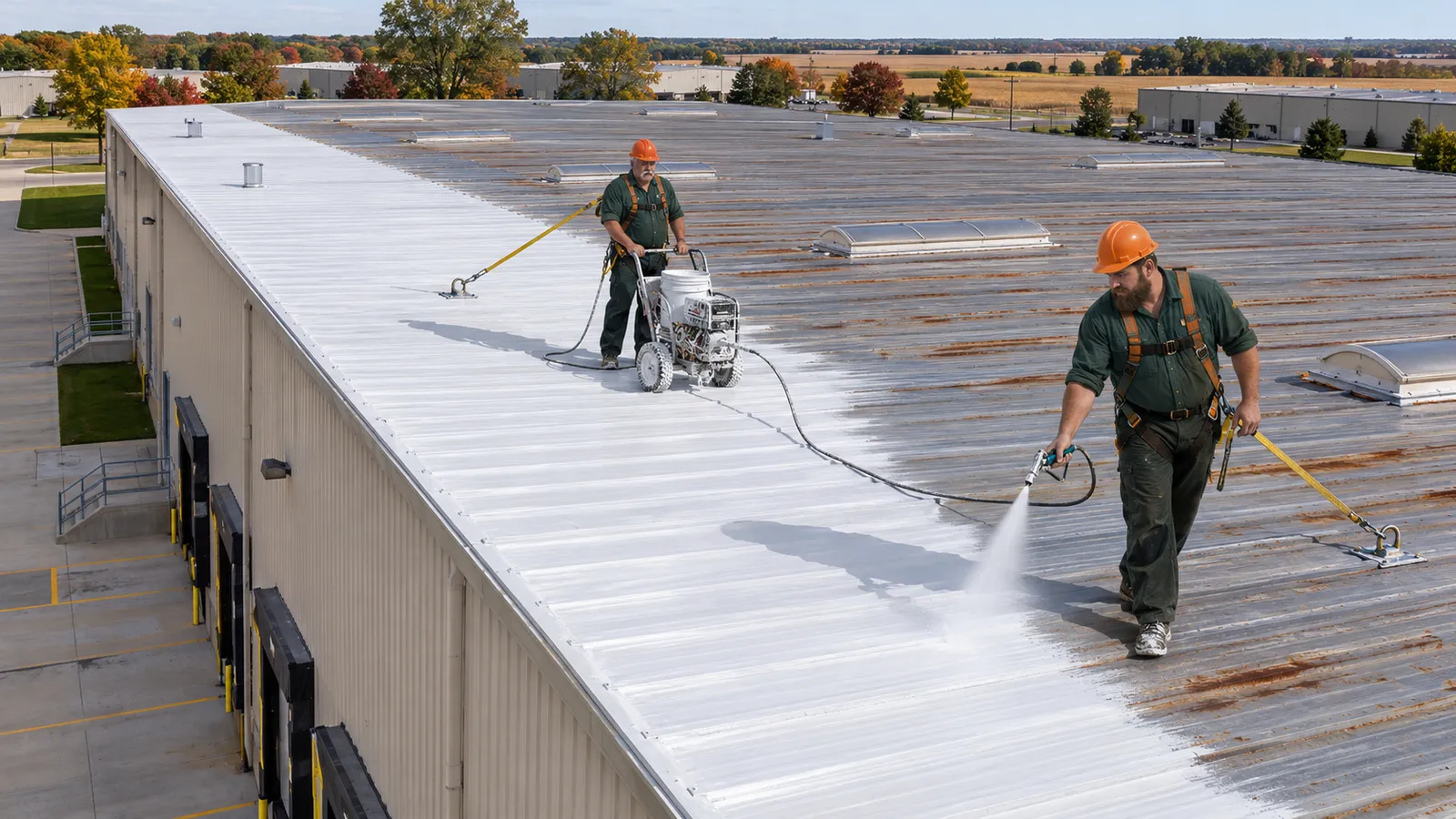
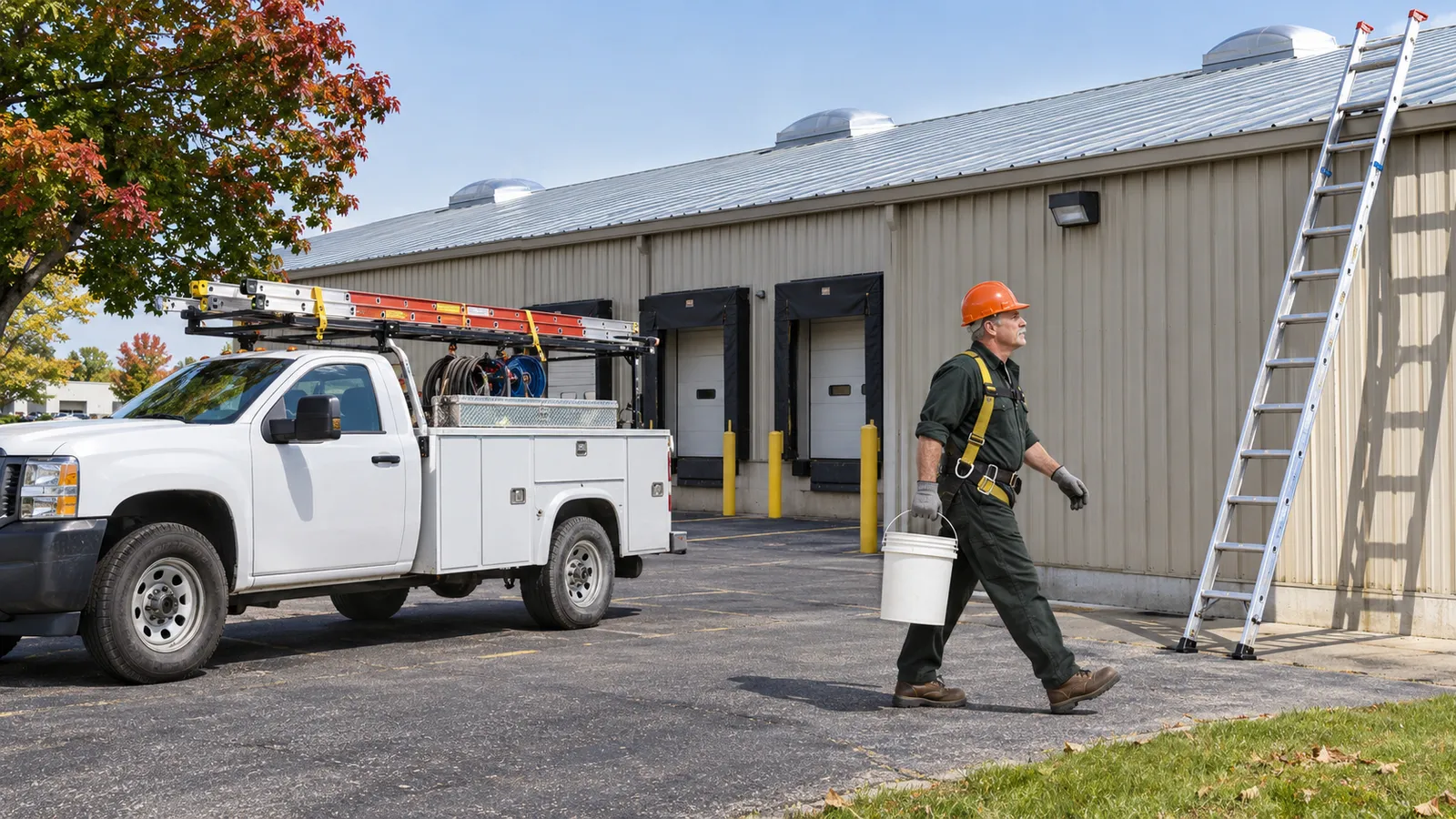
Winfield metal roof coating for storage and commercial buildings starts at the eaves, where snow and ice sit longest.
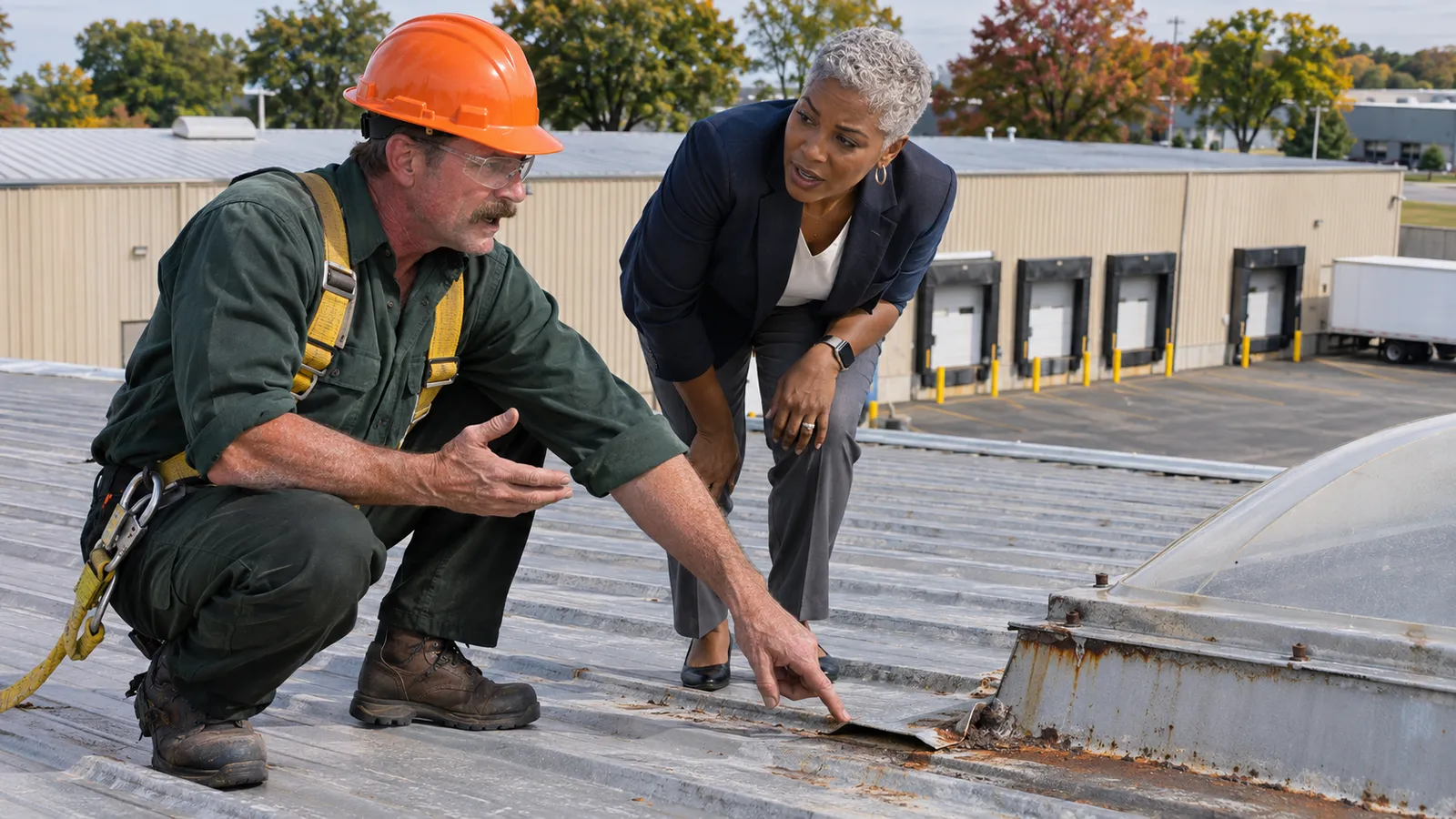
Winfield metal roof coating usually starts at the bottom edge of the roof. Snow slides down and stops at the eave, and ice holds meltwater against the end laps and screws there all winter.
We open up the eave trim where needed, treat rust at the gutter line, and seal the lowest laps before the field coat. Storage rows often have dozens of doors along the eave, so the crew stages lifts at row ends to keep every door usable.
Winter takes its toll at the low edge of the roof first. These four conditions come up most.
Ice dams push meltwater back under the end laps and bend thin eave trim. The lowest panels on each run often rust first, and the drips land on doors below.
Repair FirstGutters hold water and debris and rust from the inside out. They are cleaned and treated, or replaced when rusted through, before any coating starts.
Repair FirstSnow guards fastened through the panels can leak at each screw as sliding snow pulls on them. Their fasteners are checked, replaced, and sealed.
WatchOverhead doors under the eave catch every drip from the roof above. Leaks there are traced back up the slope to the lap or screw letting water in.
Call NowHere is what changes along the eaves and across the roof.
Meltwater held by ice has rusted the bottom of every panel run, and the rust is creeping up the ribs a little more each spring.
Gutter joints have opened, so water runs down the wall and freezes on the pavement.
The bottom screw row takes the most movement and water, and its washers fail first.
The low edge is primed, sealed, and coated thicker where ice sits each winter.
Cleaned, treated, or replaced gutters carry meltwater off the roof and away from doors.
New screws and washers hold the lowest laps closed through freeze and thaw.
Here is how each system fits Winfield storage and commercial buildings.
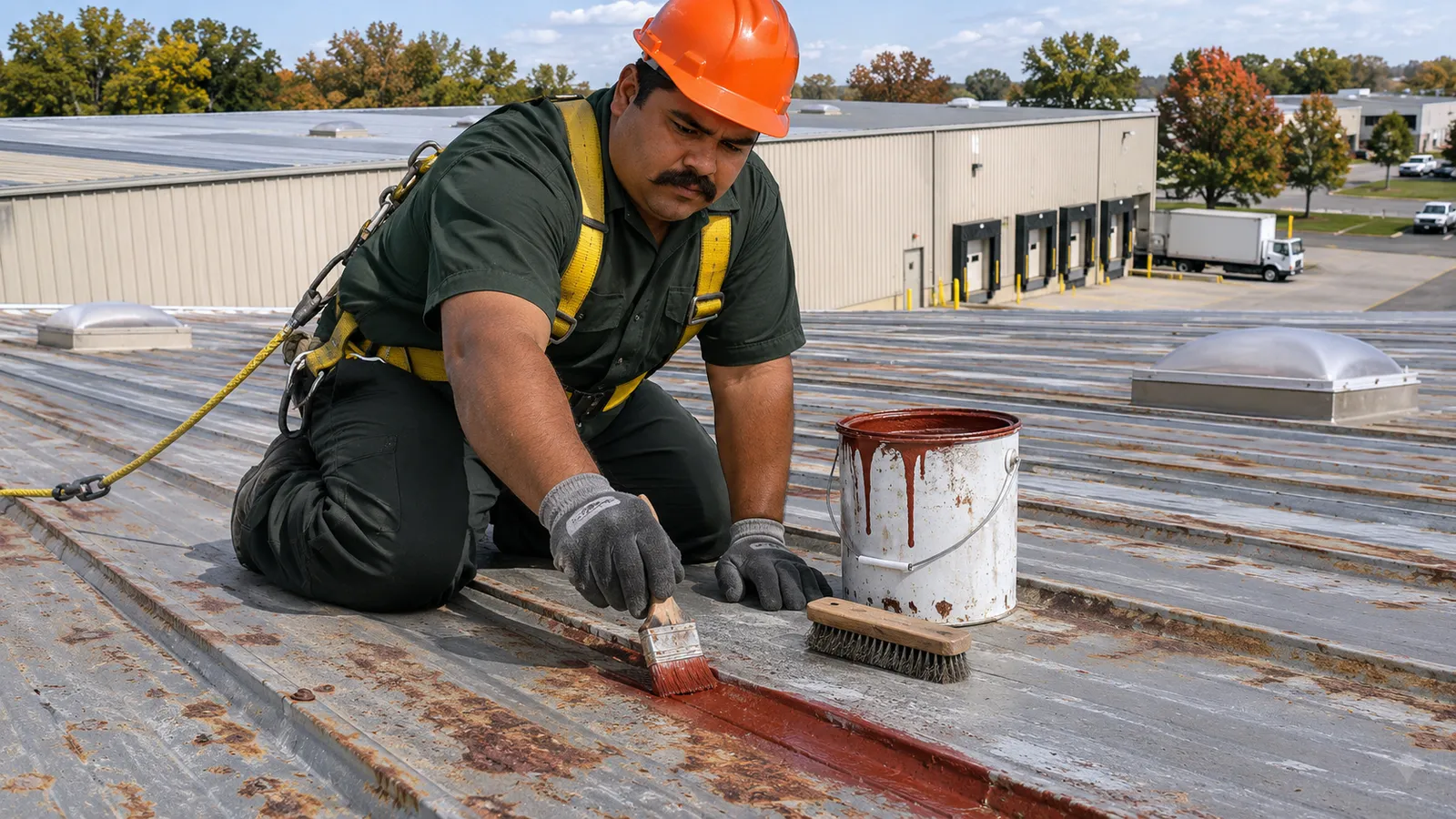
Rows of storage buildings get eave prep, screw replacement, and a coated field, one building at a time.
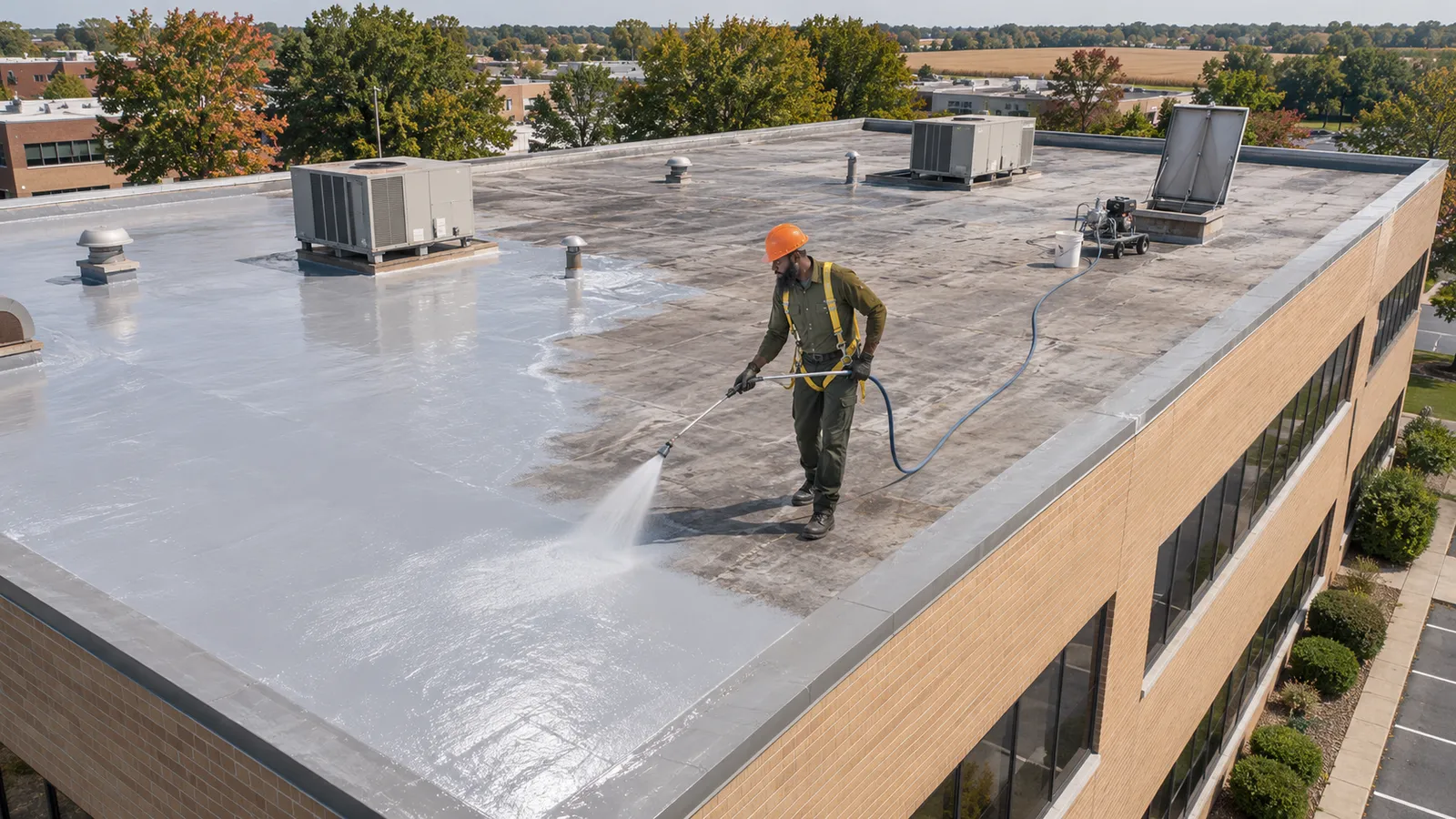
Flat roofs over rental offices take silicone where water ponds after rain or snowmelt.
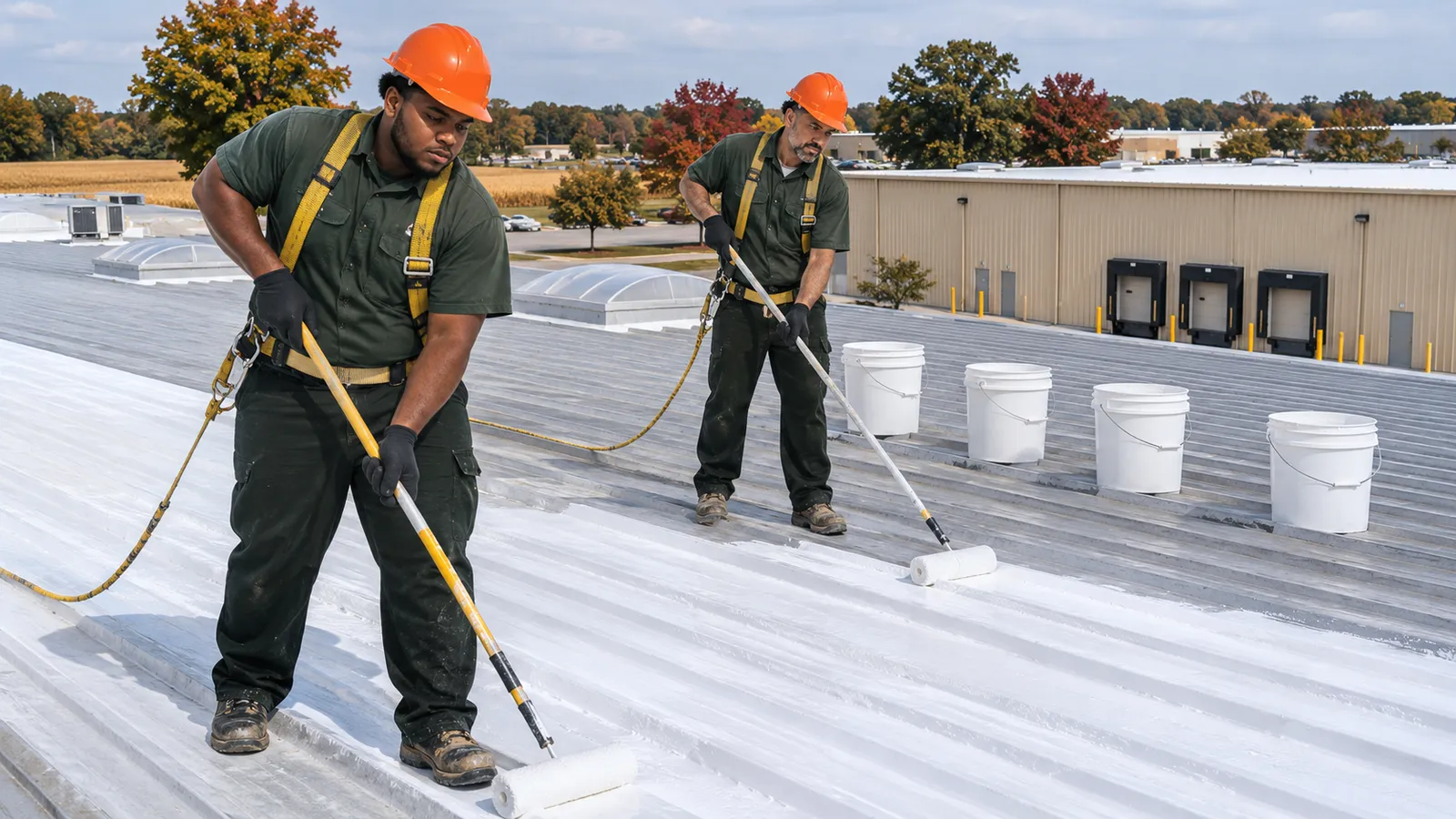
Pitched roofs that shed snow and rain well take acrylic during the warm, dry months.
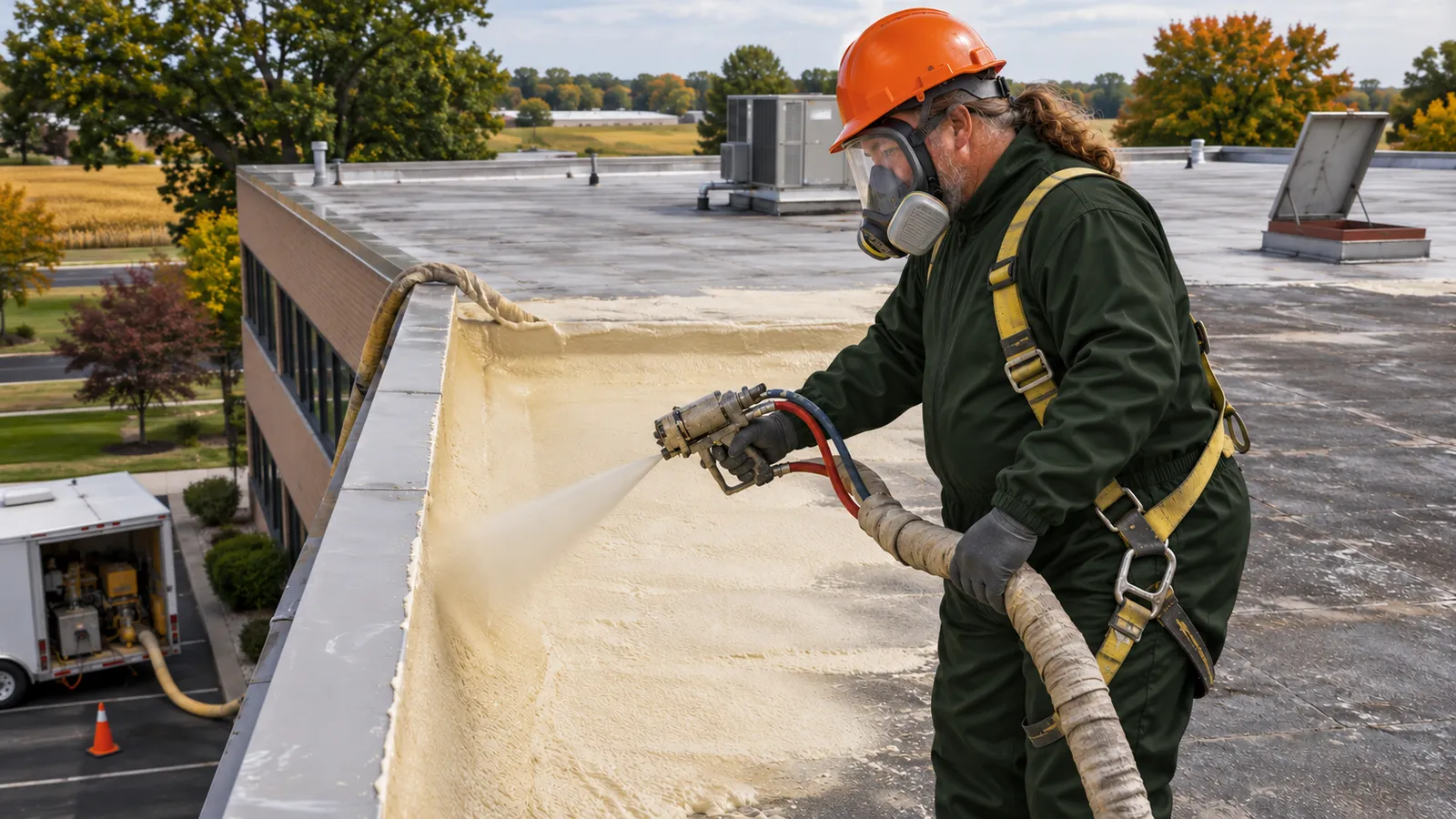
Heated or cooled storage can gain insulation from spray foam finished with a topcoat.
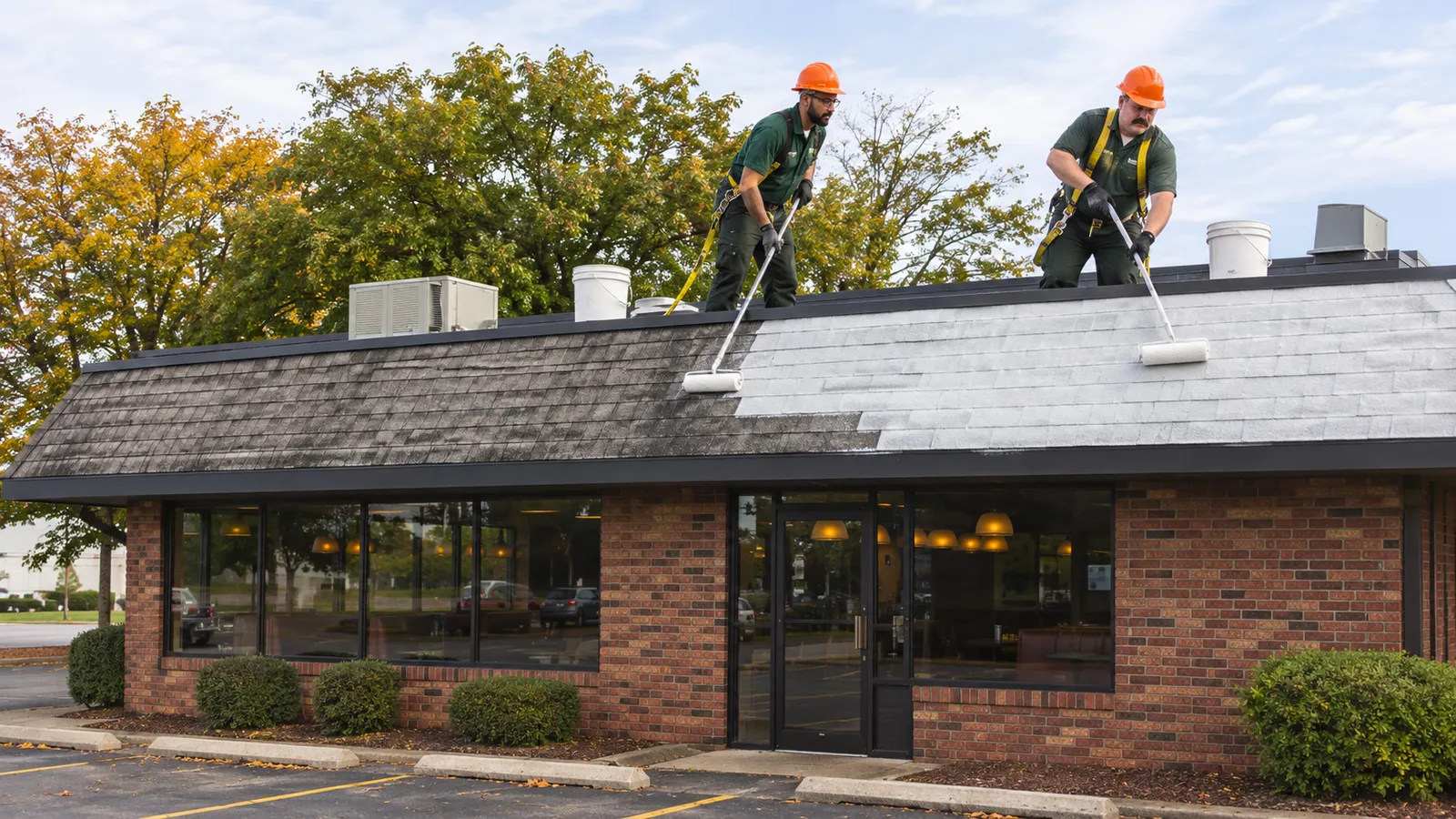
Shingle sections on front offices take a shingle-rated product when the shingles lie flat.
We repair the low edge first, then coat the whole roof, so the eaves are ready before the next round of snow and ice.
Get A Free Ballpark EstimateFour steps that start at the bottom edge.
We check the eaves, gutters, snow guards, and every panel run for rust and loose screws, building by building.
Each building in a row is prepped and coated in turn, keeping units open and drive lanes clear.
Eave trim is reset, gutters treated or replaced, and the lowest screw row swapped for new fasteners.
Extra coating goes on along the eaves first, then the field is coated up toward the ridge in even, overlapping passes.
Besides Winfield, we coat commercial metal roofs in South Bend and these towns.
Outside these towns? Call us or send us a message.
Yes, Winfield is within our service area. We coat metal roofs on commercial and storage buildings there with the same steps every time: inspection, cleaning, rust treatment, sealing of screws and seams, and a coating fitted to slope and drainage. Eaves and gutters get extra work where snow and ice sit all winter.
Yes. We work on one building at a time and keep the drive lanes open, with notice posted on each row before its roof is coated. Renters can reach their units throughout. Lifts and material are staged at the end of the row being worked, away from gates and turning areas.
Solid, tight snow guards stay in place and get their fasteners sealed and coated along with the panels. Bent or loose guards are removed, the holes patched, and new guards set after coating so they sit on a sealed surface. Guards help keep sliding snow off doors and walkways below, so we rarely leave them off.
Gutters with surface rust are cleaned, primed, and coated along with the eaves. Gutters rusted through at the bottom, pulling away from the fascia, or sagging so they hold water are replaced first. Downspouts are checked so meltwater has a clear path off the roof in late winter.
Coatings need a dry roof and temperatures above the product minimum through the cure. Late spring through early fall gives the most working days, with dry mornings once the dew burns off. Jobs booked in winter can be scheduled for the first good stretch of spring weather.
Snow melts higher on the roof, runs down, and refreezes at the cold eave. That ridge of ice holds water against the end laps and lowest screws, where it backs up and leaks. Sealing those laps and screws before coating, and keeping gutters clear, cuts the damage each winter.
Tell us how many buildings you have and where the ice builds up. We will plan the eave work and the coating, row by row.