Roof Coating Near Rooftop Air Intakes
Intakes pull air from right above the roof deck. Work near them is timed to shutdowns or done by roller with low-odor material, so fumes stay outside the plant.
Watch
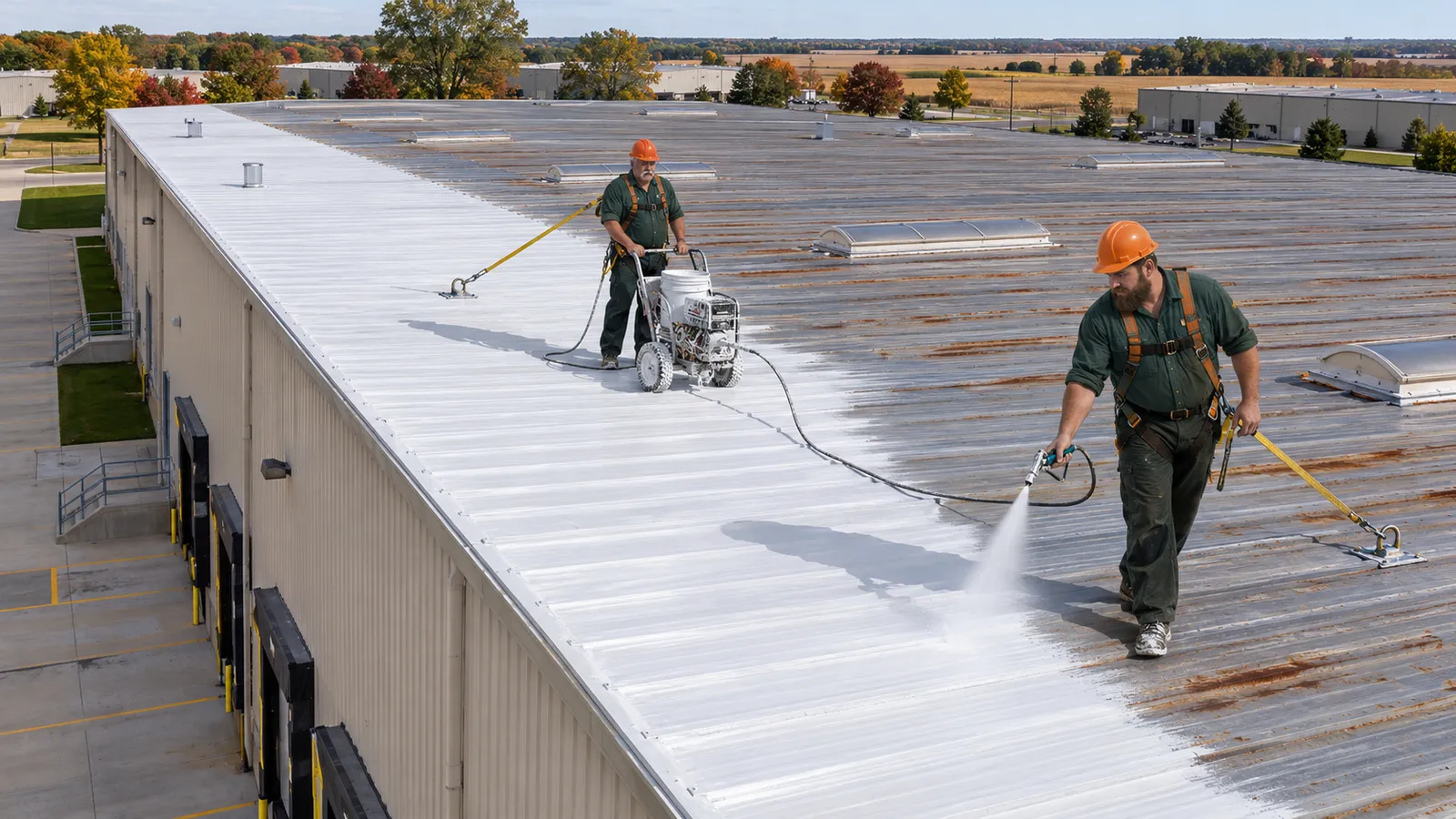
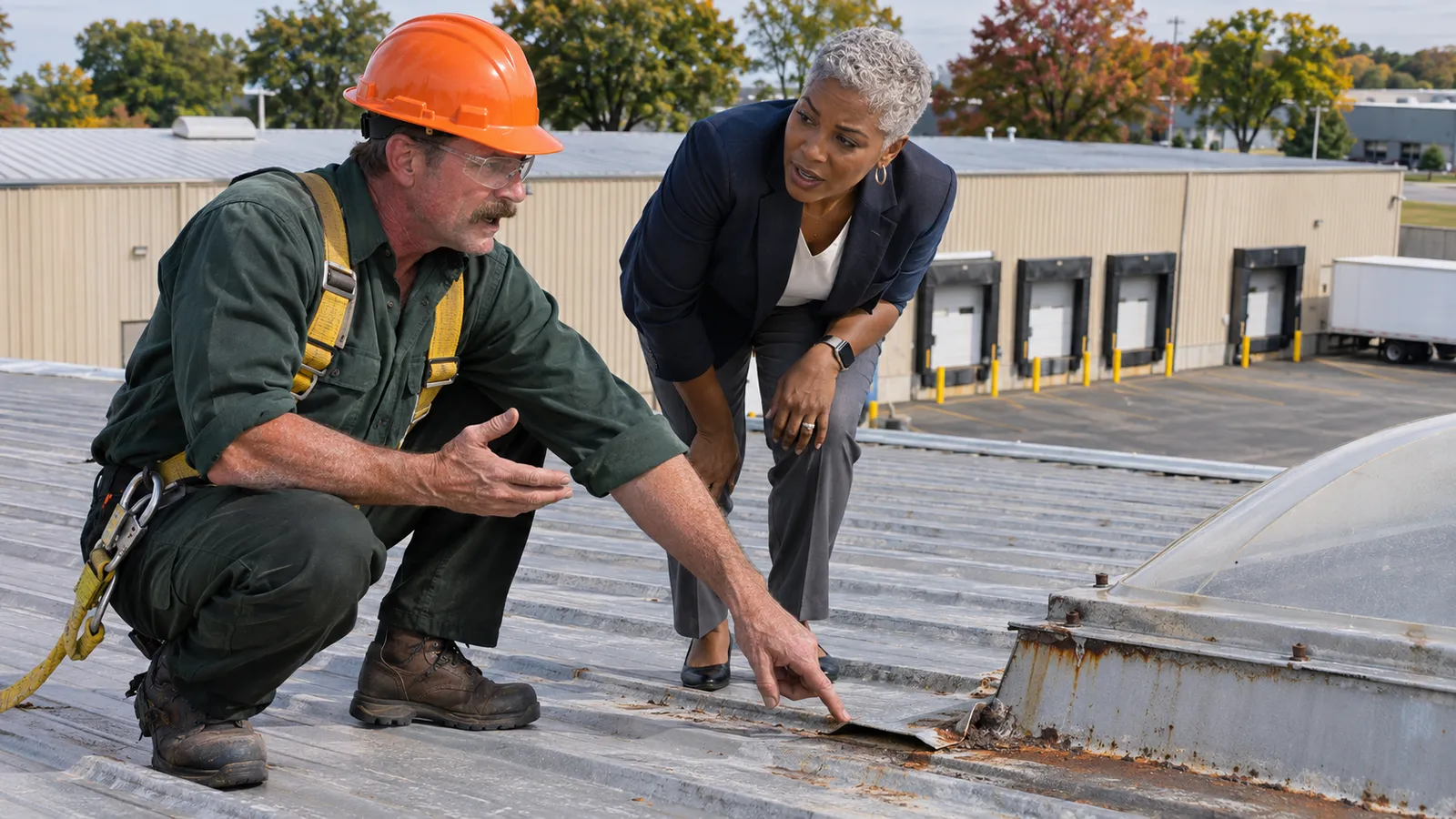
Nappanee metal roof coating for manufacturing buildings is planned around rooftop air intakes so odor stays outside the plant.
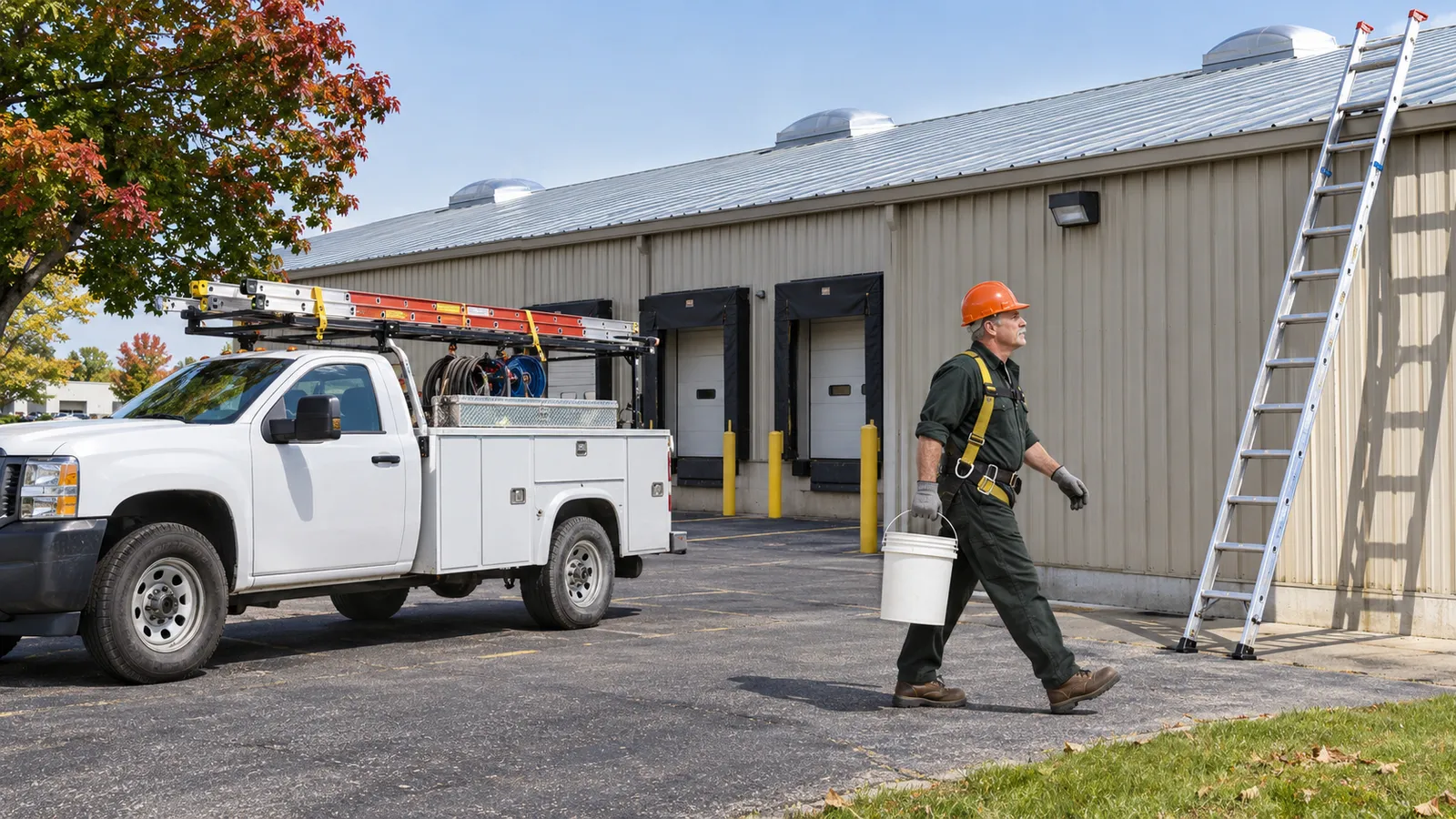
Nappanee metal roof coating on a factory has to account for the air handlers. Fresh coating near an intake can pull odor into the plant, where people are working all shift.
We map every intake, plan which ones can shut down and when, and use rollers or low-odor products close to the ones that stay running. Maintenance staff know which air handlers serve offices and which serve the floor, and that tells us where to start each day.
Factory roofs carry equipment that affects how coating goes on and when. These four conditions shape the plan for each section.
Intakes pull air from right above the roof deck. Work near them is timed to shutdowns or done by roller with low-odor material, so fumes stay outside the plant.
WatchLeaks over lines halt work and soak product. Those spots are sealed first, then the field is coated in sections planned with the plant.
Call NowOlder plant panels with heavy rust are brushed and primed before coating, and any panels rusted through are replaced with matching steel.
Repair FirstPlastic skylight panels crack along their fastener lines as they age and let water in. They are resealed at the edges or replaced.
Repair FirstHere is what the plant gains once the roof is coated.
Water over a line means stopping work, covering equipment with plastic, and cleaning up wet product before the shift can restart.
Older panels are losing their factory finish and rusting at the laps, screw holes, and the low end of each run.
Roof work gets put off year after year because of worries about fumes reaching people on the floor.
Problem areas over production are fixed and coated first, before the field work starts on the rest of the roof.
Rust is treated, failed screws replaced, and the whole roof sits under a fresh coat at the specified thickness.
A written plan for each intake keeps fumes outside the plant and keeps staff informed from day to day.
Here is how each system fits Nappanee manufacturing, warehouse, and farm buildings, from the plant roof to the office wing.
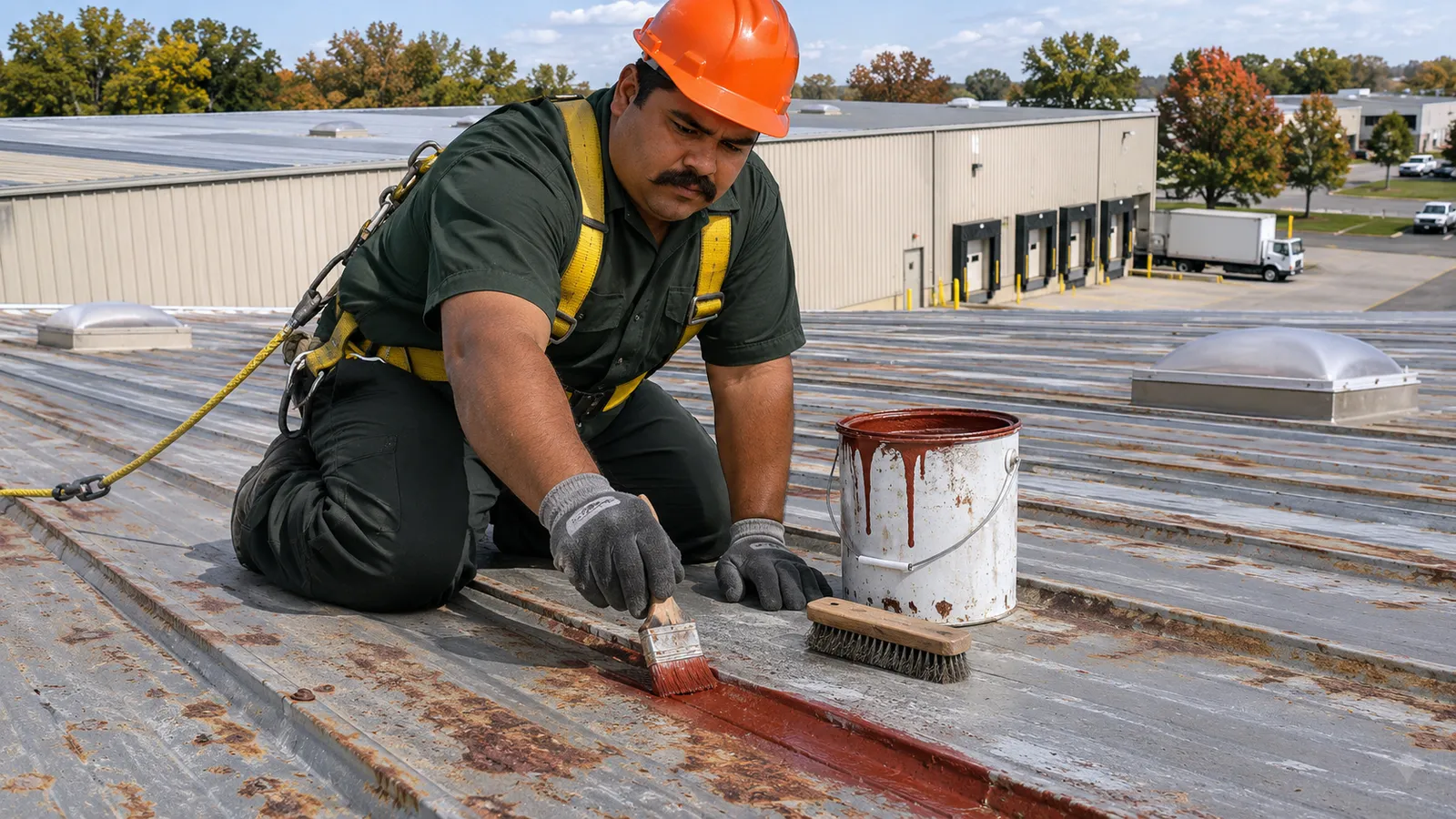
Plant roofs get screw and lap work, rust primer, and a coating plan split into sections around production.
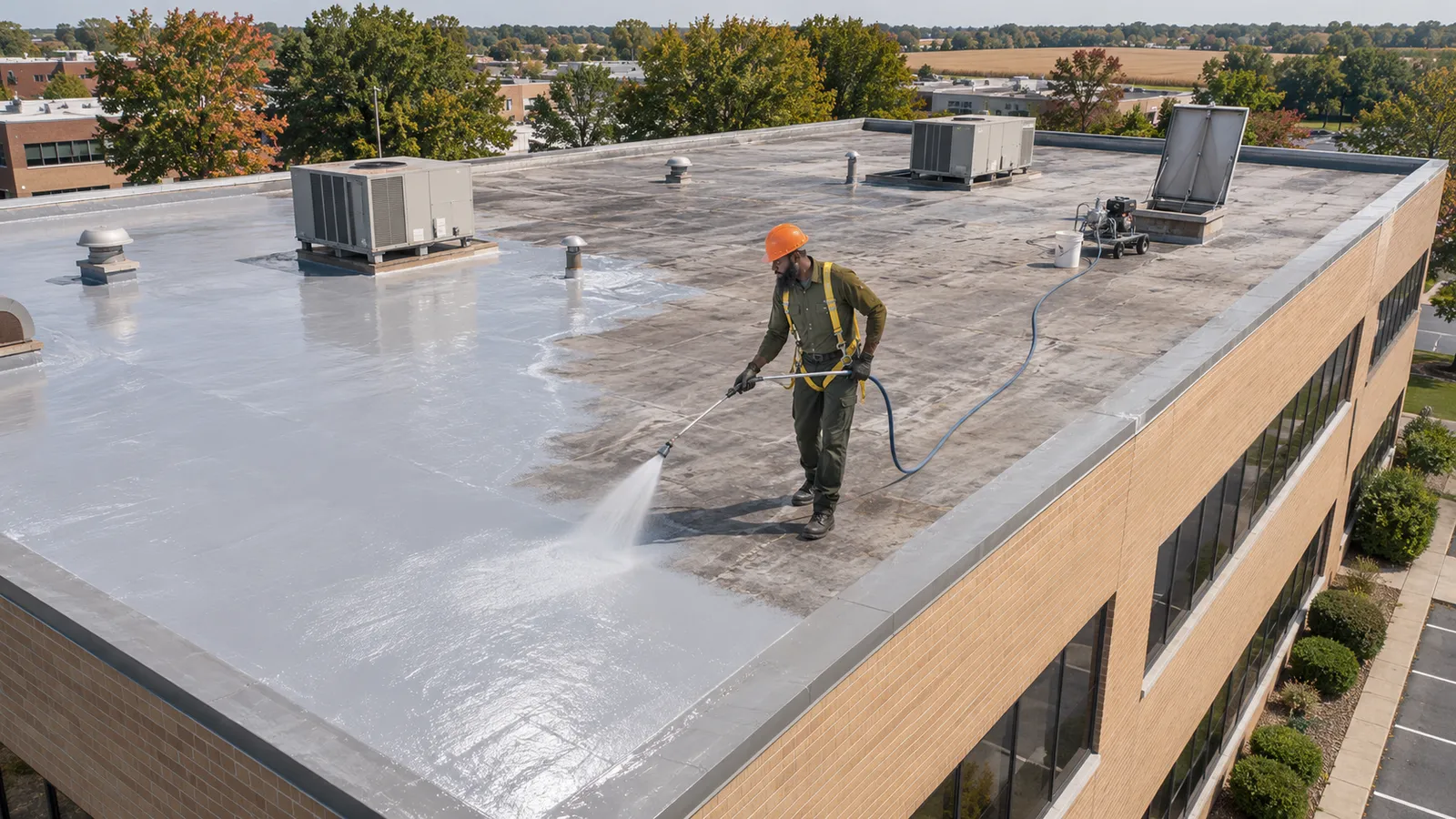
Wide low-slope plants with interior drains take silicone where water sits after storms.
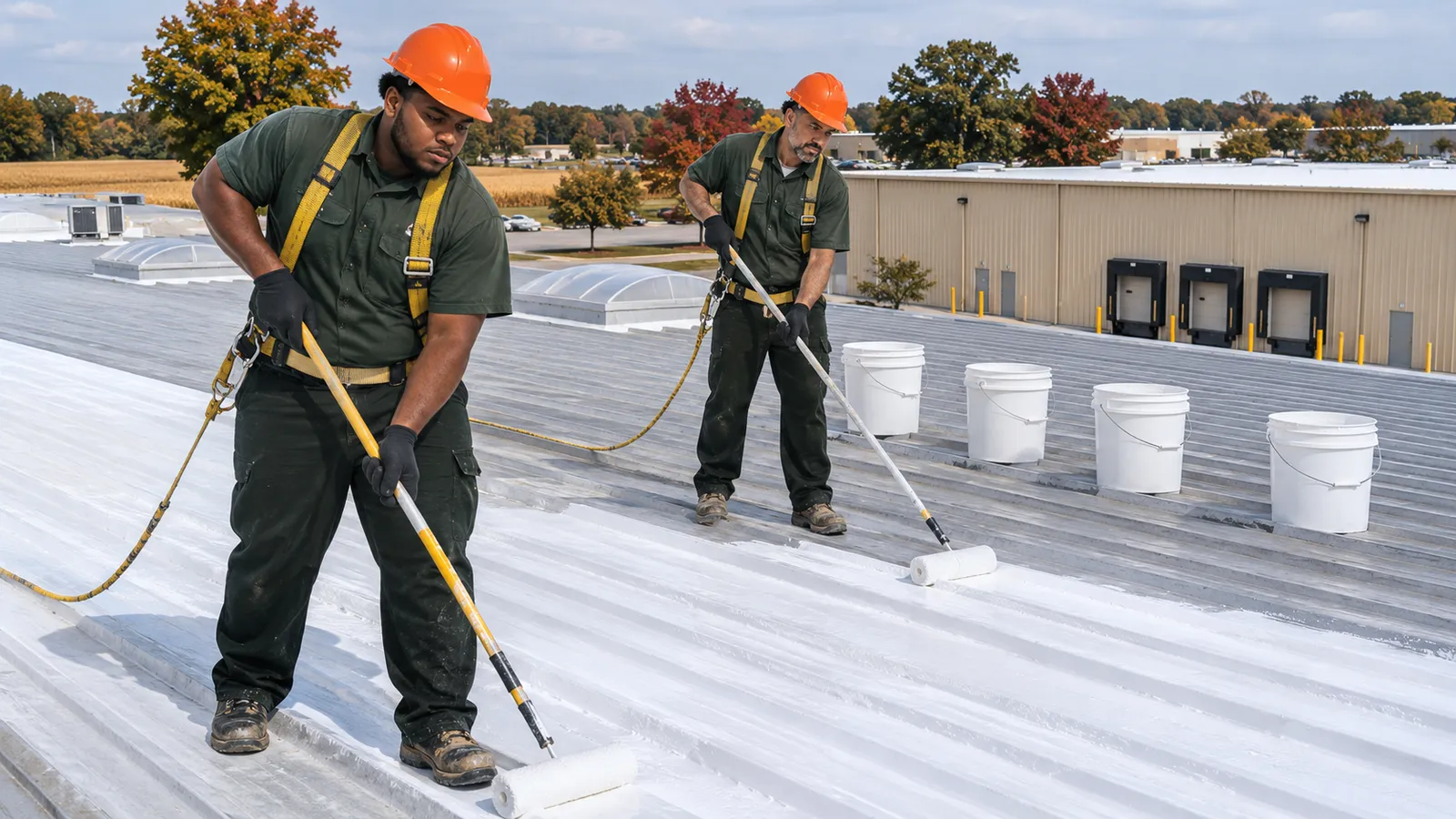
Pitched warehouse and farm roofs take two coats of acrylic during dry weather.
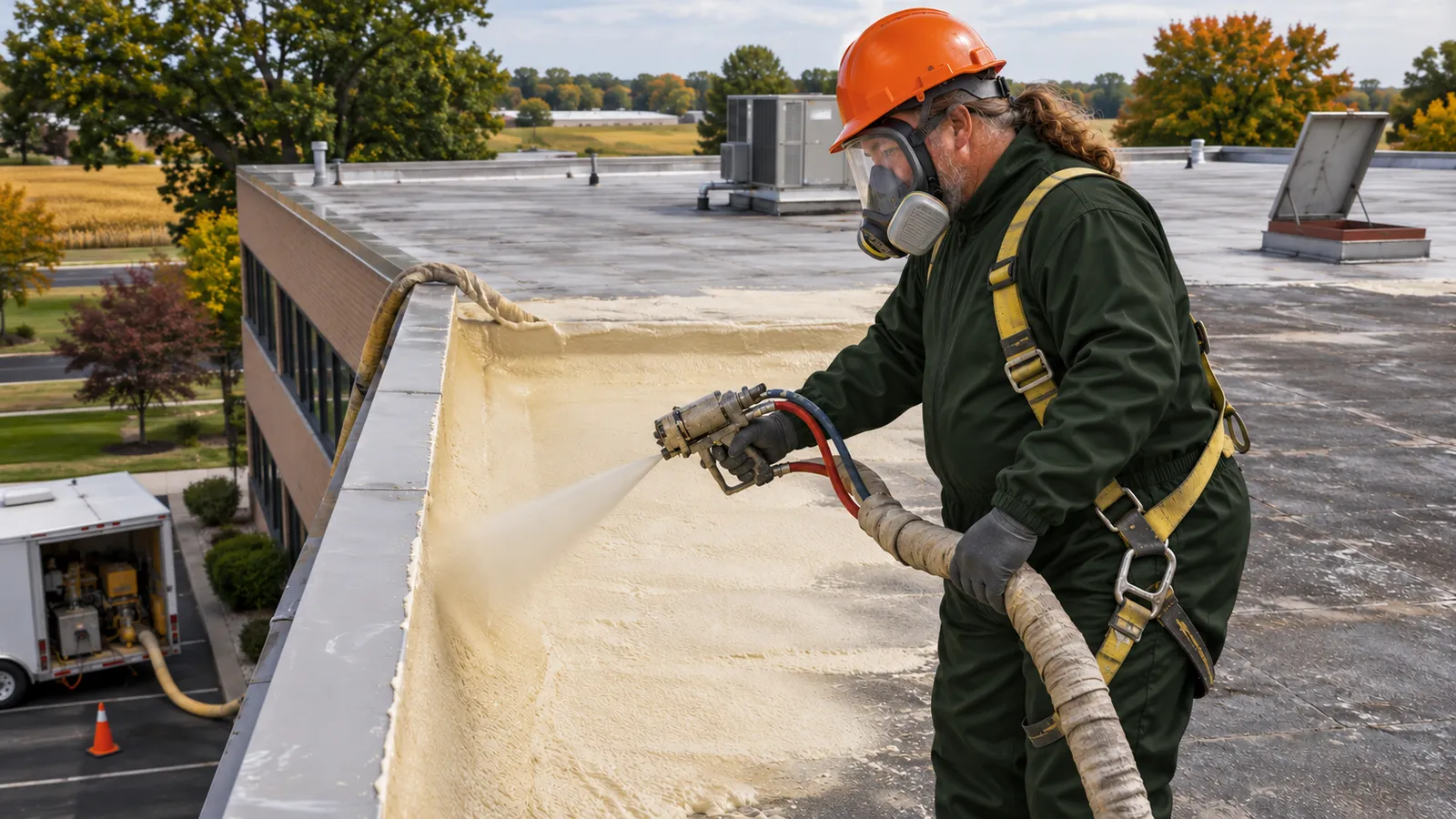
Older buildings with little insulation can take spray foam finished with a protective topcoat.
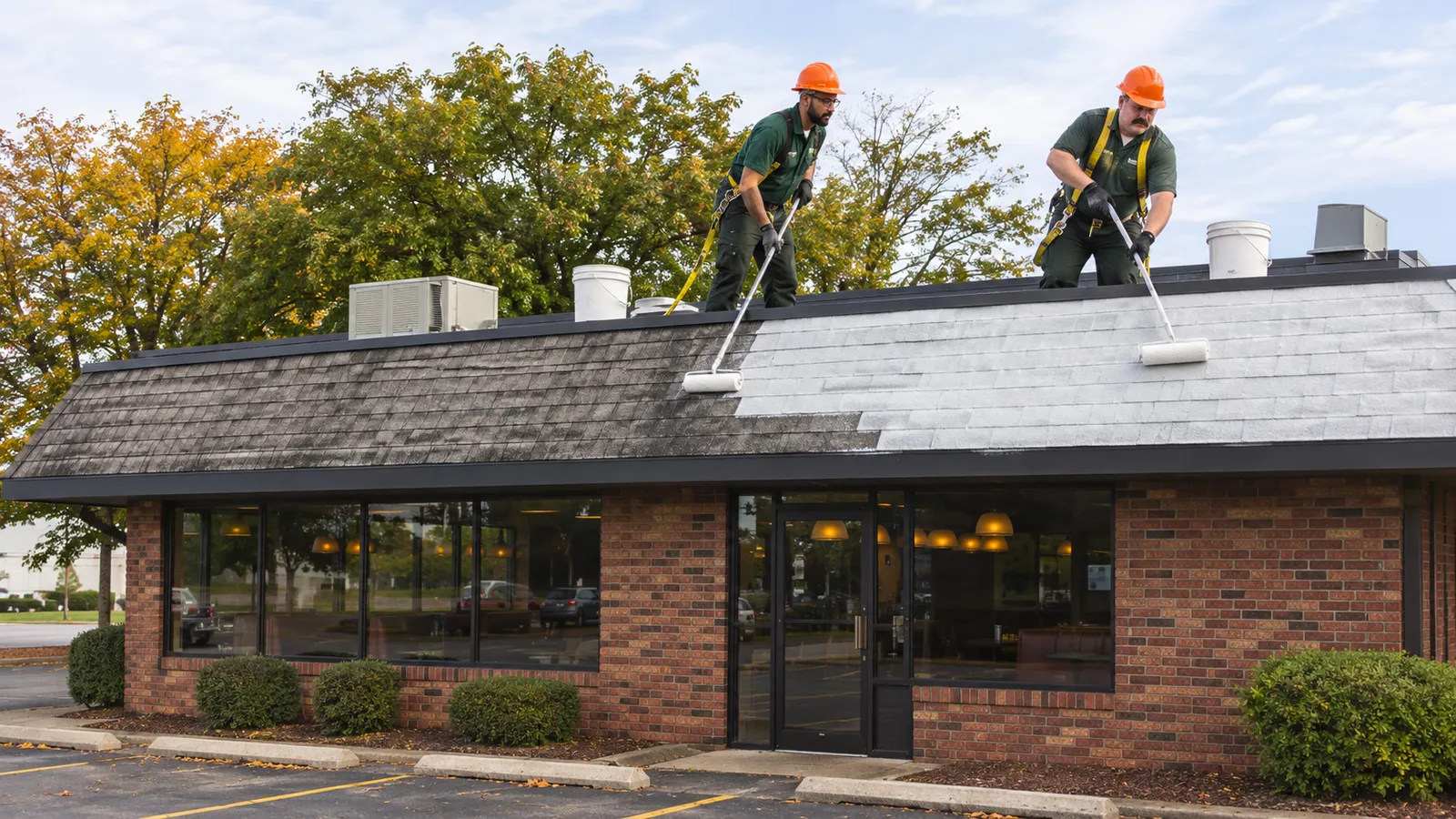
Shingled office sections take a shingle-rated coating when the shingles are flat and attached.
We plan each intake area with your maintenance team before work starts, and write down which units go off on which days.
Get A Free Ballpark EstimateFour steps planned with your maintenance team.
We map intakes, exhausts, leaks, rust, and skylights across the roof with your maintenance lead.
Areas near running intakes get low-odor products or roller work instead of spraying.
Active leaks over production get repaired in the first days, before any field coating.
Sections are coated around shutdowns, with intakes covered when off and opened again at day’s end.
Besides Nappanee, we coat commercial metal roofs in South Bend and these towns.
Outside these towns? Call us or send us a message.
Yes. We coat metal roofs on manufacturing buildings, warehouses, and farm structures in Nappanee. Roofs over production are done in sections, and we work around rooftop air intakes so fresh coating odor stays outside. Panels with heavy rust are primed before they are coated.
Intakes well away from the day’s work area can keep running. Ones close by are shut down during spraying, or the area beside them is rolled with low-odor material instead. We map every intake with your maintenance team first, so everyone knows which units go off, for how long, and which areas of the floor they serve.
Active leaks over production are sealed in the first days of the job, so the line is protected before field coating begins. If a leak shows up during a storm mid-project, the crew traces it from the roof and seals it before moving on. Maintenance gets a daily note of what was sealed.
Cracked or yellowed skylight panels are replaced, and solid ones are resealed along their fastener lines and edges. Coating stops at the skylight frame so daylight still comes through. Where people walk near skylights, we can add guards that meet fall protection needs during and after the work.
We give maintenance a schedule they can share, listing which roof areas are worked each day and which intakes will be off. Staff near those areas know what to expect, and any odor complaints come straight back to the crew so they can change the method in that spot.
Low-odor and water-based products are made for occupied buildings and carry their own data sheets for thickness and recoat timing. We use them near running intakes and over sensitive areas, and standard products elsewhere, so the whole roof meets its specified thickness either way.
Send us the plant layout and where the air handlers sit. We will plan the sections around production and price the coating.