Acrylic Coating
- Roof Pitch
- Pitched panels, water runs off
- Finish
- Bright white, reflects summer sun
- Application
- Rolled or sprayed in two coats
- Next Recoat
- Takes acrylic or silicone later
- Cost Position
- Lower end of the range
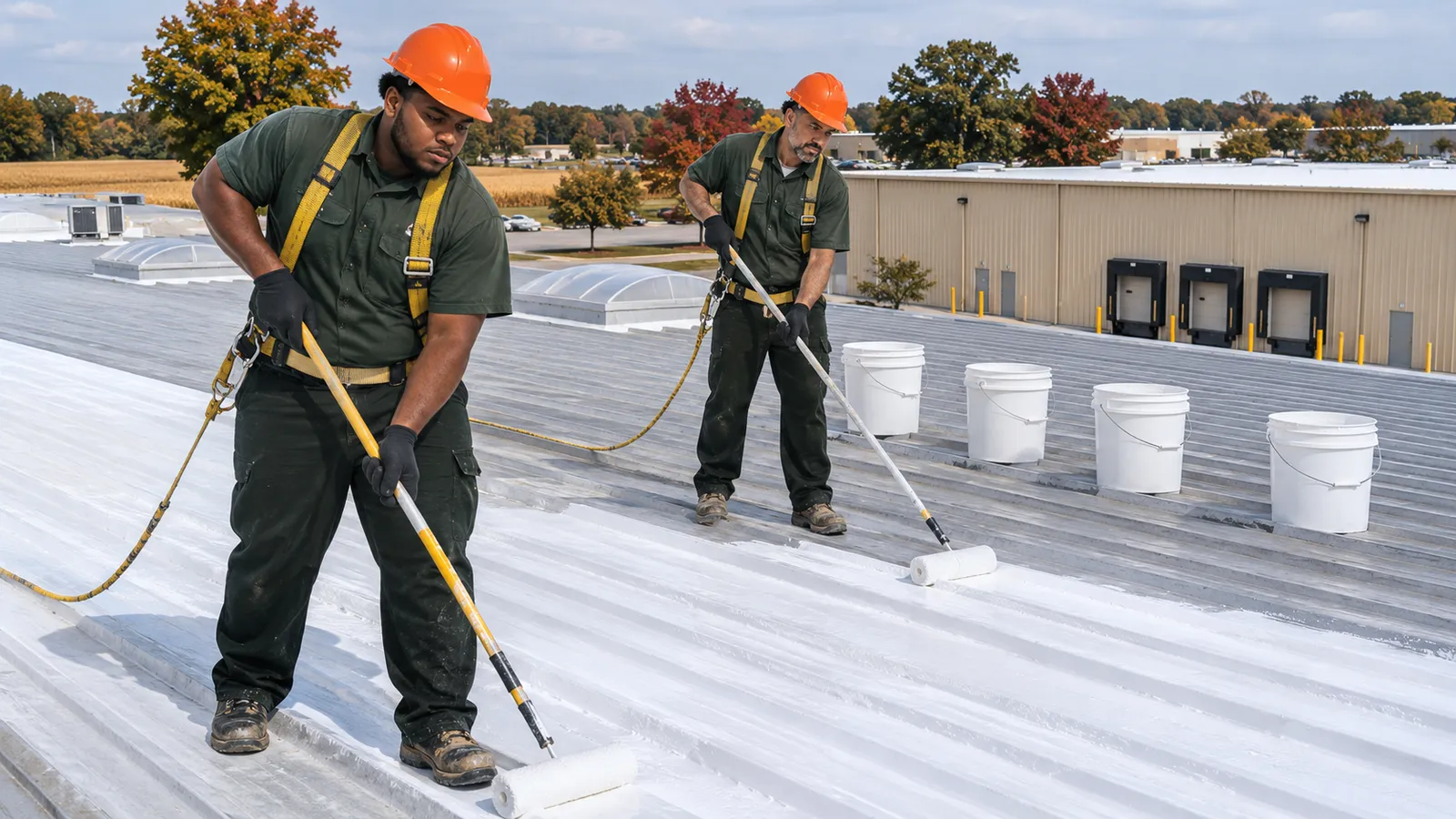
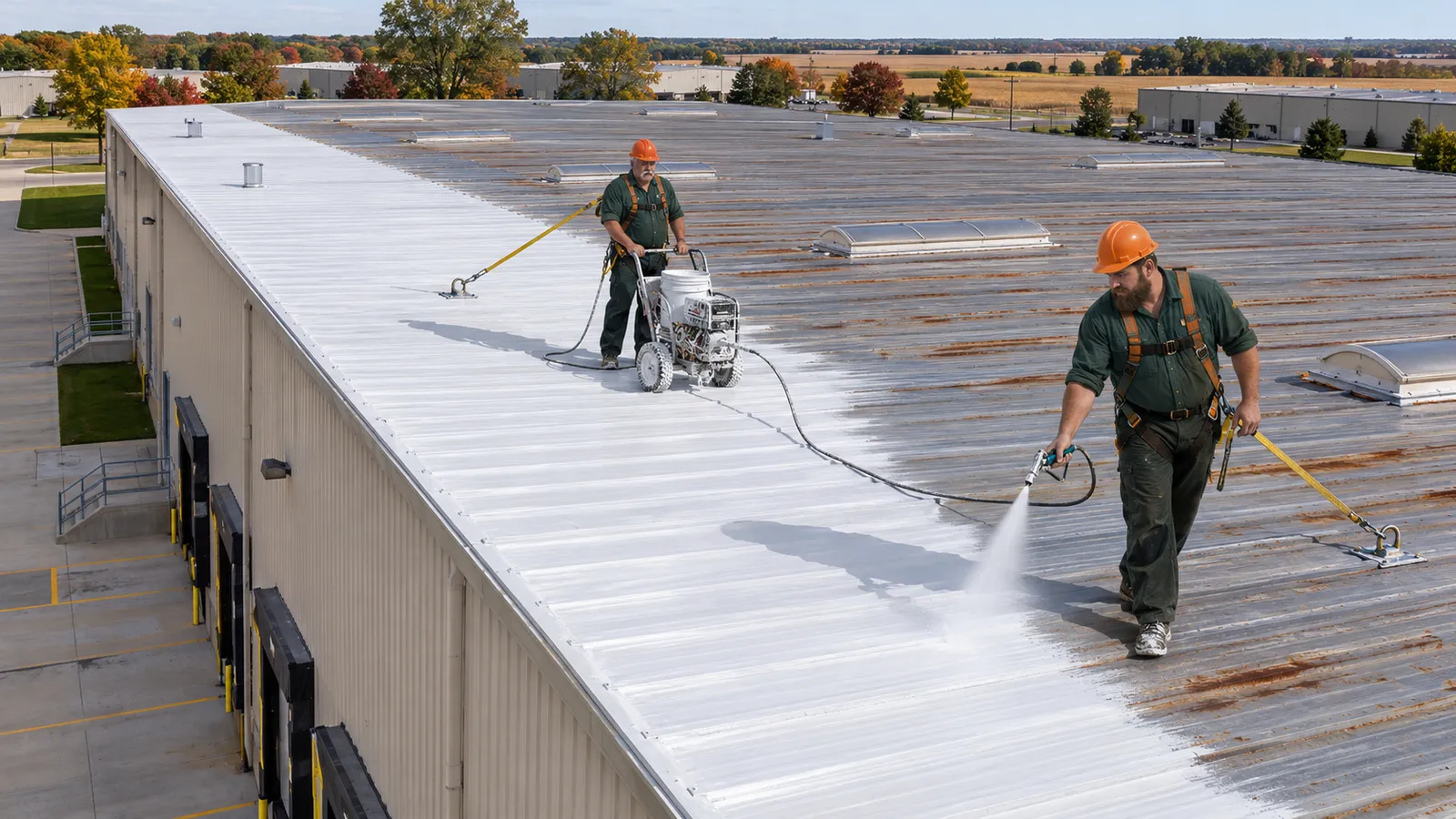
South Bend acrylic roof coating suits sloped metal panels that shed water quickly and need a bright, lower-cost finish.
South Bend acrylic roof coating fits pitched panels with good drainage. Silicone takes over where water lingers.
Acrylic is forgiving on slopes and fussy about weather. These conditions get checked before we order material.
A sag at the eave or a dented valley that ponds will soften acrylic. Those areas get silicone or a repair, and acrylic covers the rest.
Repair FirstRub a hand across old panels and it comes away white. That chalk is washed off with a cleaner and rinsed well, so the primer bonds to firm paint underneath.
WatchThe ridge is where wind and movement hit hardest. Loose screws there are replaced and the cap laps sealed before coating.
Repair FirstOpen joints at rake trim and wall flashing get fabric and mastic. Acrylic alone will not bridge a gap you can see daylight through.
Repair FirstAcrylic is one of five systems we apply. Here is how the others compare on South Bend roofs.
| System | Where It Fits | What To Know |
|---|---|---|
| Acrylic Roof Coating | Sloped metal with fast drainage | Two coats, dry weather window |
| Silicone Roof Coating | Flat roofs and ponding areas | Locks you into silicone recoats |
| Metal Roof Coating | Rusted laps and loose screws | Prep that comes before any topcoat |
| Spray Foam Roofing | Old metal buildings needing insulation | Acrylic can serve as the topcoat |
| Shingle Roof Coating | Aged asphalt shingles | Shingle-specific product, thin coat |
Here is what acrylic changes on a sloped metal roof.
The factory finish has worn thin, and every rain washes more chalk into the gutters.
Dark or weathered steel soaks up afternoon sun, and the space below holds the heat.
Small orange rings around fasteners show where water has started to work into the steel.
A white acrylic coat reflects much of the sun that used to heat the panels.
Primed screw holes and laps sit under a flexible film that moves with the steel.
When the coat wears thin, a fresh layer of acrylic or silicone goes right over it.
Worn factory paint is the easiest point to coat. Rust and leaks only add steps, so calling while the panels are still just chalky keeps the job simple and the price lower.
Get A Free Ballpark EstimateAcrylic depends on timing, so every step starts with the forecast.
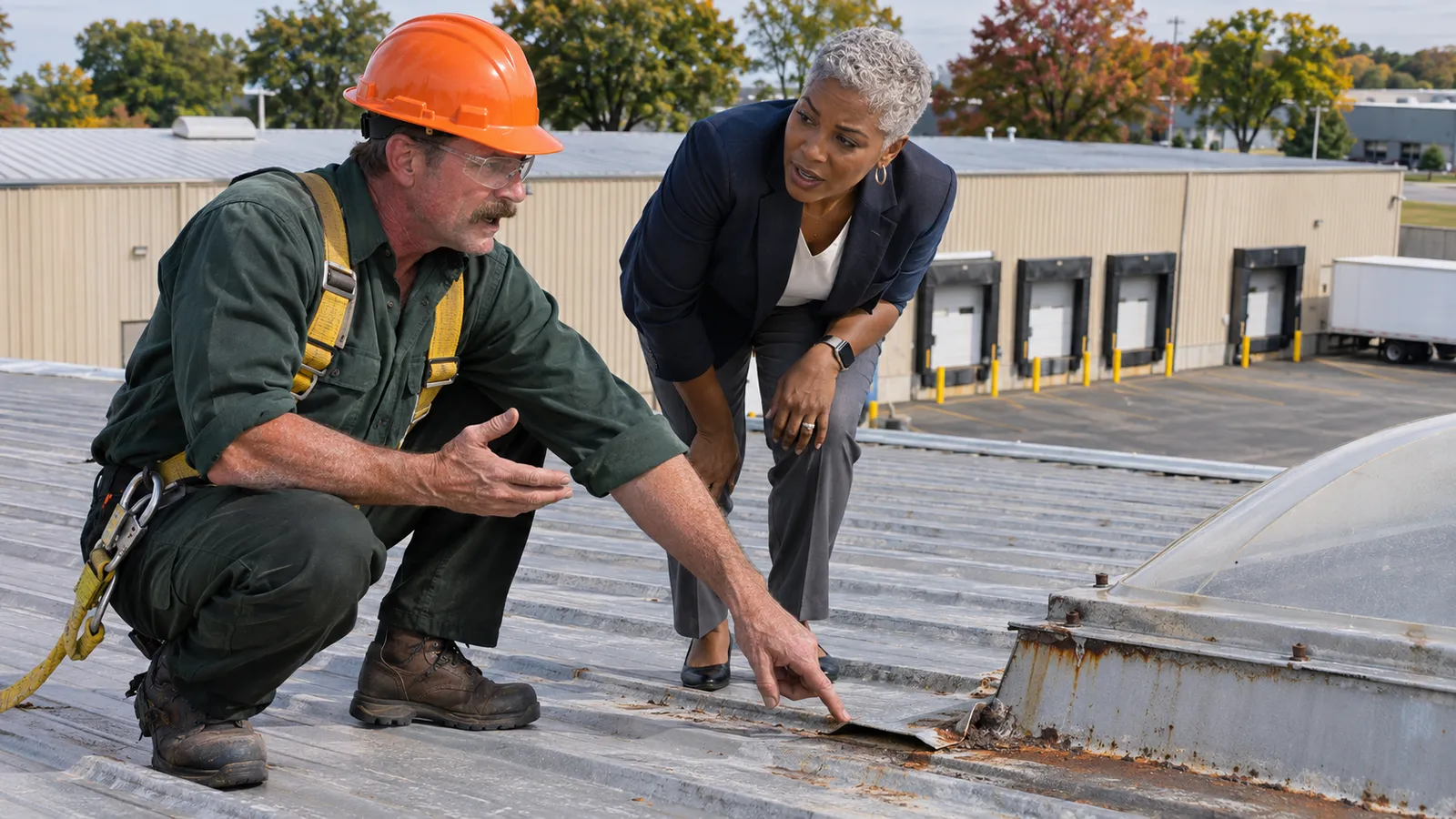
We check slope, drainage, screws, rust, and trim on every run, and mark any spot that ponds so acrylic stays off it and silicone covers that area instead.
Loose screws are replaced with larger ones, laps are sealed, and gaps at rake trim and wall flashing are bridged with fabric set in mastic.
Chalk and dirt are washed away with a pressure washer. Once the roof dries, bare steel and rusted areas get a rust-inhibiting primer.
A base coat and a top coat go on during dry, mild days, each with enough time to set before evening dew settles on the panels.
If acrylic is a poor match for part of the roof, one of these four usually fits.
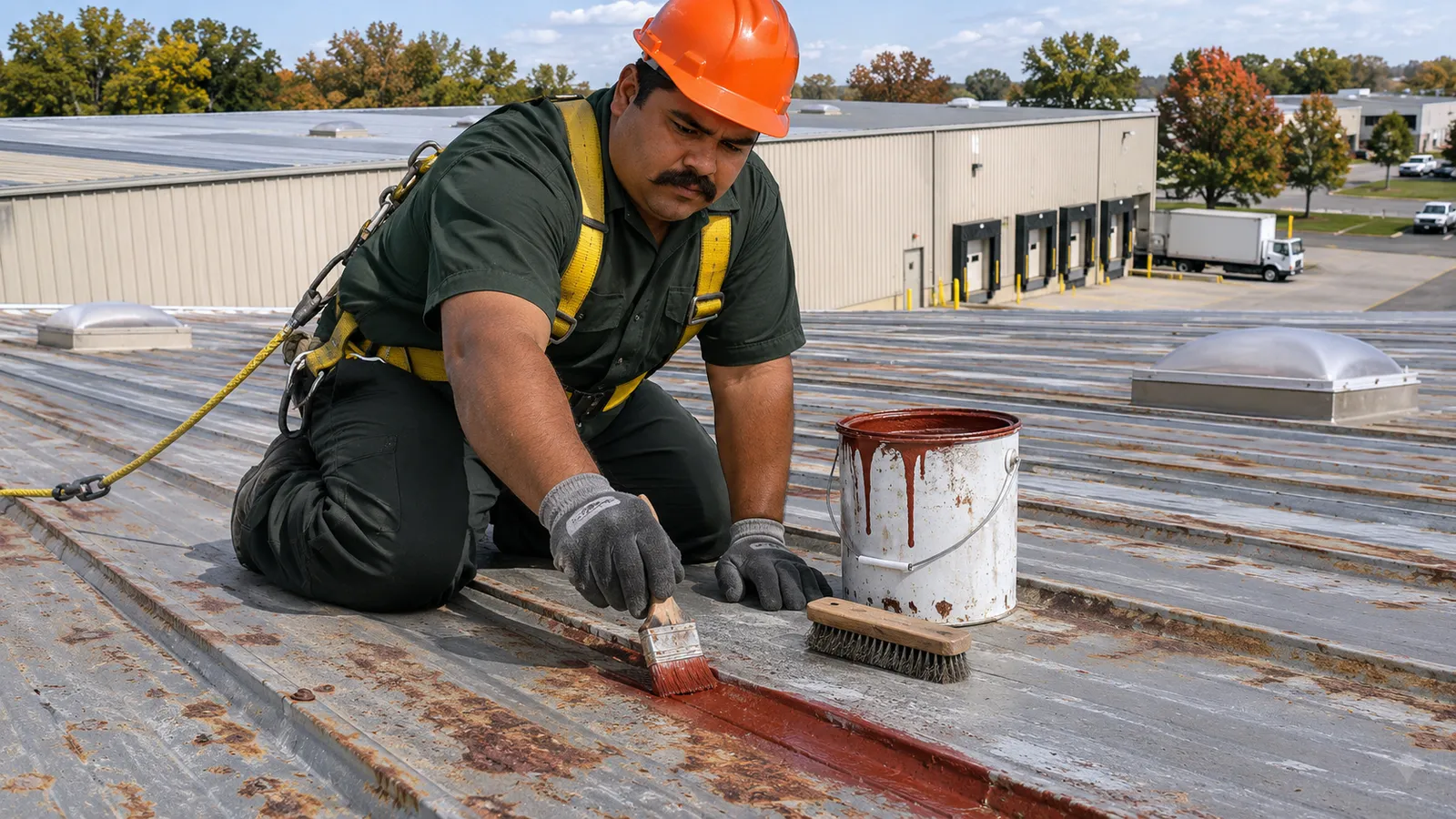
Screws, laps, and rust fixed before the field coat.
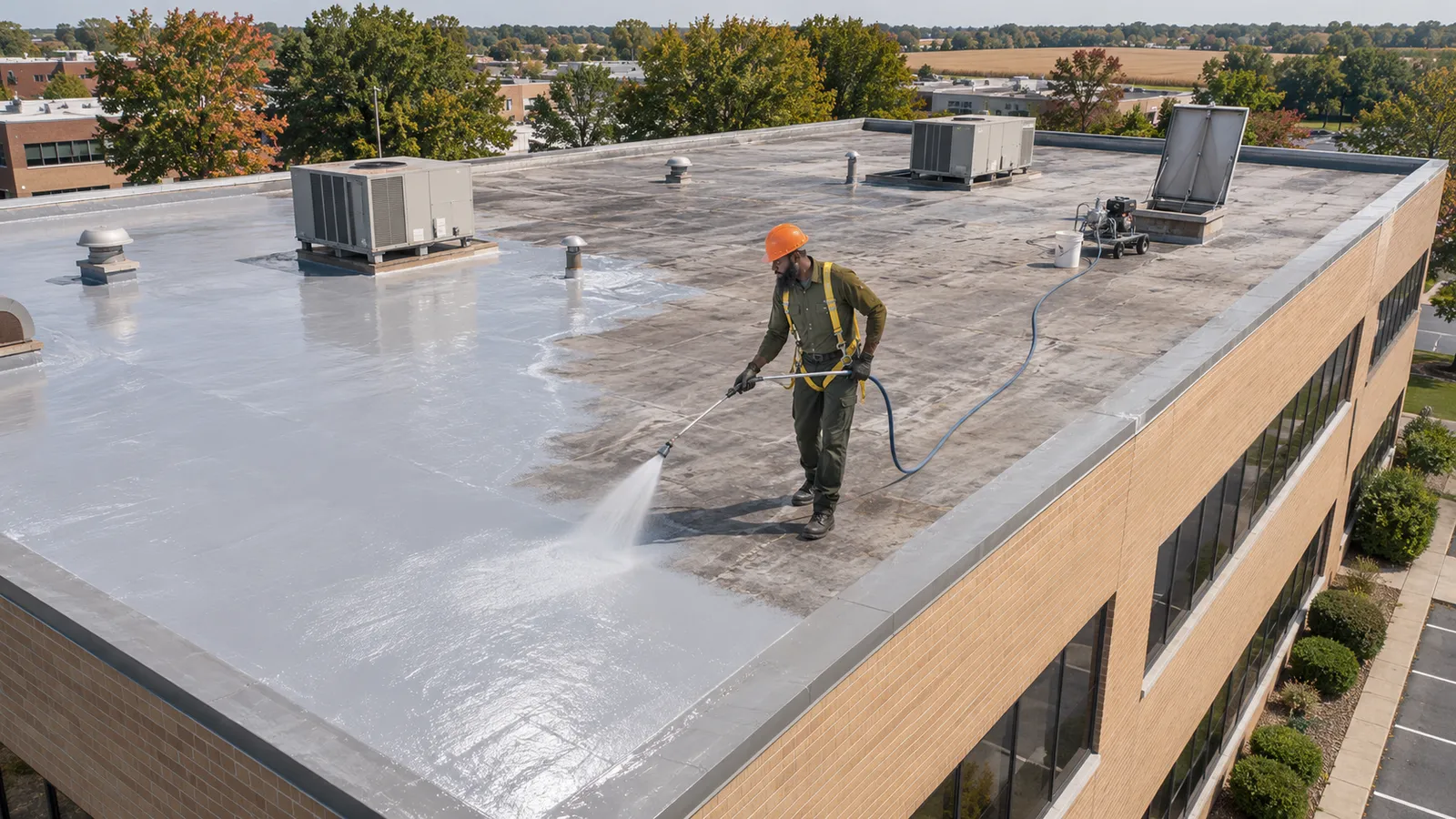
Low-slope roofs where water sits near drains.
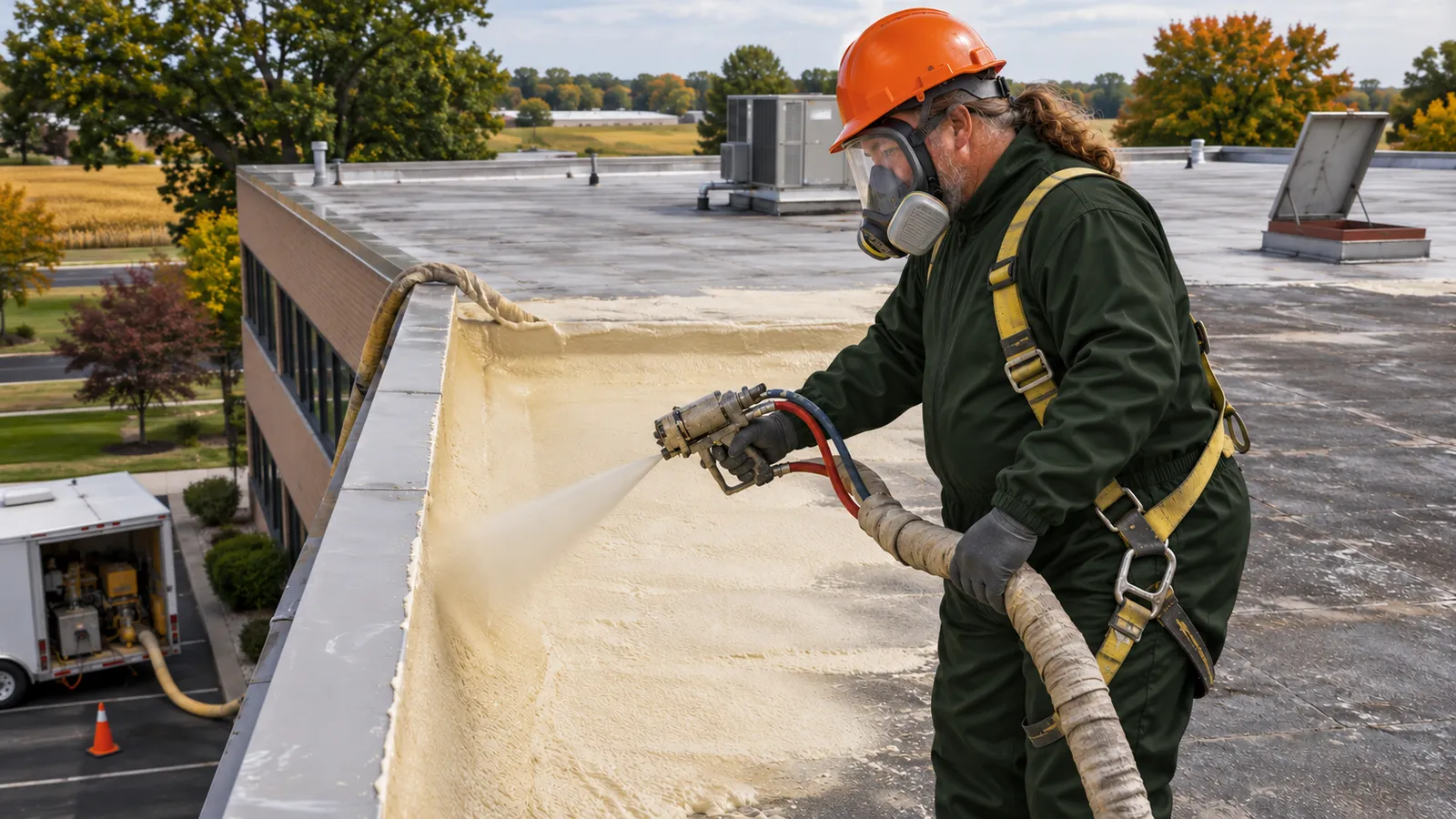
Foam over old metal adds insulation and fills ribs.
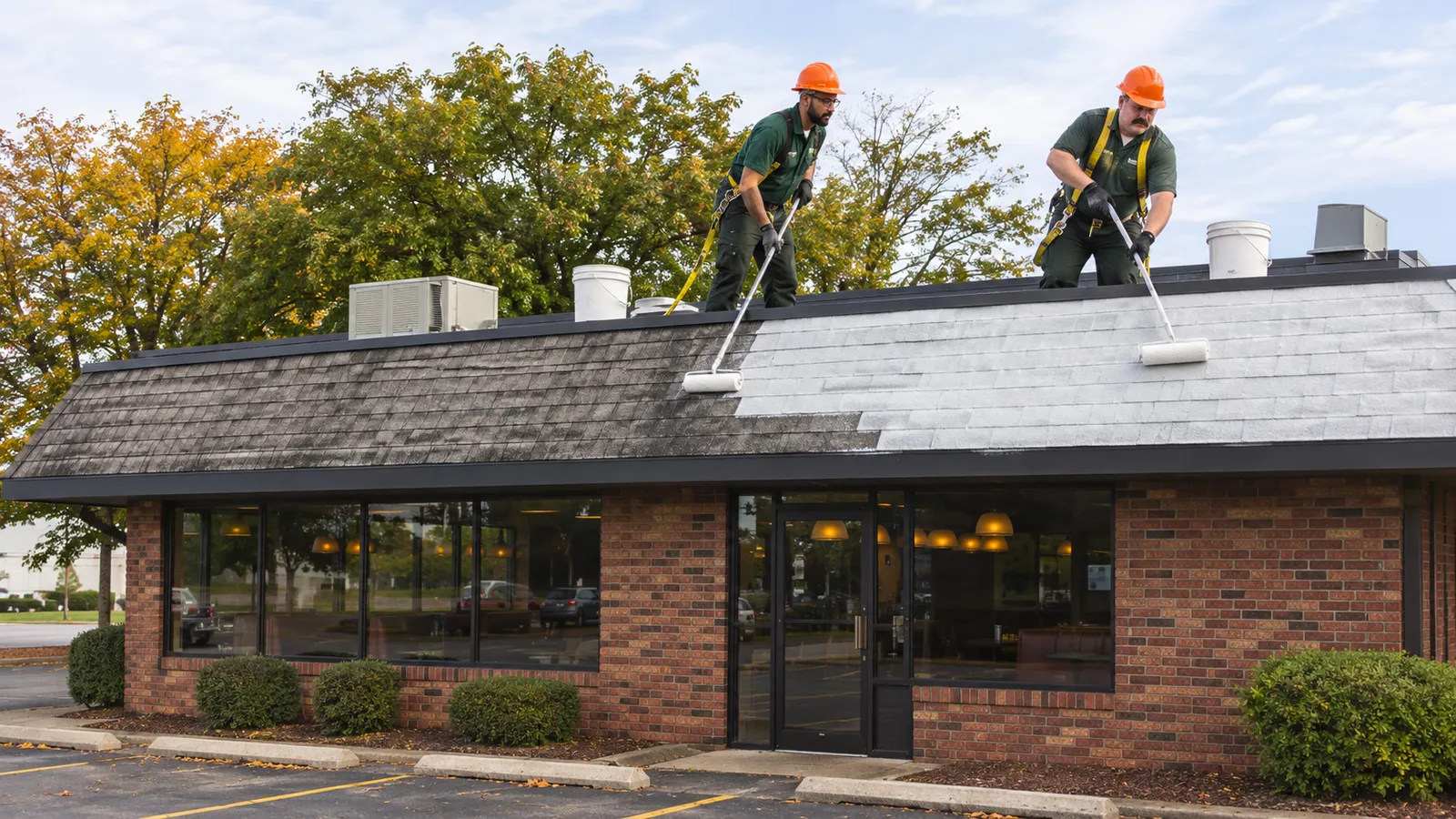
Aged but flat shingles on offices and churches.
Yes, on metal panels pitched enough to drain. Acrylic grips primed steel, reflects summer sun, and flexes with panel movement. Because it is water-based, it needs dry weather to cure and does not like standing water. On a sloped roof it is a practical coating at a lower cost.
On a warm, dry day acrylic is usually dry to the touch within a few hours, and full cure takes longer than that. Humid air, cool temperatures, and evening dew all slow it down, and rain before it sets can rinse it off. We only spray when the forecast leaves a dry window long enough for the maker’s cure time.
Every acrylic product lists a minimum air and roof temperature, and the surface has to stay above it and dry until the coat sets. In spring and fall, cold nights and heavy dew shrink that window. Work starts after the dew burns off and stops early so the coat sets before the evening chill.
Acrylic tends to fall in the lower part of our published coating range of about $2.50 to $4.00 per square foot, while replacement runs about $5 to $8. Rust treatment, new fasteners, seam fabric, and the number of coats needed to reach the spec thickness all move the price. We confirm it after an inspection.
Commercial buildings in Indiana fall under the Indiana Building Code, 675 IAC 13, adopted by the Fire Prevention and Building Safety Commission. The commission lists the 2014 edition, based on the 2012 International Building Code, as the one in effect. Local building departments enforce it, and we check current requirements with them before work.
Most acrylic systems call for a base coat and a top coat to reach the dry thickness on the data sheet, often in two different colors so the crew can see full coverage. Seams, screw heads, and trim get an extra brush coat first. We check wet thickness as each coat goes on, rather than guessing from gallons used.
Send us the roof size and slope. We will check drainage, mark any ponding spots, and price a two-coat acrylic system.