Coating Around Rooftop Exhaust Fans
Fan housings and curbs collect grease or dust that spreads across nearby panels. That film is scrubbed off with the right detergent, and the curb flashing is sealed by hand before any spraying.
Repair First
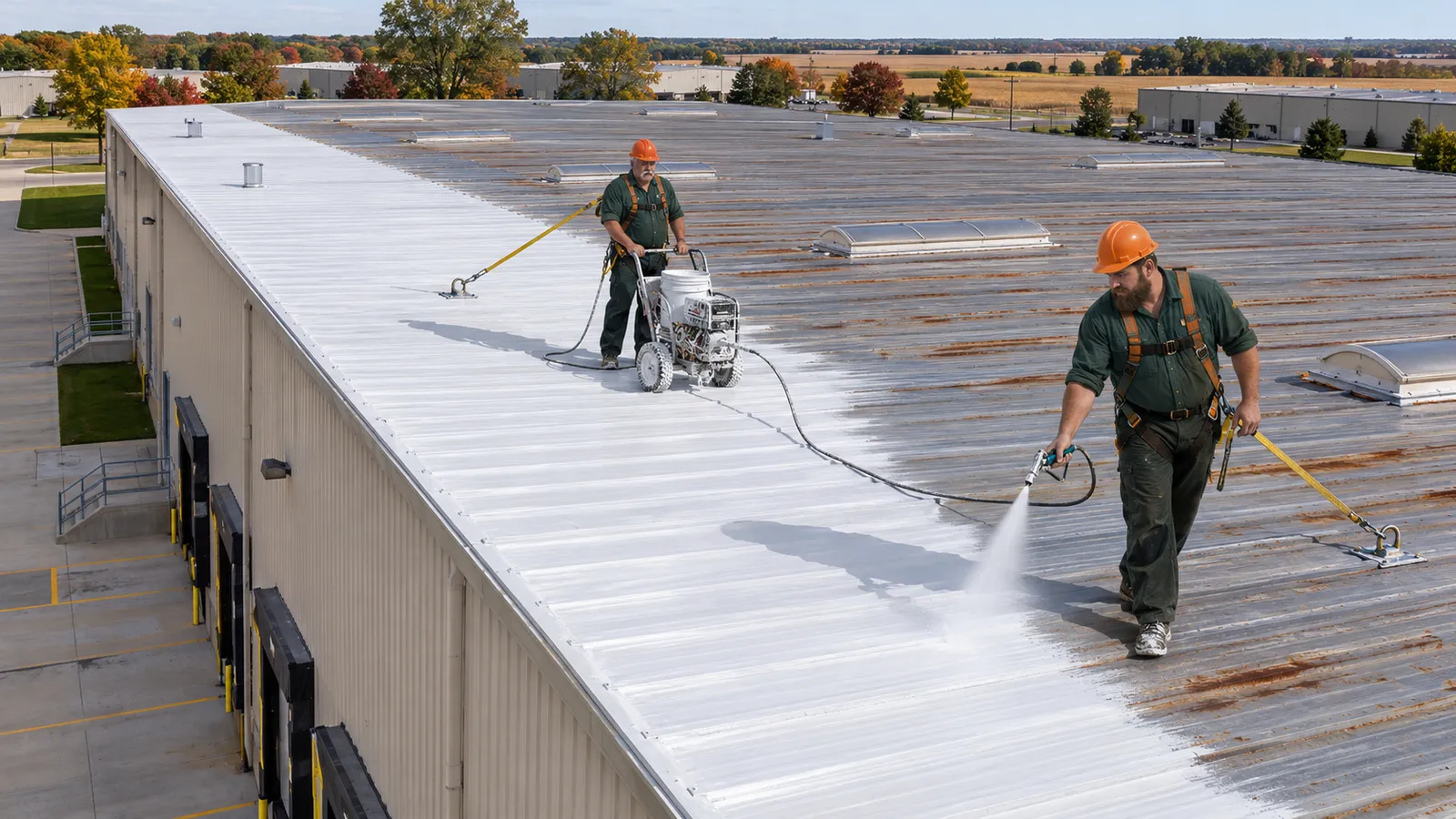
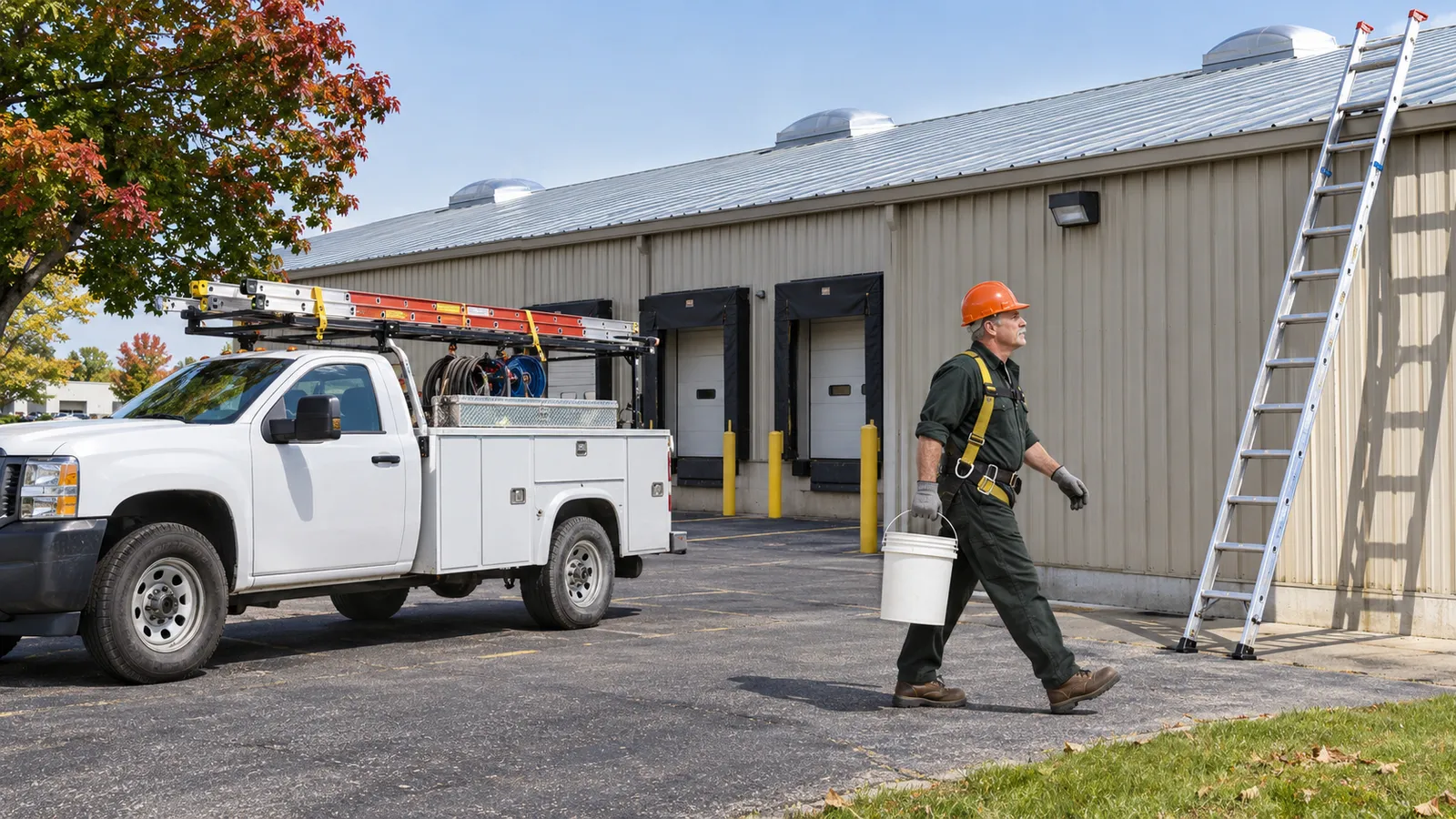
Our La Porte metal roof coating work focuses on industrial roofs where exhaust fans and process vents leave residue on the panels.
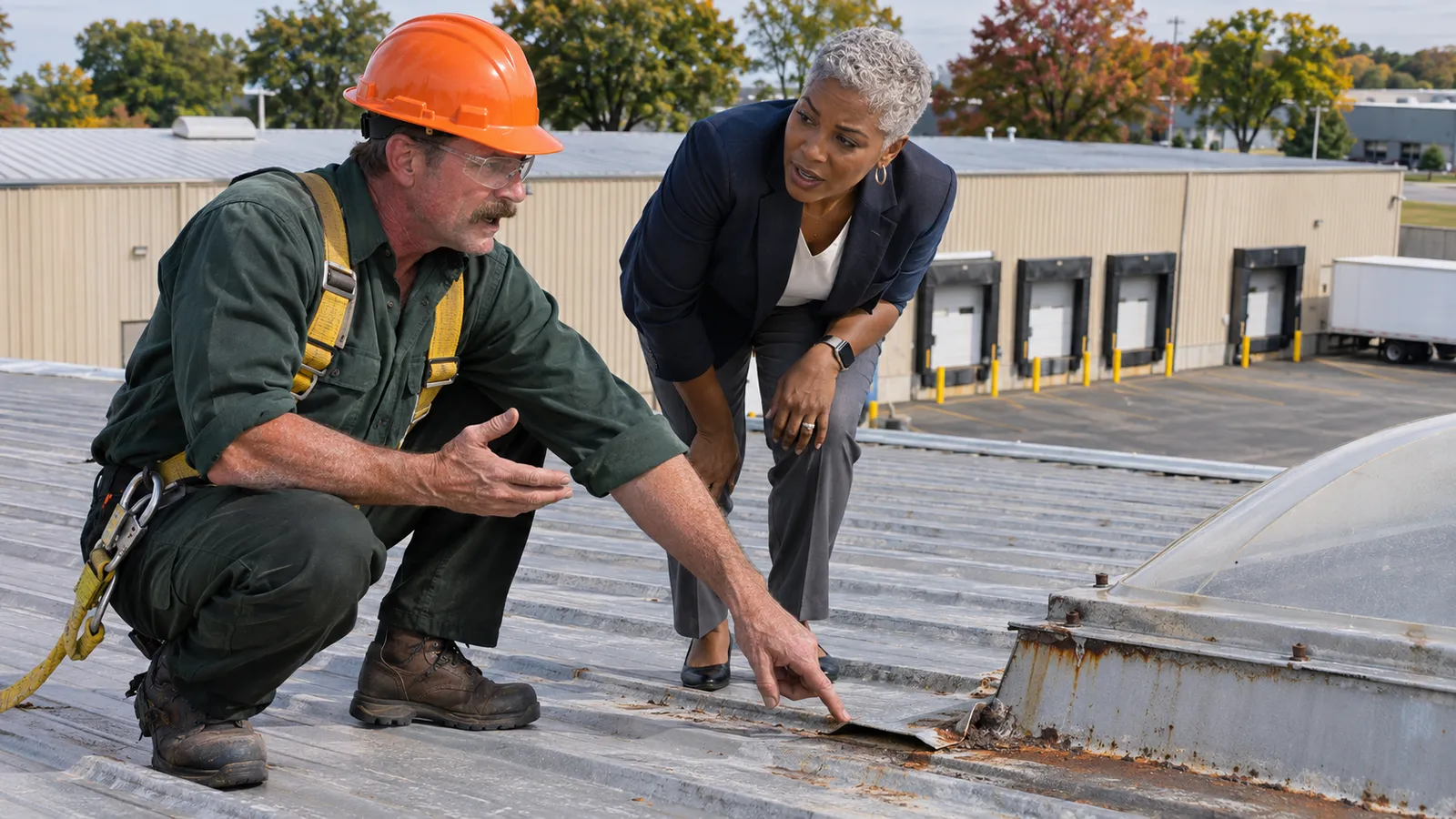
La Porte metal roof coating on a plant roof starts at the exhaust fans. Oily or dusty residue around fans and vents keeps coatings from bonding, and it often spreads downwind across the panels.
We find where the residue reaches, clean it with the right detergent, and run a pull test before ordering the full coating. Plant staff tell us which fans run on which shifts, so cleaning and testing happen while those units sit idle.
Plant roofs carry more equipment and more foot traffic than most. These four conditions decide the prep.
Fan housings and curbs collect grease or dust that spreads across nearby panels. That film is scrubbed off with the right detergent, and the curb flashing is sealed by hand before any spraying.
Repair FirstPaths to rooftop equipment wear through paint and dent the ribs where techs step. Walkway pads are added after coating along the routes used most.
WatchStack bases rust faster than the rest of the field because of heat and condensate. Cracked flashing boots are replaced and the base is primed.
Repair FirstA tan or gray stain fanning out from a stack shows how far residue travels on the wind. All of it is cleaned, well past the edge you can see.
WatchHere is what changes on an industrial metal roof after coating.
Process exhaust settles on the panels day after day and eats at the factory finish downwind of every stack.
Most plant roof leaks start where fan and unit curbs meet the panels, and they drip right over the floor.
Bare steel shows along the routes techs walk, and rust starts in the scuffed spots first.
Residue is removed and the coating is pull-tested to grip before the full job is ordered.
Every curb and stack gets hand detailing under the coating, the spots most plant leaks start.
Pads along the busy paths protect the new surface and show techs where to step.
Plant roofs often mix systems. Here is how each fits.
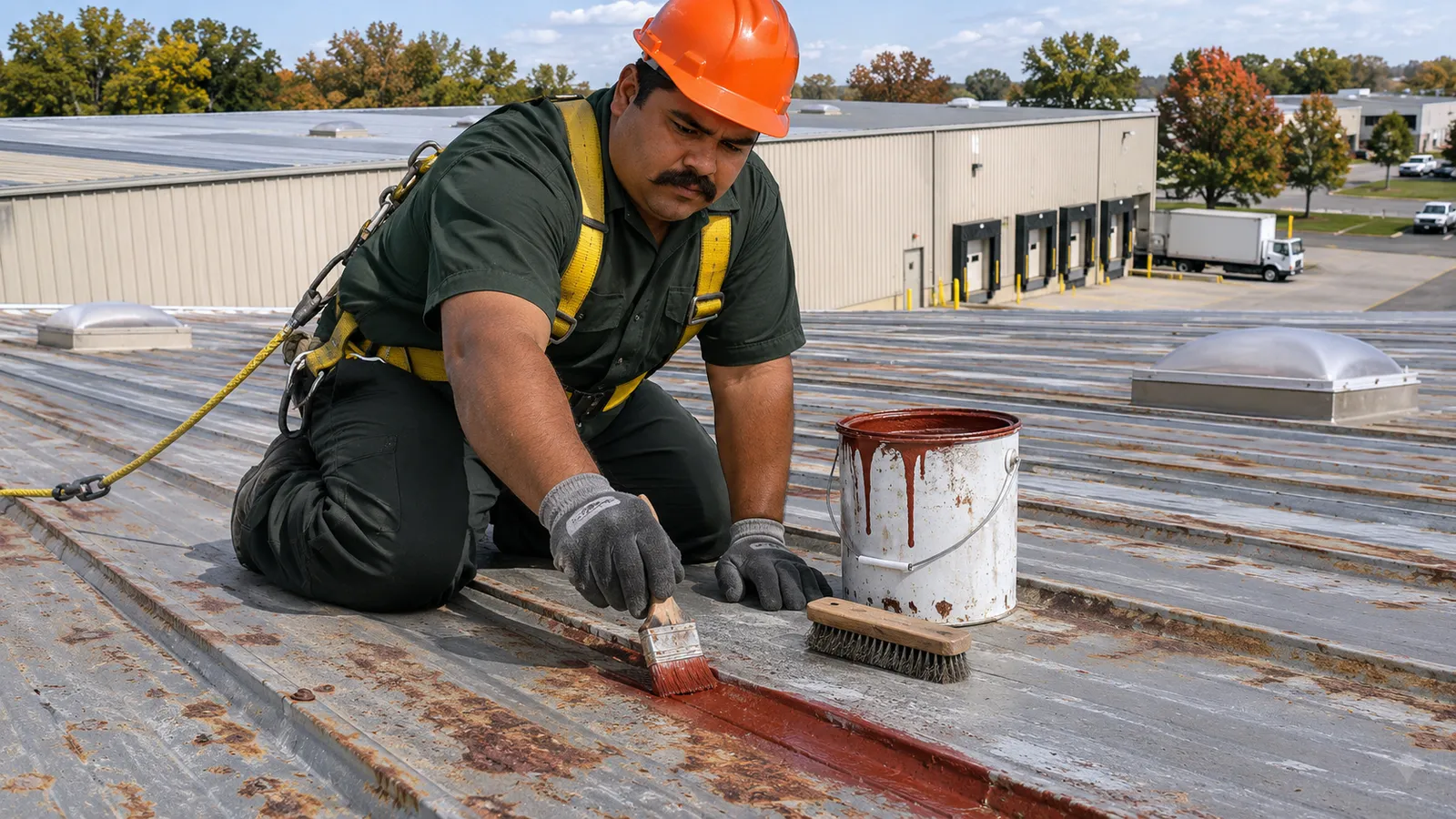
Exposed-fastener plant roofs get screw replacement, rust primer, and a field coat checked for thickness.
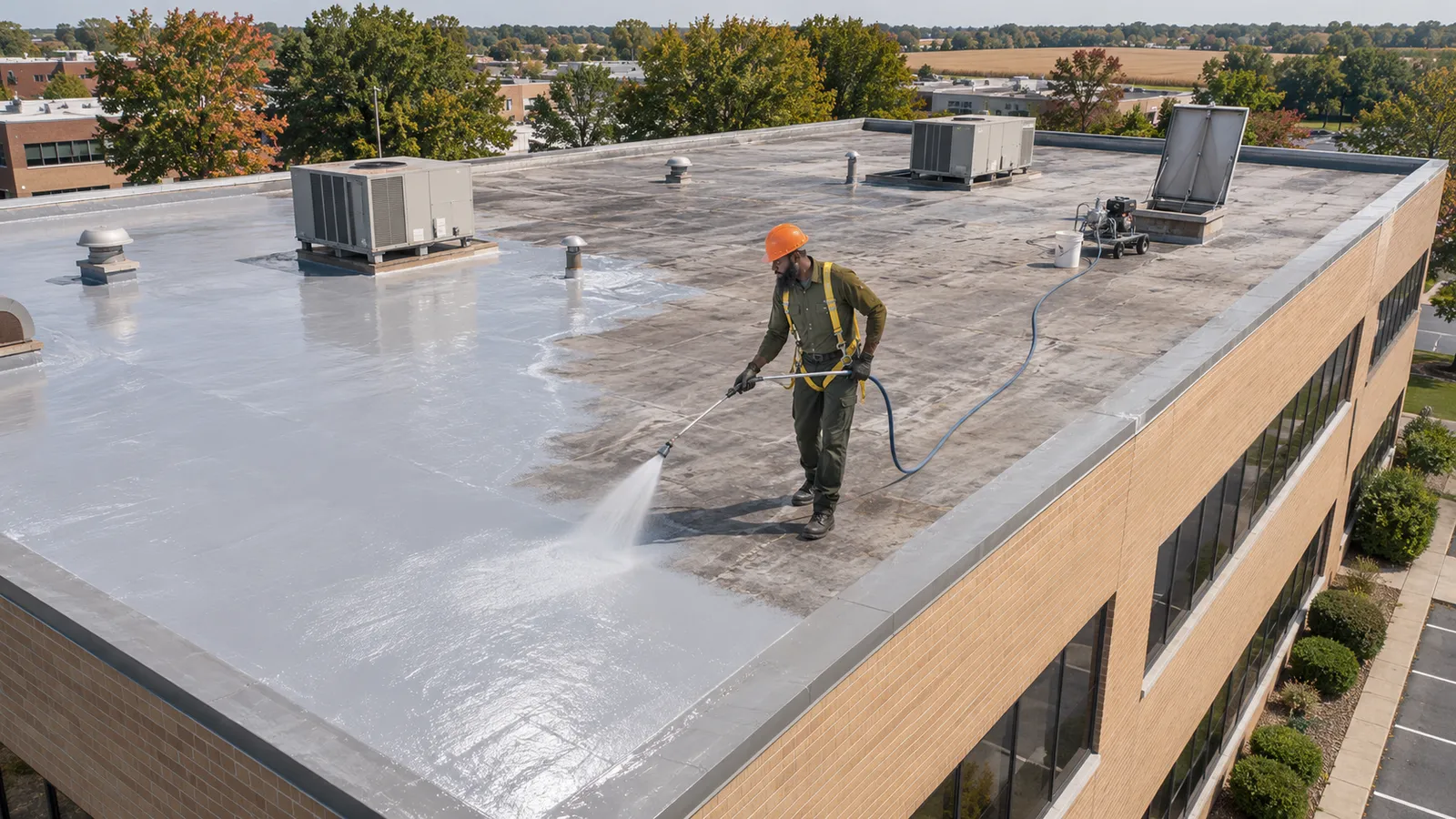
Low areas around interior drains on wide plants take silicone, which tolerates standing water.
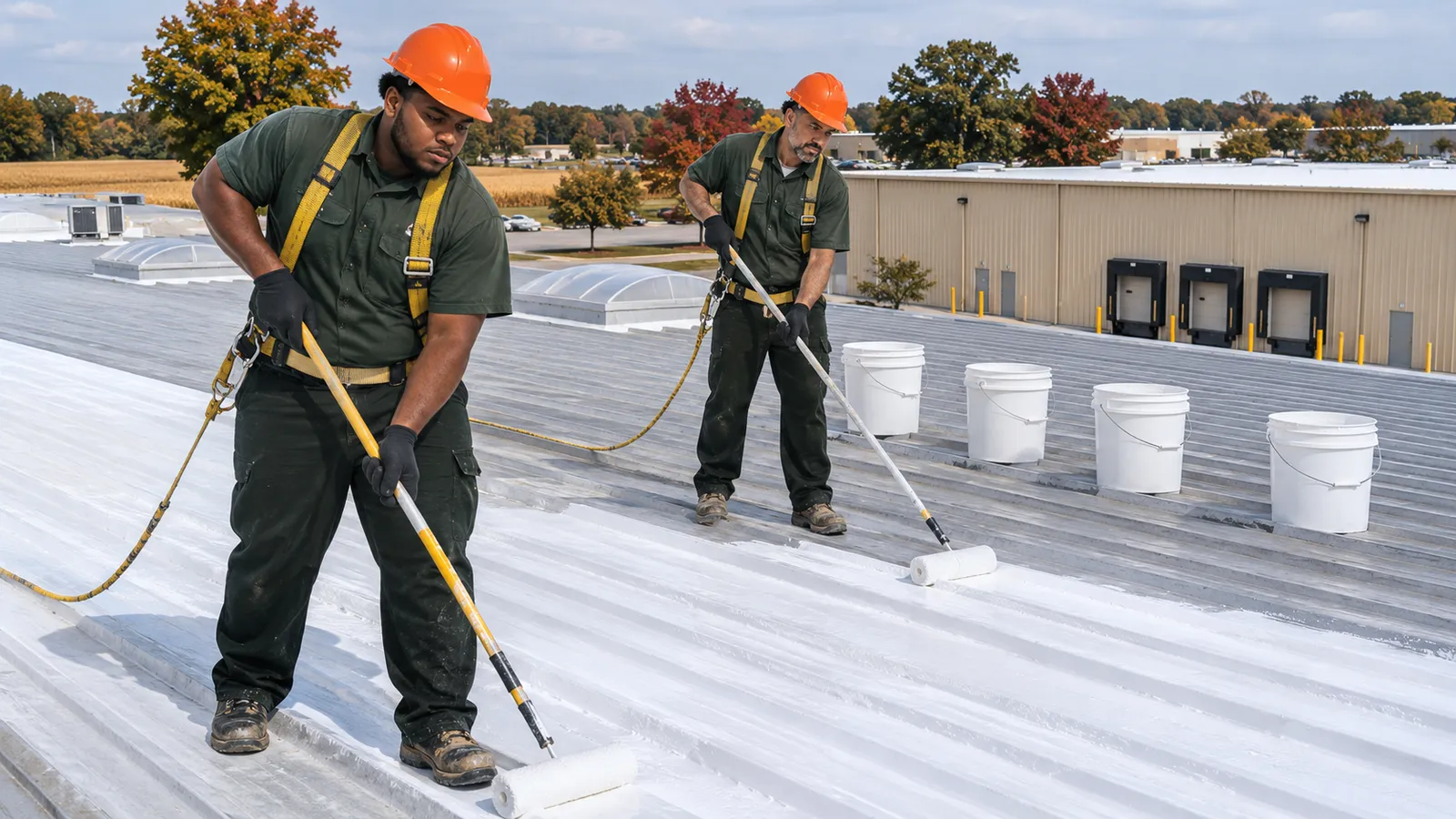
Sloped storage buildings with fast runoff take acrylic during dry spells.
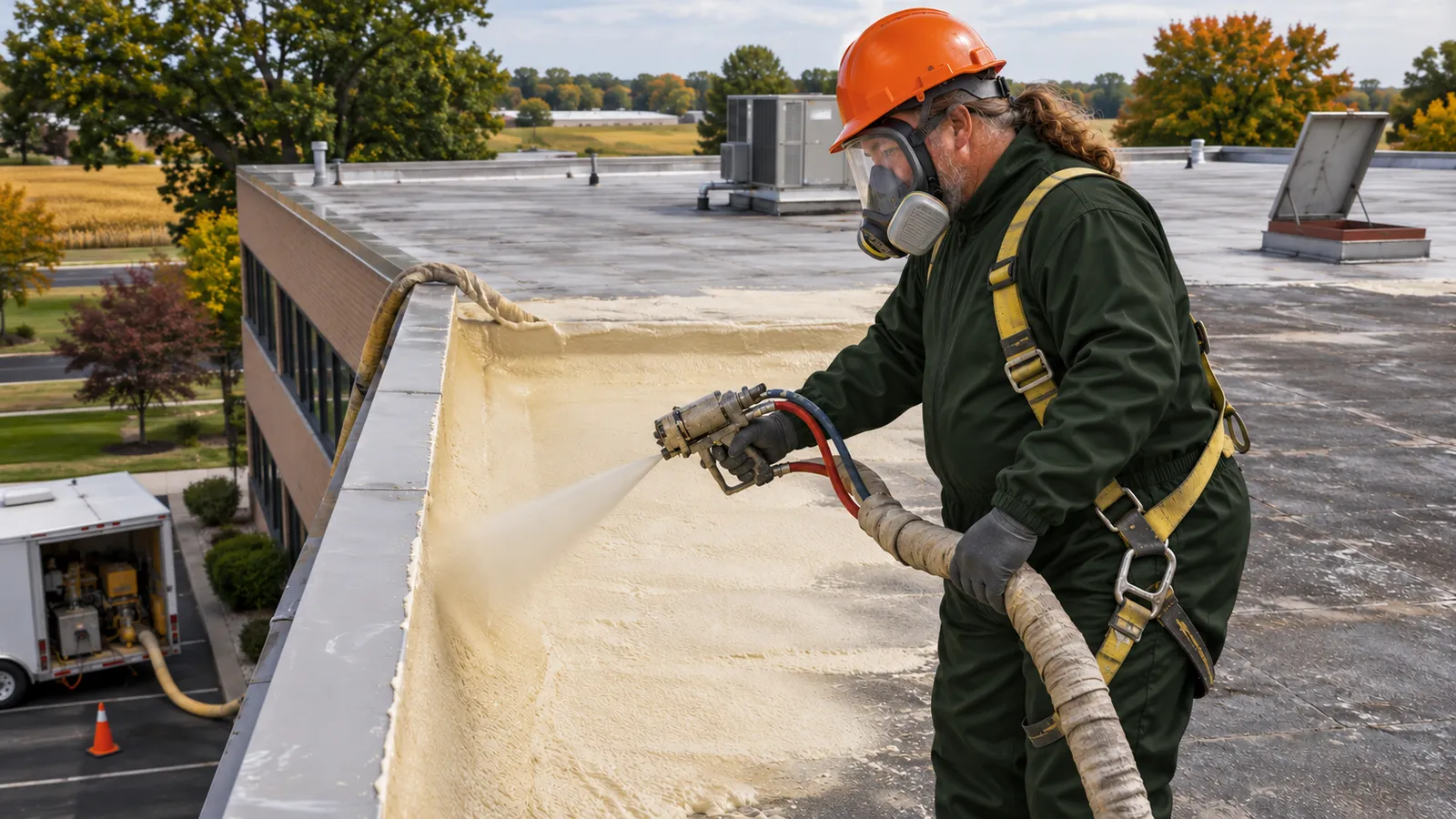
Heated production areas with thin insulation can gain R-value with foam and a topcoat.
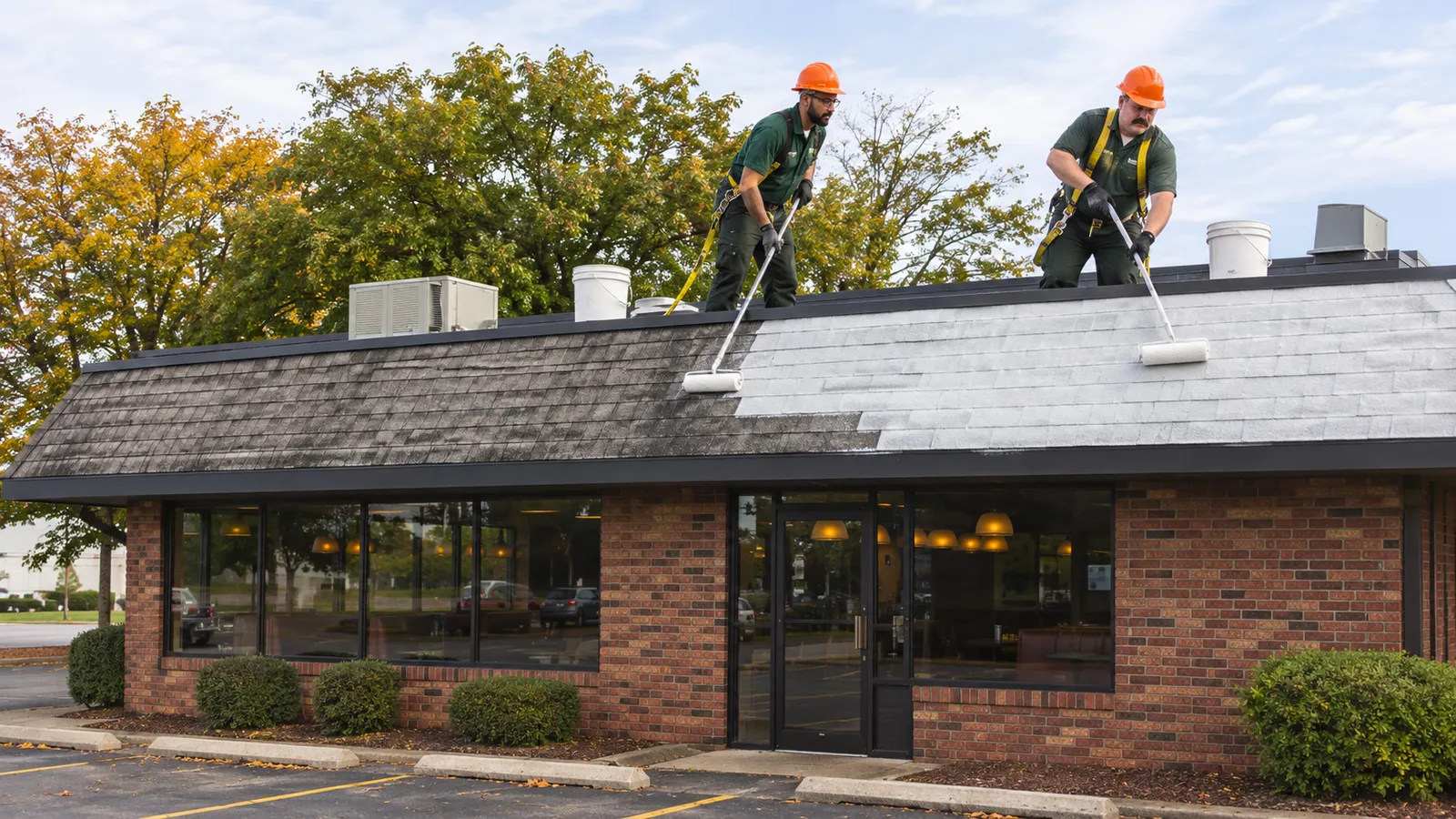
Shingled office additions take a shingle-rated coating if the tabs are flat.
We test how the coating bonds before the full job is priced, so you know the plan works on your roof before material is ordered.
Get A Free Ballpark EstimateFour steps planned around production.
We map fans, stacks, curbs, and residue, and check panels and screws across the whole field before planning sections.
Small patches are applied to cleaned areas, cured, and pulled to confirm the coating holds on that residue and paint.
Residue is scrubbed off, curbs flashed, and stacks rebooted where needed, working outward from each exhaust point.
Sections are coated around shifts and shutdowns, with intakes covered while spraying nearby and uncovered at day’s end.
Besides La Porte, we coat commercial metal roofs in South Bend and these towns.
Outside these towns? Call us or send us a message.
Yes. La Porte sits inside our service area, and industrial metal roofs there get a full inspection with a close look at exhaust fans and process vents that can hurt adhesion. Failed screws are replaced, laps and penetrations sealed, and the coating goes on in sections that work around production.
Residue around each exhaust point is cleaned with a detergent chosen for that residue, oily or dusty, and rinsed well. A test patch is then cured and pulled to confirm the coating bonds. Curbs and stacks are detailed by hand, and nearby intakes are covered while spraying so overspray and odor stay outside the plant.
They do. We follow the plant’s contractor safety rules, sign-in steps, and any lockout needs for rooftop equipment such as fans or dust collectors. The schedule is set with plant staff before work begins, and the crew checks in each day so production supervisors know which roof areas are active.
Exhaust will keep settling on the roof as long as the process runs. A scheduled wash every year or two keeps the coating clean and reflective. During the walk we also point out fans and stacks that might benefit from an extension or a filter, so less residue lands on the panels in the first place.
In most cases, yes. Areas right beside active intakes are done during shutdowns, weekends, or slow shifts, and the rest of the roof is coated while production continues below. Leaks over equipment are sealed in the first days so the floor is protected before the bigger field work starts.
Any roof with exhaust residue, old coatings, or unknown paint gets a test. We clean small areas, apply the planned primer and coating, let them cure, and pull them with tape or a gauge. If the bond fails, we change the cleaning method or the primer and test again before ordering material.
Tell us about the plant roof and its exhaust points. We will clean, test, plan the sections, and price the coating.